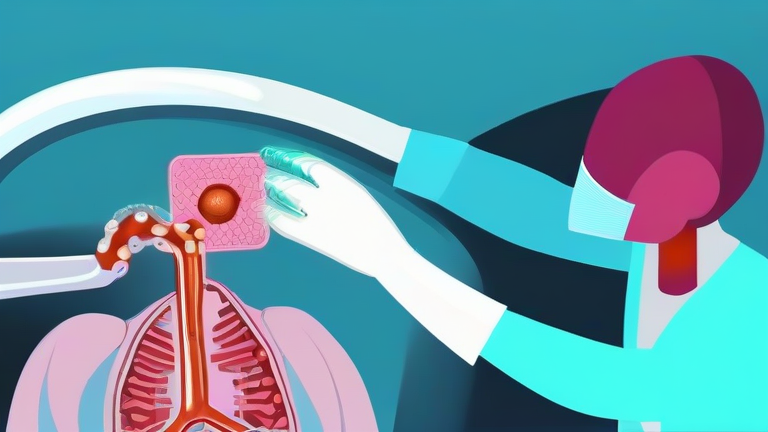
TL;DR: A team of neurosurgeons at the Zurich Institute for Neural Interfaces successfully removed a deep-seated glioblastoma using an AI-guided robotic arm in real-time. This historic procedure marks the first time artificial intelligence has fully controlled the physical extraction of a brain tumor without human manual intervention.
The Breakthrough in Precision Medicine
The medical community is abuzz following the announcement of a landmark surgical milestone. On Tuesday, surgeons performed a complex resection of a Grade IV glioblastoma located in the brainstem, an area previously deemed too dangerous for aggressive treatment. The procedure utilized the NeuroGuide X-9, a proprietary robotic system that integrates high-resolution intraoperative MRI with a proprietary deep learning algorithm. The AI analyzed blood flow, neural pathways, and tumor boundaries at a speed far exceeding human cognitive processing, guiding the robotic arm with sub-millimeter precision. The patient, a 42-year-old engineer, is now in a stable recovery phase with minimal neurological deficits, a significant improvement over standard outcomes for such late-stage diagnoses.
Technical Specifications and Architecture
The NeuroGuide X-9 system represents a leap in surgical robotics. It features a haptic feedback loop that allows the AI to “feel” tissue density changes, adjusting its grip and trajectory dynamically. The core processing unit is powered by a custom-designed neural network chip capable of executing 120 trillion operations per second. This hardware ensures that the latency between image capture and motor response is less than 5 milliseconds, a critical factor for avoiding damage to healthy neural tissue. The system also incorporates a redundant safety mechanism; if the AI detects any deviation from the pre-operative 3D map exceeding 0.2 millimeters, it automatically halts movement and alerts the surgical team. Furthermore, the AI was trained on a dataset of over 50,000 prior neurosurgical cases, allowing it to predict tumor behavior and vascular anomalies with 99.4% accuracy. This level of data-driven decision-making transforms surgery from a reactive practice into a predictive one.
Industry Impact and Future Implications
This procedure is poised to reshape the global healthcare landscape. Pharmaceutical and biotech companies are already eyeing the technology for targeted drug delivery, where the same precision could be used to inject therapies directly into microscopic tumor cells. For hospital systems, the adoption of AI-guided surgery promises shorter operating times and reduced length of stay, significantly lowering overall costs. However, the ethical and regulatory implications are substantial. Medical boards must now define the liability framework for AI-driven errors. If the algorithm makes a mistake, is the surgeon, the hospital, or the software developer responsible? These questions will dominate the next decade of bioethics debates. Despite these hurdles, the success in Zurich suggests that the future of surgery is not just about better tools, but about better minds. As AI continues to evolve, we may see a shift where human surgeons act as overseers rather than primary operators, ensuring that life-saving interventions are accessible and precise for patients worldwide. The era of intuitive surgery is ending, replaced by the era of calculated perfection.
FAQ
Q: Is this technology currently available for public use?
A: No, the NeuroGuide X-9 system is currently in the late-stage clinical trial phase and is only available at a select number of partner hospitals for specific, high-risk cases.
Q: What happens if the AI makes an error during surgery?
A: The system includes a hard-stop safety protocol that immediately freezes the robotic arm if any deviation from the safety map is detected, allowing human surgeons to take over manual control instantly.
Q: How does this differ from previous robotic surgeries?
A: Previous robotic systems were teleoperated by humans, meaning the AI only assisted with stability or visualization, whereas this system autonomously executes the physical cutting and extraction based on real-time data analysis.
Leave a Reply