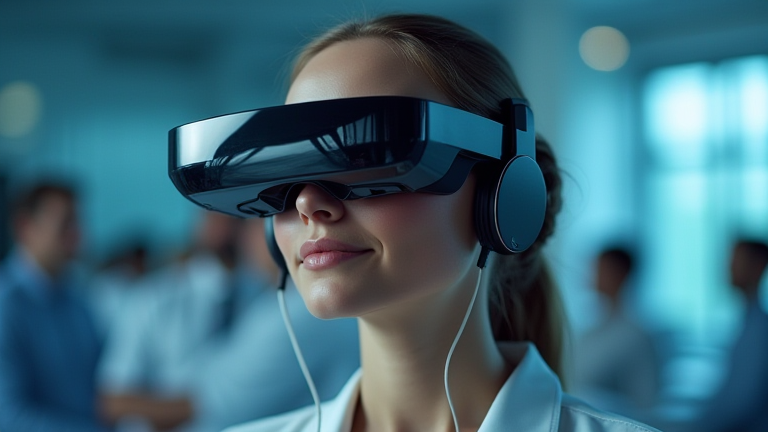
Spatial Computing Glasses: Do They Actually Replace Laptops?
TL;DR: Spatial computing glasses currently do not replace laptops for heavy productivity tasks but are rapidly becoming essential complementary tools for creative workflows. For most users, the hybrid model of a portable spatial display paired with a high-performance base station is the emerging standard.
The consumer electronics market is undergoing a seismic shift as spatial computing transitions from niche novelty to mainstream utility. Analysts project that the global spatial computing market will exceed $100 billion by 2028, driven by enterprise adoption in architecture, engineering, and design. However, the narrative that these devices will immediately obsolete the laptop is premature. The core limitation remains thermal management and battery life. High-fidelity rendering required for complex 3D modeling or video editing generates significant heat, which current all-in-one headsets cannot dissipate efficiently without sacrificing weight or form factor. Consequently, the “tethered” model, where glasses connect to a local workstation or high-end laptop via low-latency wireless links, remains the dominant enterprise strategy.
If you want to dig deeper, check out our guide on Global Green Hydrogen Infrastructure Projects Accelerate Rap.
Market Analysis and Strategic Positioning
Market data indicates a clear bifurcation in user intent. Casual consumers are adopting lighter, audio-centric devices for media consumption, while professional users are demanding high-resolution, high-refresh-rate displays. Strategy insights suggest that hardware manufacturers are pivoting away from the “all-in-one” dream toward ecosystem integration. Companies like Apple and Meta are focusing on seamless hand-offs between mobile, desktop, and spatial interfaces. The strategic imperative is no longer about raw power within the headset but about latency reduction and software interoperability. Enterprises are prioritizing solutions that offer secure, private cloud rendering capabilities, allowing employees to access heavy workloads from anywhere without carrying a bulky workstation.
Case Studies in Productivity
A prominent case study involves a leading automotive design firm that integrated spatial computing stations into their R&D workflow. Engineers reported a 20% increase in design iteration speed by using mixed reality to inspect vehicle prototypes in full scale. However, they retained their high-end laptops for final rendering and file management. The glasses served as an infinite canvas for collaboration, while the laptop remained the data hub. Similarly, a financial services firm used spatial displays to visualize complex data sets, improving analyst comprehension of multi-dimensional risk models. Yet, for day-to-day administrative tasks like email and spreadsheet manipulation, the traditional keyboard and screen remained superior due to ergonomic constraints and input latency.
The future lies in convergence. As chip efficiency improves and wireless bandwidth expands, the line between the laptop and the headset will blur. But for now, the laptop is not dead; it is evolving into the processing engine for a new visual era. Businesses should adopt spatial computing as a force multiplier, not a total replacement, ensuring a balanced hardware stack that maximizes both mobility and computational power.
FAQ
Q: Are spatial computing glasses comfortable enough for all-day work?
A: No, most current models are heavier than glasses and cause fatigue after a few hours, though new designs with improved weight distribution are extending comfort windows.
Q: Can I use a wireless keyboard and mouse with spatial glasses?
A: Yes, most platforms support standard Bluetooth peripherals, though using a trackpad or mouse within a virtual space is often less precise than using a physical surface.
Q: What is the biggest barrier to replacing laptops with these devices?
A: Battery life and heat generation are the primary technical barriers, as high-performance processing generates significant heat that is difficult to dissipate in a lightweight form factor.
Leave a Reply