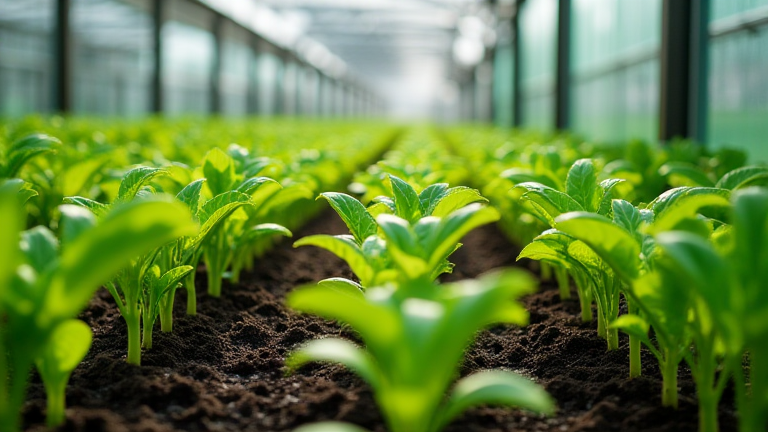
**Urban Farming Tech: The Key to Food Security in Major Cities**
TL;DR: Urban farming technologies, including vertical hydroponics and AI-driven climate control, are transforming dense metropolitan areas into self-sufficient food hubs. By maximizing yield per square foot and reducing supply chain vulnerabilities, these innovations are critical for ensuring long-term food security in major global cities.
The Rise of Vertical Agritech
The landscape of urban agriculture has shifted dramatically from passive rooftop gardens to high-tech indoor vertical farms. Recent developments focus on precision agriculture, utilizing sensors and machine learning to optimize growth conditions. Companies like Plenty and AeroFarms are deploying systems that stack crops in multi-tiered structures, allowing for year-round production regardless of external weather patterns. These facilities operate in controlled environments where light, water, and nutrient delivery are regulated by algorithms, resulting in crop yields up to 300 times higher than traditional field farming on a per-square-foot basis.
If you want to dig deeper, check out our guide on Generative Video Ads: The Future of Digital Marketing.
Technical Specifications and Innovations
Modern urban farming rigs rely on full-spectrum LED lighting tailored to specific plant photosynthesis requirements. The latest specs indicate a shift toward dynamic lighting schedules that adjust intensity and wavelength based on the growth stage of the crop, significantly reducing energy consumption. Water usage is minimized through recirculating hydroponic systems, which can reduce water usage by up to 95% compared to soil-based agriculture. Furthermore, the integration of Internet of Things (IoT) devices allows for real-time monitoring of pH levels, electrical conductivity, and humidity. These systems automatically adjust dosing pumps to maintain optimal conditions, preventing crop loss due to environmental stress. Energy efficiency is also a primary focus, with new solar-integrated greenhouse structures and waste-heat recovery systems being deployed in commercial districts.
Industry Impact and Economic Viability
The industry impact extends beyond food production to encompass energy efficiency and waste reduction. By locating production facilities close to consumers, urban farms drastically cut down on transportation emissions and food spoilage. This localized model strengthens community resilience against global supply chain disruptions. Economically, the sector is attracting significant venture capital, signaling a maturation from a niche experiment to a viable industrial standard. However, challenges remain regarding the high initial capital expenditure and the need for specialized technical expertise. As technology costs continue to decline and energy prices fluctuate, the balance between operational costs and retail prices becomes increasingly delicate. Stakeholders must navigate these economic hurdles to ensure that locally grown produce remains competitive with imported goods.
FAQ
Q: How much water do urban vertical farms use compared to traditional agriculture?
A: Vertical farms use up to 95% less water due to closed-loop hydroponic systems that recirculate nutrients and minimize evaporation.
Q: What is the primary energy source for these indoor facilities?
A: Most facilities rely on grid electricity, but there is a growing trend toward integrating on-site solar panels and renewable energy contracts to offset costs.
Q: Can urban farms produce staple grains like wheat or rice?
A: Currently, urban farms primarily focus on leafy greens, herbs, and strawberries; producing calorie-dense grains indoors is not yet economically viable due to energy requirements.
Leave a Reply