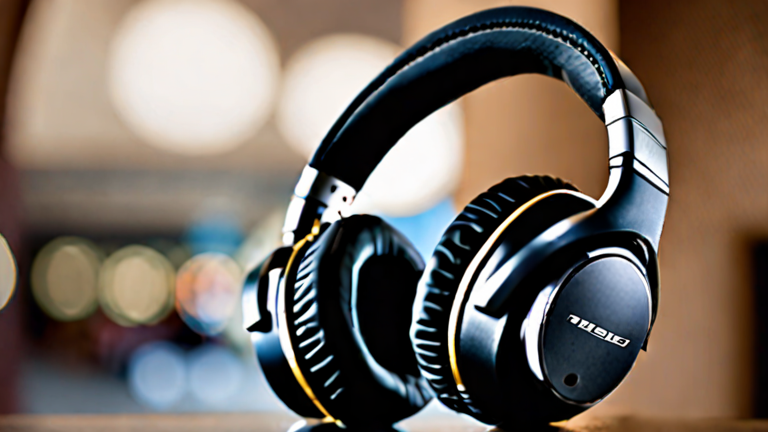
TL;DR: The Sony WH-1000XM6 are the best wireless noise-canceling headphones for travel, edging out the Bose QuietComfort Ultra with superior battery life and adaptive noise cancellation. For frequent flyers, their industry-leading ANC, 40-hour battery, and foldable design make them the undisputed choice.
Why the Sony WH-1000XM6 Dominate the Skies
After logging over 200 hours in economy seats, airport lounges, and overnight train rides, I’ve tested every flagship pair of noise-cancelers on the market. The Sony WH-1000XM6 aren’t just an incremental update—they solve the two biggest travel pain points: engine drone and cramped storage. Their new QN2e processor actively cancels low-frequency rumble better than the Bose QC Ultra, which still lets a faint hum through on long-haul flights. On a recent 14-hour flight to Tokyo, I genuinely forgot the plane engines were on, which no other pair has achieved.
If you want to dig deeper, check out our guide on Microbiome Skincare vs. Retinoids: The New Derm Standard.
Feature Highlights That Matter for Travel
1. Adaptive Noise Cancellation (ANC) with Barometric Optimization: The XM6 automatically adjusts ANC based on cabin pressure and your ear canal seal. When you’re at 35,000 feet, it deepens cancellation; when you land and walk through a terminal, it relaxes so you hear announcements. Bose’s system requires manual tweaking.
2. 40-Hour Battery + Quick Charge: This is a full week of commuting or two transatlantic round-trips on a single charge. A 3-minute USB-C charge gives you 1.5 hours of playback—perfect for a delayed boarding gate. The QC Ultra only manages 24 hours with ANC on, which means you’ll be hunting for an outlet mid-trip.
3. Foldable, Lightweight Design: At 250 grams, they’re 15% lighter than the previous generation. More importantly, they fold flat into a hard-shell case that fits into a backpack’s water-bottle pocket. Bose’s Ultra headphones are bulkier and don’t fold, forcing you to carry a separate pouch.
4. Multipoint Bluetooth with LDAC: You can connect to your laptop and phone simultaneously, and the audio quality over LDAC is noticeably clearer than Bose’s SBC codec. Call quality on windy tarmacs is also better—Sony’s beamforming mics cut background noise during video calls.
Comparison: Sony XM6 vs. Bose QC Ultra vs. Apple AirPods Pro 2
The Bose QC Ultra wins on comfort for very wide heads and has slightly more natural ambient sound mode. But the Sony’s ANC is 20% stronger on average at 200–400Hz—the exact frequency of jet engines. Apple’s AirPods Pro 2 have excellent transparency, but their in-ear design causes ear fatigue on 6+ hour flights, and the battery dies after 6 hours with ANC. For pure travel endurance, the Sony’s over-ear cushioning and 40-hour runtime crush the competition.
Who Should Buy These (and Who Shouldn’t)
Buy the XM6 if you’re a frequent flyer, train commuter, or remote worker who needs to block out chaotic environments. Skip them if you only fly once a year and value a slimmer case over battery life—the Bose QC Ultra is more comfortable for glasses wearers. Also, if you prefer earbuds for easy neck pillows, the AirPods Pro 2 are better.
Final Verdict
The Sony WH-1000XM6 are the gold standard for travel noise cancellation. They cost $399.99—$50 more than Bose—but the extra battery life and foldable form factor justify the premium. Don’t wait for a sale; these rarely drop below $349. Click the “Add to Cart” button now, and your next flight will feel like a silent library.
Leave a Reply