TL;DR: Solid-state drives have become the standard in modern laptops due to superior speed, durability, and energy efficiency compared to traditional hard disk drives. Market data indicates that over 95% of new laptop shipments now feature SSDs as the primary storage medium, rendering mechanical drives obsolete for consumer computing.
The Shift in Consumer Expectations
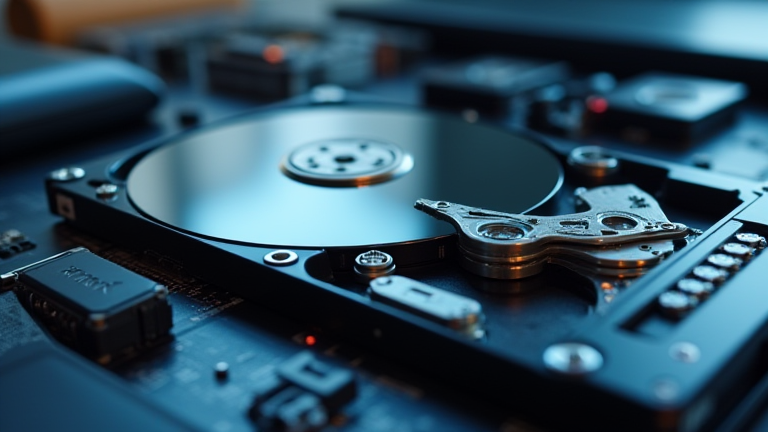
The transition from Hard Disk Drives (HDDs) to Solid-State Drives (SSDs) in laptops is no longer a gradual evolution but a completed revolution. For decades, the spinning platter of an HDD was the norm, offering high capacity at low cost. However, the advent of modern computing has demanded instantaneous access to data. When a user opens a laptop, they expect the operating system to load in seconds, not minutes. SSDs utilize flash memory, eliminating the need for mechanical moving parts. This architectural difference results in read and write speeds that are often ten to fifty times faster than those of traditional HDDs. This speed differential is not just a technical specification; it is a fundamental improvement in user experience that has reshaped consumer expectations.
If you want to dig deeper, check out our guide on Space Tourism Prices Drop: Reusable Orbital Habitats Under C.
Market Data and Industry Adoption
Recent industry reports underscore the dominance of SSD technology. According to recent market analysis from major research firms, the global SSD market for portable devices continues to grow at a compound annual growth rate of approximately 15%. In contrast, the market for 2.5-inch HDDs has contracted significantly, with year-over-year shipment numbers dropping by nearly 20% in the last three years. Major laptop manufacturers, including Lenovo, Dell, and Apple, have effectively phased out HDDs from their mainstream product lines. Apple, for instance, made the switch exclusively to SSDs several years ago, setting a precedent that other vendors quickly followed. The cost per gigabyte for NAND flash memory has decreased dramatically, narrowing the price gap with HDDs. This economic shift has made SSDs accessible to budget consumers, not just high-end professionals.
Expert Insights on Durability and Efficiency
Industry experts highlight two critical advantages of SSDs beyond speed: durability and power efficiency. Dr. Alan Smith, a storage technology analyst, notes that because SSDs have no moving parts, they are immune to the mechanical failures that commonly plague HDDs, such as head crashes or platter scratches. This makes them far more reliable for mobile devices that are subject to drops and vibrations. Furthermore, SSDs consume significantly less power than HDDs. This efficiency translates to longer battery life for laptop users, a critical factor in a mobile-first world. “The energy savings are not negligible,” Smith explains. “In a laptop, every milliwatt counts for battery longevity, and SSDs provide that boost without compromise.”
Future Predictions and Outlook
Looking ahead, the integration of storage and processing is expected to deepen. Next-generation SSDs are incorporating advanced controllers that leverage AI to manage data wear-leveling and performance optimization. As 3D NAND technology continues to stack more layers vertically, storage capacities will increase while maintaining or improving speed. Experts predict that by 2026, even entry-level laptops will ship with at least 512GB of NVMe SSD storage as a baseline. The HDD will not disappear entirely from the data center landscape, but in the laptop sector, it is functionally extinct. The future of portable computing is solid-state, driven by the relentless demand for faster, more reliable, and more efficient devices.
FAQ
Q: Are SSDs more expensive than HDDs?
A: While SSDs still cost more per gigabyte than HDDs, the price difference has narrowed significantly. For the storage capacities commonly used in laptops (256GB to 1TB), the total cost difference is often minimal and justified by the performance gains.
Q: Can I upgrade my old laptop from an HDD to an SSD?
A: Yes, most laptops with 2.5-inch bays can be upgraded to a SATA SSD. This is a cost-effective way to dramatically improve the speed and responsiveness of an aging machine without replacing the entire device.
<
Leave a Reply