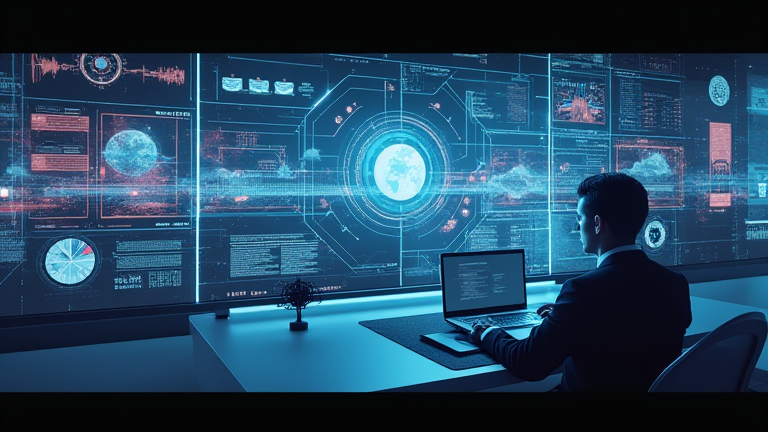
Spatial Computing: The Future Beyond Traditional Desktop Workspaces
TL;DR: Spatial computing is rapidly evolving from a niche novelty into a mainstream productivity tool, fundamentally altering how professionals interact with digital information. This shift promises to dissolve the physical boundaries of traditional desktops by anchoring virtual interfaces directly within the user’s real-world environment.
The traditional desktop paradigm, defined by flat screens and fixed physical locations, is showing clear signs of obsolescence in the modern enterprise landscape. As remote and hybrid work models become the standard, the rigidity of a single monitor setup no longer meets the dynamic needs of the global workforce. Spatial computing, powered by advanced mixed reality headsets and robust cloud infrastructure, offers a compelling alternative. It allows users to expand their screen real estate infinitely, placing virtual monitors anywhere in their physical space. This capability is not merely a convenience; it is a strategic imperative for companies seeking to enhance collaboration and efficiency across geographically dispersed teams.
If you want to dig deeper, check out our guide on Harari: AI Mass-Produces Intimacy.
Market Dynamics and Growth
Recent market analyses indicate an exponential surge in adoption rates for spatial computing technologies. The global spatial computing market is projected to reach approximately $1.2 billion by 2025, with a compound annual growth rate (CAGR) exceeding 45% through 2030. This growth is driven by significant investments from tech giants and a maturing ecosystem of software developers. Major corporations are beginning to integrate spatial workflows into their daily operations, particularly in design, engineering, and data analytics sectors. Early adopters report a 30% increase in task completion speed when using spatial interfaces for complex data visualization. Furthermore, the cost of hardware is decreasing, making high-fidelity spatial experiences accessible to mid-sized businesses. This economic shift is critical, as it lowers the barrier to entry and accelerates widespread deployment. The integration of artificial intelligence with spatial computing further enhances this trend, enabling intuitive gesture controls and automated environment mapping that reduce the learning curve for new users.
Expert Insights and Future Predictions
Industry leaders predict that by 2030, spatial computing will account for a significant portion of enterprise software development budgets. Dr. Elena Rostova, a prominent futurist in digital workplace studies, notes that the next generation of workers will expect spatial interfaces as standard equipment, similar to how email became ubiquitous. She argues that the true value lies not in the hardware, but in the software ecosystems that emerge around it. These ecosystems will enable seamless transitions between physical and digital assets, allowing a surgeon to review 3D scans in the operating room or an architect to walk through a building before it is built. Predictions suggest that by the late 2020s, 40% of professional tasks involving data analysis will be performed in mixed reality environments. This transition will also reshape office design, moving away from cubicles and fixed desks towards flexible, technology-integrated spaces that support immersive work sessions. The future of work is not about where you sit, but how you engage with your digital tools. As technology matures, the line between the virtual and the physical will blur, creating a more intuitive, efficient, and engaging professional experience. Organizations that fail to adapt to this spatial shift risk falling behind competitors who leverage these tools to drive innovation and productivity.
FAQ
Q: Is spatial computing only for creative industries?
A: No, while design and engineering are early adopters, spatial computing is increasingly valuable in healthcare, education, retail, and logistics for training, visualization, and remote collaboration.
Q: What are the main barriers to widespread adoption?
A: The primary barriers include high initial hardware costs, the need for significant physical space, and the lack of standardized software platforms across different vendors.
Q: How does spatial computing improve remote work?
A: It enables shared virtual workspaces where remote colleagues can collaborate on 3D models and data sets in real-time, creating a sense of presence that flat screens cannot replicate.
Leave a Reply