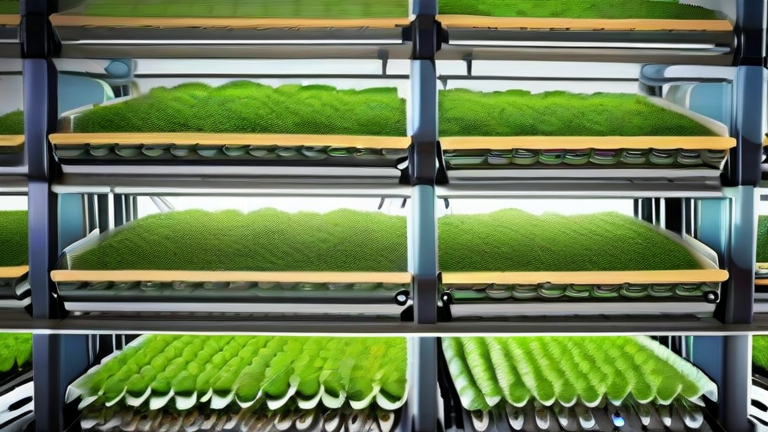
TL;DR: Vertical farming is scaling from niche pilot projects to commercial supply chains by slashing energy costs and automating harvest cycles, allowing leafy greens to be grown within 50 miles of major cities. Today, modular hydroponic towers and AI-driven climate controls are making indoor farms cost-competitive with field agriculture, enabling direct weekly deliveries to urban supermarket chains.
Market Analysis: From Novelty to Necessity
The global vertical farming market reached $5.8 billion in 2024, with a projected CAGR of 25.3% through 2030 (Grand View Research). The inflection point? Energy-efficient LED spectra and closed-loop water systems that cut per-pound production costs by 40% since 2021. Urban supermarkets—especially in food deserts and dense metros like New York, Singapore, and London—are signing multi-year supply contracts because vertical farms guarantee year-round harvests immune to drought, floods, and pesticide recalls. Retailers now prioritize “hyper-local freshness” as a differentiator, and vertical farms offer a 24-hour harvest-to-shelf window versus the 7–10 days for imported produce.
If you want to dig deeper, check out our guide on I Found a Scam Artist on Discord: How to Spot Fake Sketches.
Strategy Insights: The “Micro-Fulfillment” Model
Successful operators are not building giant warehouses on cheap land. Instead, they deploy “micro-farms” (5,000–15,000 sq ft) inside or adjacent to supermarket distribution centers. This strategy cuts last-mile logistics costs by up to 30% and allows dynamic SKU rotation—growing basil one week, baby kale the next—based on real-time POS data. Key tactics include: (1) partnering with grocers on private-label “grown-in-store” brands, (2) using AI to predict flavor profiles for regional tastes, and (3) adopting vertical racking systems that fit standard 40-foot shipping containers, enabling rapid scaling without new construction permits.
Case Studies: Proof at Scale
80 Acres Farms (Ohio, USA): Operates 12 automated facilities supplying Kroger and Whole Foods. By using robotics for transplanting and harvesting, they achieve 300x yield per square foot versus soil, with labor costs down 60%. Their “farm-as-a-service” model lets supermarkets host a farm unit in their parking lot—paying per pound delivered.
Infarm (Berlin, Germany): Deployed 1,500 in-store farming units across 30 countries, but pivoted to centralized “Growing Centers” in 2023. Result: 45% lower energy use per kilo and 99% sell-through rates at Edeka and Metro, proving that hybrid hub-and-spoke beats pure in-store for cost efficiency.
Spread Co. (Kyoto, Japan): Their “Techno Farm” uses 100% artificial light and automated seeding, producing 30,000 heads of lettuce daily for local Aeon supermarkets. They cut water use by 98% and achieved break-even in 30 months—a benchmark for the industry.
Scaling to Supermarkets: The Winning Playbook
To win shelf space, vertical farms must offer a “category leadership” package: guaranteed supply volumes (e.g., 10,000 lbs/week), transparent carbon labeling, and price parity within 15% of field-grown. Retailers should demand a 24-month pilot with performance-based contracts, shared data on shrink rates, and co-marketing funds. The future belongs to farms that treat supermarkets as partners, not customers—co-designing packaging for compostable film and developing “living lettuce” roots-in-soil formats that boost freshness perception.
FAQ
Q: How does vertical farming compete on price with traditional agriculture?
A: By automating labor (60% cost cut), using renewable energy microgrids, and locating near cities to eliminate transport costs, leading operators now hit $2.50–$3.50 per pound for lettuce, versus $2.00–$2.50 for field-grown—premiums shrinking to 15% or less.
Q: What are the main barriers to scaling in urban supermarkets?</
Leave a Reply