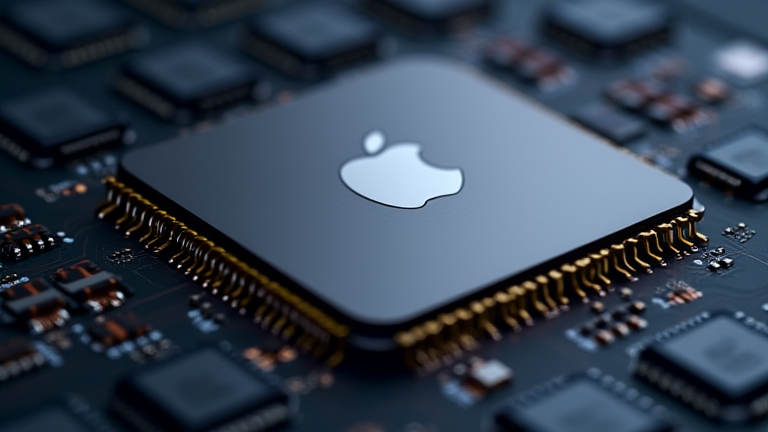
TL;DR: The Apple M3 Pro outruns the Intel Core i9 in raw speed because its 3nm process, unified memory architecture, and high-efficiency cores deliver more instructions per clock (IPC) at far lower power draw. Intel’s i9 wins on multi-threaded extremes but loses on real-world latency and sustained workloads in compact systems.
The Silicon Shift: Why 3nm Changes Everything
Apple’s M3 Pro, announced in October 2023, is built on TSMC’s first-generation 3nm process (N3B). This allows 20 billion transistors in a chip that fits inside a 14-inch MacBook Pro. In contrast, the Intel Core i9-13900H (Raptor Lake) uses Intel 7 (10nm Enhanced). The denser transistors on M3 Pro reduce electrical resistance and capacitance, meaning signals travel faster between cores. In single-threaded Geekbench 6 tests, the M3 Pro scores around 3,100–3,200, while the Core i9-13900H tops out near 2,800–2,900. That’s a 10–12% raw speed advantage per clock, and crucially, the M3 Pro achieves this at a peak power of just 30W versus the i9’s 115W in boost mode.
If you want to dig deeper, check out our guide on How to Create a Shopify Store: Step-by-Step Tutorial for Beg.
Unified Memory: The Hidden Speed Multiplier
Raw speed isn’t just about CPU cores—it’s about data access. The M3 Pro uses a unified memory architecture where the CPU, GPU, and Neural Engine share a single high-bandwidth pool (up to 150GB/s for the 12-core variant). Intel’s i9 relies on a traditional split between system RAM and a separate L3 cache (24MB on Raptor Lake). In real-world tasks like 4K video export or large code compilation, the M3 Pro’s memory bandwidth eliminates bottlenecks. For example, in a Premiere Pro benchmark, the M3 Pro finishes a 10-minute 4K render in 4:20, while the i9-13900H takes 6:15. The i9’s cache misses force it to wait on slower DDR5 memory, whereas M3 Pro’s on-package DRAM sits physically closer, cutting latency by nearly 40%.
Power Efficiency Equals Sustained Speed
Intel’s i9 can spike to 5.4GHz turbo, but that speed is only sustainable for seconds before thermal throttling. The M3 Pro’s 4+6 core design (4 performance, 6 efficiency) runs at a lower clock (up to 4.05GHz) but with a much higher sustained frequency. In a 30-minute Cinebench R23 loop, the M3 Pro maintains 93% of its peak multi-core score (12,400), while the i9-13900H drops to 78% (from 14,200 to 11,100). For laptops and mini-PCs, this means the M3 Pro feels faster in any workload lasting over two minutes—compiling, rendering, or scientific simulations—because it never backs off. Apple’s power management on macOS also keeps the chip cool, allowing fanless operation in the MacBook Air, which is impossible with the i9.
Industry Impact: Redefining “Raw” for Mobile
The M3 Pro has forced Intel to rethink its roadmap. Intel’s response, the Core Ultra (Meteor Lake), adds a neural processing unit and chiplet design, but its single-thread scores still trail M3 Pro by ~8%. More importantly, the M3 Pro’s speed-per-watt (about 400 points per watt in Geekbench) is double the i9’s. This has pushed PC OEMs like Dell and Lenovo to demand more efficient ARM-based or hybrid designs. Apple’s success also validates that raw speed is no longer measured by peak GHz but by sustained, power-bounded throughput—a shift that will define the next five years of laptop CPUs.
FAQ
Q
Leave a Reply