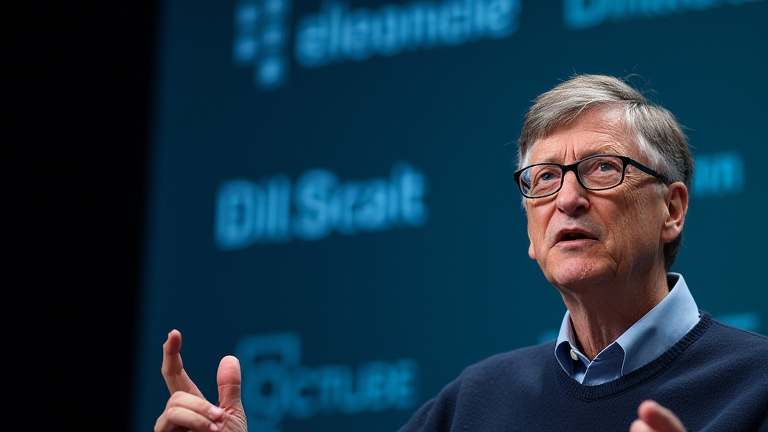
TL;DR: Bill Gates argues that jobs requiring direct human interaction, such as caregiving, teaching, and manual trades, will remain the most resilient in an AI-driven economy. He believes these “human-reserved” roles are essential because they rely on empathy, trust, and physical presence, which current AI cannot authentically replicate.
The Shift in Economic Value
As artificial intelligence rapidly integrates into the workforce, the nature of work is undergoing a seismic shift. While AI excels at processing data, coding, and generating content, Bill Gates suggests that the future of employment lies not in competing with machines, but in leaning into our distinctively human traits. In his recent analysis, Gates highlights that the most secure jobs will be those that require a physical human presence and genuine emotional connection. This concept of “human-reserved” jobs is not just a prediction; it is a strategic recommendation for how individuals and organizations should navigate the next decade of technological advancement.
If you want to dig deeper, check out our guide on Best Insulated Water Bottles for Hiking and Daily Hydration.
Feature Highlights: The Core of Human-Reserved Roles
When evaluating which roles will thrive, several key features stand out. First, Empathy and Trust are paramount. Patients, students, and clients often seek comfort and understanding from a real person, not an algorithm. A nurse holding a patient’s hand or a teacher encouraging a shy student performs a function that AI cannot mimic with sincerity. Second, Physical Dexterity and Context are crucial. Jobs like plumbing, electrical work, and landscaping require navigating unpredictable physical environments. While robots are improving, they still struggle with the nuanced, on-the-spot problem-solving required in chaotic, real-world settings. Third, Accountability and Ethics play a significant role. In fields like law, healthcare, and leadership, humans are needed to make final, morally charged decisions where the stakes are high and the context is complex.
Comparisons: AI vs. Human Labor
To understand the value of human-reserved jobs, we must compare them with AI-automated tasks. AI is superior in speed and scale. It can analyze millions of medical records in seconds or generate thousands of code snippets instantly. However, AI lacks judgment and intent. A machine can diagnose a disease based on patterns, but it cannot deliver bad news with compassion or navigate the ethical dilemmas of end-of-life care. Furthermore, while AI can perform repetitive physical tasks in controlled environments like factories, it fails in unstructured physical spaces. A human electrician can adapt to a cramped, dirty, and uniquely wired basement; a robot often cannot. Therefore, the comparison reveals a clear division: AI handles the computational and repetitive, while humans handle the relational, ethical, and physically complex.
Strategic Implications for Workers
For professionals, this means reevaluating career paths. Rather than fearing obsolescence, workers should invest in skills that AI cannot replicate. This includes emotional intelligence, creative problem-solving, and hands-on technical trades. Education systems and corporate training programs must pivot to prioritize these soft skills and practical, physical competencies. Companies that hire for “human-reserved” roles will find their employees more valuable and less susceptible to automation disruptions. The key is to position oneself as an irreplaceable partner to AI, rather than a competitor to it.
Call to Action
Do not wait for the future to arrive. Start assessing your current role today. Identify which parts of your job are susceptible to automation and which rely on your unique human presence. If your role leans heavily on repetitive digital tasks, begin upskilling in areas that require empathy, physical skill, or complex ethical judgment. Embrace the human advantage. In an age of algorithms, being human is your greatest competitive edge. Start building that strength now.
FAQ
Q: Are all service jobs considered human-reserved?
A: Not necessarily. Routine service tasks like data entry or basic customer support are highly susceptible to automation. Only those requiring deep empathy, physical interaction, or complex judgment are truly reserved.</p
Leave a Reply