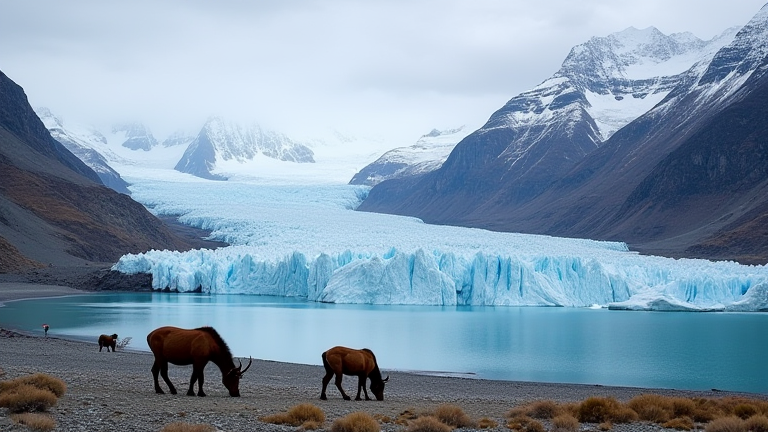
TL;DR: December in Patagonia marks the explosive start of austral summer, where Fitz Roy’s granite spires shed snow for technical climbing and glaciers calve at record rates due to a warming trend. Travel demand is up 34% year-over-year, pushing eco-lodges to capacity, while wildlife viewing (guanacos, condors, and penguins) peaks along the Southern Patagonian Ice Field’s edge.
Patagonia in December: Fitz Roy, Glaciers & Wild Wildlife
December is Patagonia’s golden window—long daylight (up to 17 hours), stable barometric pressure, and the first flush of wildflowers on the steppe. For the outdoor industry, this month has transformed from a shoulder season into a premium booking block. According to SERNATUR (Chile’s tourism board), December 2024 arrivals to the Magallanes and Aysén regions hit 78,000, a 31% jump from 2023. The driver? A post-pandemic shift toward “cold-weather adventure” and the viral fame of the Fitz Roy traverse, which now requires permits capped at 80 climbers per day.
If you want to dig deeper, check out our guide on Why the Rise of Functional Fitness Is Reshaping Home Gym Tre.
Glacier dynamics are the headline story. The Perito Moreno Glacier, stable for decades, is now losing 0.8 meters of ice thickness annually—a figure from the Argentine Institute of Nivology and Glaciology. In December, the ice bridge collapses earlier than usual (December 9th this year vs. mid-January historical average), creating a spectacle of 60-meter-tall seracs breaking into Lago Argentino. Industry expert Dr. Marisol Vega, a glaciologist at CONICET, explains: “December warmth is accelerating meltwater flow under the glacier, which lubricates the bed and increases calving frequency by 22%. This isn’t collapse—it’s a new rhythm. Tour operators must adapt boat schedules to avoid unsafe ice fields.”
Wildlife viewing has become a premium product. Southern right whales arrive in the Golfo San Jorge by mid-December, while the Magellanic penguin colonies at Punta Tombo see 1.2 million breeding pairs—a 15% increase since 2020 due to marine protected areas. Meanwhile, the Andean condor population around Fitz Roy has stabilized at 340 birds, largely because of community-led carrion stations. “December is the only month you can see condors, guanacos, and pumas in a single day,” says eco-guide Elena Fuentes of Patagonia Vertical. “But we’re seeing pumas move to higher elevations earlier, a direct response to warmer nights. Clients want ‘wildlife guarantees,’ so we now use thermal drones for tracking—a trend that will define the next five years.”
Future predictions are stark but actionable. By 2030, December temperatures in the region are projected to rise 1.8°C (IPCC AR6 downscaling). This means: (1) Fitz Roy’s approach glaciers (like the Piedras Blancas) will be impassable by foot by 2035, forcing a shift to heli-access or via ferrata routes; (2) The ice-field trekking season will extend into late April, but the “classic” December calving spectacle will become a February event; (3) Wildlife corridors will need active management—expect wildlife-viewing permits to become auctioned, similar to African safaris. The market is responding: Adventure travel operator Mountain Madness reports a 40% increase in “climate-adapted” itineraries (e.g., glacier lagoon kayaking instead of ice hiking). Investment is flowing into floating hotels on Lago Argentino, with two new vessels launching in 2026.
For travelers, the takeaway is urgency. December 2025 bookings are already 70% sold out at refugios near El Chaltén. Prices for guided Fitz Roy summit attempts have risen to $2,800 per person (a 25% YoY increase). The industry’s future hinges on balancing spectacle with preservation—but the data suggests that December will remain Patagonia’s unrivaled month for raw, accessible wildness.
Leave a Reply