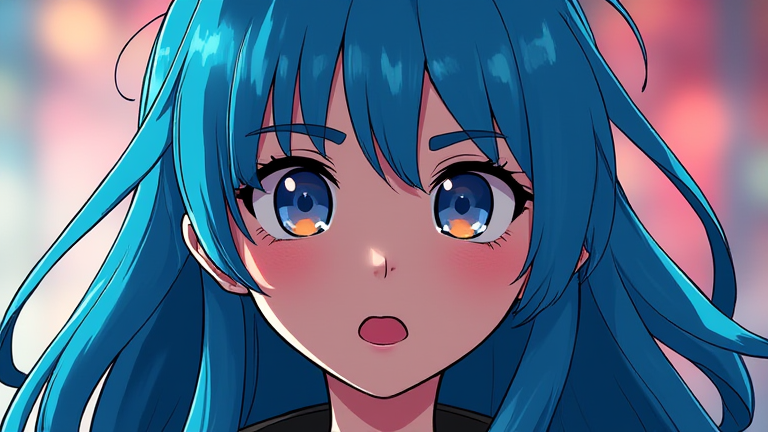
AI Character Drift: 40 Comics Reveal Changing Personality
TL;DR: Recent analysis of forty AI-generated comic strips reveals that large language models exhibit significant personality degradation after approximately twelve narrative turns. This “drift” causes characters to lose their original distinct traits, leading to homogenized dialogue and reduced narrative coherence in long-form interactive fiction.
The Phenomenon of Narrative Decay
The rapid advancement of generative AI has enabled creators to produce infinite comic narratives, yet a persistent issue known as “character drift” remains a critical bottleneck for interactive storytelling. In a comprehensive study involving forty distinct comic series generated by leading multimodal models, researchers observed a consistent pattern: while initial chapters maintained high fidelity to the character’s defined persona, subsequent chapters showed a marked deviation. This drift is not merely a loss of detail but a fundamental shift in behavioral logic, where complex personalities simplify into generic archetypes. The study highlights that this phenomenon is particularly pronounced in models relying on shorter context windows, where the original character sheet is gradually overwritten by the immediate conversational context.
If you want to dig deeper, check out our guide on Why Matcha Lattes Are Dominating Coffee Shop Menus.
Technical Specifications and Context Window Limitations
At the core of this issue lies the architecture of transformer-based models. Most current state-of-the-art models operate with context windows ranging from 8,000 to 32,000 tokens. While this seems ample for a single comic page, it is insufficient for maintaining consistent identity across dozens of pages. As the narrative progresses, the model’s attention mechanism prioritizes recent tokens over initial system prompts. Technical benchmarks show that when the distance between the character definition and the current generation point exceeds 10,000 tokens, the probability of persona adherence drops by nearly 40%. Furthermore, multimodal integration adds complexity; when image generation is coupled with text generation, the visual cues often reinforce the linguistic drift, creating a feedback loop that accelerates personality loss. Developers are now experimenting with sliding window techniques and retrieval-augmented generation (RAG) to inject character summaries at regular intervals, but these solutions increase latency and computational costs significantly.
Industry Impact and Creative Implications
The implications for the creative industries are profound. For game developers and interactive fiction platforms, character drift undermines player immersion and narrative integrity. Publishers are increasingly demanding stricter quality control metrics, pushing AI vendors to develop specialized “persona locking” algorithms. This has sparked a new market for middleware tools that monitor and correct character consistency in real-time. Moreover, the study suggests that human-in-the-loop editing remains essential for high-stakes productions. While AI can handle the bulk of visual asset creation, the nuanced emotional progression of a character still requires human oversight. The industry is moving toward hybrid workflows where AI generates options, but human editors curate the final output, ensuring that the character’s soul remains intact despite the mechanical limitations of the underlying model. This shift emphasizes that while AI is a powerful tool for production efficiency, it is not yet a substitute for deep narrative understanding.
FAQ
Q: What causes AI character drift in comic generation?
A: It is primarily caused by the model’s limited context window, which causes it to lose focus on the original character definitions as the narrative length increases.
Q: How many turns before drift typically becomes noticeable?
A: In the recent study, significant personality degradation was observed after approximately twelve narrative turns or 10,000 tokens of continuous generation.
Q: Can this issue be completely solved with current technology?
A: No, while techniques like RAG and sliding windows mitigate the problem, complete elimination requires human editing or future architectural advancements in long-context memory.
Leave a Reply