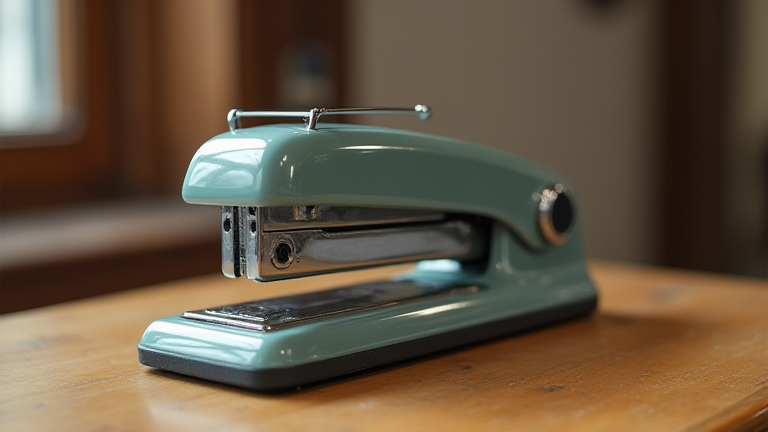
TL;DR: Restoring a 1950s Swingline 99 is a tactile journey into mid-century design, offering a tangible connection to the era’s aesthetic. It transforms a functional office tool into a cherished cultural artifact, blending nostalgia with the satisfaction of craftsmanship.
The Allure of Mid-Century Minimalism
There is a specific weight to history that only vintage objects can provide. When I first held my 1950s Swingline 99, the heavy, cold metal felt like a bridge to a different time. This was not just a stapler; it was a piece of industrial art, a symbol of the post-war efficiency and sleek modernism that defined the mid-twentieth century. In an age of disposable plastic and fleeting trends, the permanence of this object serves as a grounding force in my daily life.
If you want to dig deeper, check out our guide on Top 5 Skincare Trends: Why Retinol Serum Is Still King.
The Restoration Process
The restoration began with a deep clean, removing decades of paper dust and oxidation. Using gentle solvents and fine steel wool, I revealed the original chrome plating, which gleamed with a warmth that modern finishes lack. This process was meditative, requiring patience and a steady hand. It was a personal growth exercise in mindfulness, teaching me to slow down and appreciate the intricate details of manufacturing. The mechanical action, once stiff, now glides with a satisfying *thunk*, a sound that has become my personal ritual for starting the workday.
Cultural Significance
Beyond the physical repair, owning this item connects me to a broader cultural narrative. The Swingline 99 represents a time when office supplies were designed to last a lifetime. It speaks to a different relationship with objects, one rooted in utility and longevity rather than consumption. Displaying it on my desk is a statement of intent. It reminds me that quality and design are not mutually exclusive. In a world that often moves too fast, this vintage staple anchors my workspace, offering a moment of quiet reflection before the day begins. It is a small rebellion against the ephemeral, a daily reminder to value what endures.
FAQ
Q: Is a vintage stapler worth restoring?
A: Yes, for enthusiasts, the value lies in the historical significance and the tactile pleasure of using a well-crafted, durable tool that no longer exists in modern form.
Q: What tools are needed for restoration?
A: Basic tools include fine steel wool, a soft cloth, mild metal polish, and a small amount of machine oil to lubricate the internal spring mechanism.
Q: Can I use modern staples in a 1950s model?
A: While many vintage models accept standard modern staples, it is best to test with a single staple first to ensure the gauge and shape are compatible with the older feeding mechanism.
Leave a Reply