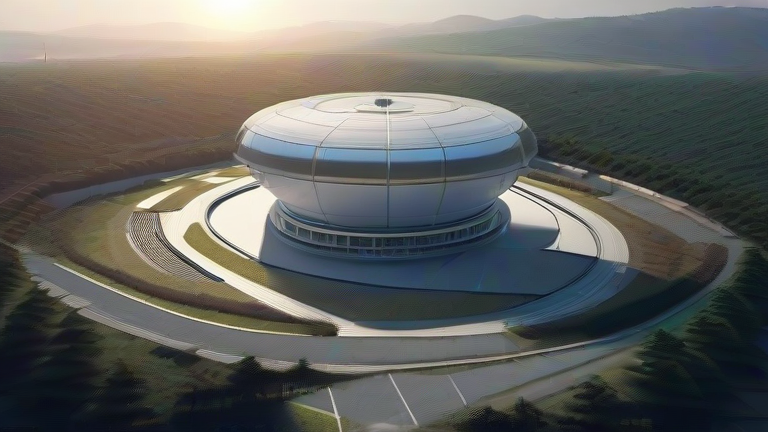
TL;DR: South Korea’s homegrown fusion reactor prototype represents a pivotal step toward achieving true energy independence by leveraging domestic expertise in plasma physics. While commercial viability remains years away, this initiative positions Seoul as a global leader in next-generation clean energy infrastructure.
Introduction: A New Era for Seoul’s Energy Grid
For decades, the global energy landscape has been dominated by fossil fuels and the incremental improvements in nuclear fission technology. However, a quiet revolution is unfolding in Daejeon, where South Korea’s Institute for Basic Science (IBS) and the Korea Institute of Fusion Energy (KFE) are collaborating on a groundbreaking homegrown fusion reactor. This project is not merely a scientific curiosity; it is a strategic national asset designed to secure the country’s energy future. The promise of fusion is simple yet profound: replicate the power of the sun on Earth, using deuterium and tritium, to generate vast amounts of clean energy with minimal waste. This review explores the key features, competitive advantages, and the broader implications of this ambitious Korean venture.
If you want to dig deeper, check out our guide on The Ultimate SEO Tutorial: Step-by-Step Guide for Beginners.
Feature Highlights: Engineering Excellence
The core of this project is the KSTAR (Korea Superconducting Tokamak Advanced Research) reactor, often referred to as the “artificial sun.” Its most distinguishing feature is the use of high-temperature superconducting magnets, which allow for stronger magnetic fields and a more compact reactor design. Unlike older tokamaks that required massive cooling systems, this Korean design minimizes energy losses, significantly improving the efficiency ratio. Furthermore, the reactor incorporates advanced remote handling systems, allowing technicians to maintain internal components without direct exposure to radiation. The integration of AI-driven real-time plasma control systems is another standout feature. These algorithms can adjust magnetic field configurations in milliseconds, stabilizing the plasma and preventing disruptions that have plagued other experimental reactors worldwide. This level of precision control is a testament to Korea’s advanced engineering capabilities and its commitment to data-driven innovation.
Comparisons: Standing Out in a Global Field
When compared to other major fusion projects, such as the ITER facility in France or the SPARC reactor in the United States, the Korean initiative offers distinct advantages. While ITER is a massive international collaboration with a timeline extending into the 2030s, Korea’s approach is more agile and vertically integrated. By controlling the supply chain for critical components, such as superconducting coils and vacuum chambers, Seoul reduces dependency on foreign vendors. This vertical integration accelerates the R&D cycle and lowers long-term costs. In contrast to private ventures like Commonwealth Fusion Systems, which rely on heavy private funding and rapid prototyping, the Korean state-backed model provides stability and long-term vision. This ensures that research continues uninterrupted by market fluctuations. Additionally, the Korean reactor is designed with modular scalability in mind, allowing for easier integration into existing power grids compared to the monolithic designs of older generation reactors. This modularity is crucial for a nation with limited land resources and a high density of population, where space efficiency is paramount.
Call-to-Action: Join the Energy Revolution
As the world grapples with climate change and energy security, the path to fusion is no longer a distant dream but a tangible reality. For investors, researchers, and policy makers, this is a moment to act. Support for domestic fusion initiatives can unlock trillions of dollars in future economic value and secure energy sovereignty. We urge stakeholders to engage with the latest developments from KFE and IBS. Attend upcoming webinars, subscribe to technical reports, and consider partnerships that align with the green energy transition. The road to energy independence is not just about building a reactor; it is about building a sustainable society. By backing Korean innovation, you are investing in a cleaner, safer, and more secure future for generations to come. Do not wait for the future to arrive; help build it today.
FAQ
Q: When will the Korean fusion reactor generate usable power?
A: Commercial power generation is expected to be achievable by the late 2030s or early 2040s, following successful demonstration phases.
Q: Is fusion energy
Leave a Reply