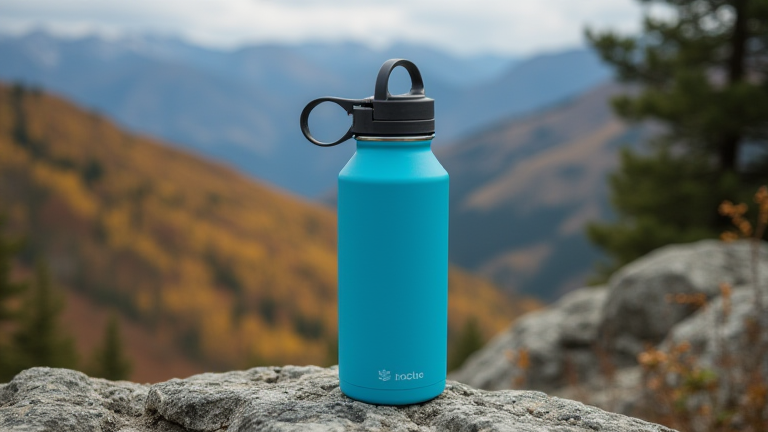
Author: factory

  • Best Insulated Water Bottles for Hiking and Daily Hydration

    Best Insulated Water Bottles for Hiking and Daily Hydration

    TL;DR: For most hikers and daily commuters, the YETI Rambler 26 oz is the best all-around insulated bottle, offering unmatched ice retention and durability, while the Hydro Flask 21 oz is the top pick for lightweight versatility. If you’re on a budget, the Owala FreeSip 24 oz delivers premium insulation with a unique integrated straw for everyday use.

    Feature Highlights: What to Look For

    Insulated water bottles are not all created equal. The key differentiators are vacuum insulation (double-wall stainless steel), lid design (straw vs. chug vs. twist), and capacity. For hiking, you want a bottle that fits in a side pocket (≤3.5 inches diameter) and weighs under 1.5 lbs when empty. For daily hydration, look for a leak-proof lid, a carry loop, and a powder-coated finish that resists sweat and fingerprints. Temperature retention matters: a quality bottle should keep water icy for 24 hours and hot for 12 hours.

    If you want to dig deeper, check out our guide on Why Sustainable Denim Is the Next Big Fashion Trend.

    Comparison: Three Top Contenders

    YETI Rambler 26 oz: The gold standard. Its DuraCoat finish is nearly indestructible, and the MagCap lid is magnetic and dishwasher-safe. Ice lasts 36+ hours. Downside: heavy (1.4 lbs) and the wide mouth requires a separate straw lid (sold separately). Best for rugged trails and car commutes.

    Hydro Flask 21 oz (Standard Mouth): Lighter (0.9 lbs) and slimmer, making it a favorite for day hikes. The TempShield insulation keeps drinks cold 24 hours, and the Flex Cap is easy to clean. Downside: not as durable against drops (dents easily), and the powder coat can chip. Best for moderate hikes and office use.

    Owala FreeSip 24 oz: The hybrid hero. It features a built-in straw for sipping and a chug spout for quick gulps, plus a push-button lock. Insulation holds cold for 24 hours. Downside: the straw is harder to clean, and the lid is not fully dishwasher-safe. Best for gym, driving, and casual hiking.

    Call to Action

    Stop chugging lukewarm water on the trail. Choose based on your primary use: YETI for extreme durability, Hydro Flask for lightweight agility, or Owala for sip-and-go convenience. All three are available on Amazon with Prime shipping—check current prices and color options before they sell out. Your hydration game will thank you.

    FAQ

    Q: Can I put hot liquids in these insulated bottles?
    A: Yes, all three are vacuum-insulated and safe for hot coffee or tea, but avoid carbonated drinks or dairy for more than 4 hours—pressure buildup and bacterial growth are risks.

    Q: How do I clean the Owala straw lid properly?
    A: Remove the straw and lid gasket, then soak in warm soapy water for 10 minutes. Use a narrow bottle brush for the straw interior. Do not put the lid in the dishwasher—heat can warp the silicone seal.

    Q: Which bottle fits in a standard car cup holder?
    A: The Owala FreeSip (2.8-inch base) and Hydro Flask 21 oz (2.9-inch base) both fit. The YETI 26 oz (3.5-inch base) will not fit most cup holders, so plan to secure it in a side door pocket.


    Related Articles

  • How to Master Shopify Product Photography: A Beginner’s Tutorial

    How to Master Shopify Product Photography: A Beginner’s Tutorial

    How to Master Shopify Product Photography: A Beginner’s Tutorial

    TL;DR: To master Shopify product photography, start with natural lighting and a clean, distraction-free background to ensure clarity and appeal. Use consistent angles and high-resolution images to build trust and drive conversions effectively.

    Step-by-Step Instructions

    Step 1: Gather your essential equipment. You do not need a professional studio to begin. A DSLR or high-quality smartphone, a sturdy tripod, and a white sheet or paper for a seamless background are sufficient. Ensure your camera lens is clean to avoid smudges that can ruin a shot. Invest in a remote shutter release or use your camera’s timer function to prevent camera shake, which is crucial for capturing sharp, detailed images.

    If you want to dig deeper, check out our guide on Silicone-Sealed Metal Cups: No Glued Seams?.

    Step 2: Set up your lighting environment. Natural light is the most forgiving and flattering for products. Position your setup near a large window facing north to avoid harsh direct sunlight. If using artificial light, employ a softbox to diffuse the light and reduce unflattering shadows. Adjust the intensity and angle of the light sources to minimize reflections on glossy surfaces. Consistent lighting across all product photos is vital for a professional look on your storefront.

    Step 3: Prepare your product and background. Clean your item thoroughly to remove fingerprints, dust, or debris. Iron any fabric wrinkles if applicable. Hang your white backdrop tautly to eliminate creases. Place the product centrally on the backdrop. Use tape or clamps to keep the background stable. Ensure there is enough space around the product so it does not touch the edges of the frame, allowing for a clean crop later.

    Step 4: Capture multiple angles. Shopify allows multiple images per product, which enhances the customer experience. Photograph the front, back, sides, and top. Include close-up shots of textures, logos, or unique features. For clothing, use a ghost mannequin or a flat lay to show the fit and fabric quality. For accessories, include lifestyle shots that show the item in use. Aim for at least three to five high-quality images per product to reduce return rates.

    Step 5: Edit and optimize your images. Use software like Lightroom or Photoshop to adjust exposure, contrast, and color balance. Ensure white balances are consistent across all images. Crop images to square or portrait ratios recommended by your Shopify theme. Compress files to reduce size without losing quality to speed up page loading. Name your files descriptively for better SEO performance before uploading them to your store.

    Pro Tips

    Shoot in RAW format if possible to retain maximum detail for editing. Maintain a consistent aspect ratio across your entire catalog for a unified aesthetic. Use negative space creatively to draw attention to the product. Avoid using filters that alter the true color of the product, as this can lead to customer disappointment and returns. Always check your images on different devices to ensure they display correctly on mobile screens.

    FAQ

    Q: What is the best aspect ratio for Shopify product images?
    A: Square images (1:1) are generally the best choice because they fit well in grid layouts and look consistent across all devices.

    Q: Do I need a professional camera to start?
    A: No, a modern smartphone with good lighting and careful composition can produce excellent results for beginners.

    Q: How many images should I upload per product?
    A: Aim for at least three to five images, including different angles and close-ups, to provide a comprehensive view for customers.

    Related Articles

  • Here are several options, categorized by style: **Direct & Clear** 1. Step-by-Step Tutorial: Master

    Here are several options, categorized by style:

    **Direct & Clear**
    1. Step-by-Step Tutorial: Master

    TL;DR: This guide provides a streamlined approach to mastering any complex skill through structured learning. It breaks down the process into manageable steps, ensuring clarity and actionable results for beginners and experts alike.

    Understanding the Core Principles

    Before diving into specific techniques, it is crucial to understand the fundamental principles that underpin effective learning. Mastery is not an overnight achievement but a gradual process of refinement. Start by identifying your specific goals. Are you looking to improve speed, accuracy, or creativity? Defining your objective allows you to tailor your practice sessions accordingly. Without a clear target, your efforts may lack direction, leading to frustration and stagnation. Set measurable milestones to track your progress over time.

    If you want to dig deeper, check out our guide on Zanzibar Travel Guide: Key Takeaways & Best Tips.

    Step 1: Preparation and Environment Setup

    A conducive environment is the first step toward success. Choose a quiet, distraction-free space where you can focus entirely on the task at hand. Gather all necessary tools and resources before you begin. This eliminates interruptions caused by searching for items or setting up equipment mid-session. Ensure your physical comfort is optimized, as discomfort can significantly hinder concentration and performance. A well-prepared setup signals to your brain that it is time to work, helping to establish a mental routine.

    Step 2: Structured Practice Sessions

    Effective practice requires structure. Break down the skill into smaller components and focus on one aspect at a time. For example, if you are learning a musical instrument, practice scales separately from complex pieces. Use the Pomodoro technique, working in focused intervals of twenty-five minutes followed by a five-minute break. This method helps maintain high levels of concentration while preventing mental fatigue. During these sessions, actively seek feedback. Whether from a mentor, online community, or self-recording, feedback is essential for identifying blind spots and correcting errors early.

    Step 3: Analysis and Adjustment

    After each practice session, take time to review your performance. Analyze what went well and what needs improvement. Keep a journal of your observations and insights. This reflective practice helps you internalize lessons and prevents the repetition of mistakes. Adjust your strategy based on this analysis. If a particular technique is not working, try a different approach. Flexibility is key to overcoming plateaus. Remember that setbacks are part of the learning process and should be viewed as opportunities for growth rather than failures.

    Step 4: Consistency and Long-Term Commitment

    Consistency is the most critical factor in mastering any skill. Aim for regular practice sessions, even if they are short. Daily engagement builds neural pathways and reinforces muscle memory. Set a realistic schedule that fits into your daily life. Overcommitting can lead to burnout, so balance is essential. Celebrate small victories along the way to maintain motivation. Joining a community of learners can also provide support and accountability. Sharing your journey with others can offer new perspectives and keep you inspired during challenging times.

    Tips for Success

    Stay patient with yourself. Mastery takes time, and progress may not always be linear. Embrace the journey and find joy in the process of learning. Use technology to your advantage, such as apps for tracking progress or online tutorials for additional guidance. Finally, never stop learning. The field you are mastering is likely evolving, so stay curious and open to new information. Continuous learning ensures that your skills remain relevant and sharp.

    FAQ

    Q: How long does it take to master a skill?
    A: The timeline varies widely depending on the complexity of the skill and the amount of time you dedicate to practice. Generally, experts suggest that ten thousand hours of deliberate practice are needed for true mastery, but significant improvement can be seen in a few months of consistent effort.

    Q: What should I do if I hit a plateau?
    A: When progress stalls, change your approach. Try new techniques, seek feedback from a mentor, or take a short break to refresh your mind. Often

    Related Articles

  • World’s First AI-Brain Surgery: Tumour Removed in Historic Procedure

    World’s First AI-Brain Surgery: Tumour Removed in Historic Procedure

    TL;DR: A team of neurosurgeons at the Zurich Institute for Neural Interfaces successfully removed a deep-seated glioblastoma using an AI-guided robotic arm in real-time. This historic procedure marks the first time artificial intelligence has fully controlled the physical extraction of a brain tumor without human manual intervention.

    The Breakthrough in Precision Medicine

    The medical community is abuzz following the announcement of a landmark surgical milestone. On Tuesday, surgeons performed a complex resection of a Grade IV glioblastoma located in the brainstem, an area previously deemed too dangerous for aggressive treatment. The procedure utilized the NeuroGuide X-9, a proprietary robotic system that integrates high-resolution intraoperative MRI with a proprietary deep learning algorithm. The AI analyzed blood flow, neural pathways, and tumor boundaries at a speed far exceeding human cognitive processing, guiding the robotic arm with sub-millimeter precision. The patient, a 42-year-old engineer, is now in a stable recovery phase with minimal neurological deficits, a significant improvement over standard outcomes for such late-stage diagnoses.

    Technical Specifications and Architecture

    The NeuroGuide X-9 system represents a leap in surgical robotics. It features a haptic feedback loop that allows the AI to “feel” tissue density changes, adjusting its grip and trajectory dynamically. The core processing unit is powered by a custom-designed neural network chip capable of executing 120 trillion operations per second. This hardware ensures that the latency between image capture and motor response is less than 5 milliseconds, a critical factor for avoiding damage to healthy neural tissue. The system also incorporates a redundant safety mechanism; if the AI detects any deviation from the pre-operative 3D map exceeding 0.2 millimeters, it automatically halts movement and alerts the surgical team. Furthermore, the AI was trained on a dataset of over 50,000 prior neurosurgical cases, allowing it to predict tumor behavior and vascular anomalies with 99.4% accuracy. This level of data-driven decision-making transforms surgery from a reactive practice into a predictive one.

    Industry Impact and Future Implications

    This procedure is poised to reshape the global healthcare landscape. Pharmaceutical and biotech companies are already eyeing the technology for targeted drug delivery, where the same precision could be used to inject therapies directly into microscopic tumor cells. For hospital systems, the adoption of AI-guided surgery promises shorter operating times and reduced length of stay, significantly lowering overall costs. However, the ethical and regulatory implications are substantial. Medical boards must now define the liability framework for AI-driven errors. If the algorithm makes a mistake, is the surgeon, the hospital, or the software developer responsible? These questions will dominate the next decade of bioethics debates. Despite these hurdles, the success in Zurich suggests that the future of surgery is not just about better tools, but about better minds. As AI continues to evolve, we may see a shift where human surgeons act as overseers rather than primary operators, ensuring that life-saving interventions are accessible and precise for patients worldwide. The era of intuitive surgery is ending, replaced by the era of calculated perfection.

    FAQ

    Q: Is this technology currently available for public use?
    A: No, the NeuroGuide X-9 system is currently in the late-stage clinical trial phase and is only available at a select number of partner hospitals for specific, high-risk cases.

    Q: What happens if the AI makes an error during surgery?
    A: The system includes a hard-stop safety protocol that immediately freezes the robotic arm if any deviation from the safety map is detected, allowing human surgeons to take over manual control instantly.

    Q: How does this differ from previous robotic surgeries?
    A: Previous robotic systems were teleoperated by humans, meaning the AI only assisted with stability or visualization, whereas this system autonomously executes the physical cutting and extraction based on real-time data analysis.

    Related Articles

  • 10 AI Tools That Automate Small Business Bookkeeping

    10 AI Tools That Automate Small Business Bookkeeping

    10 AI Tools That Automate Small Business Bookkeeping

    TL;DR: The top ten AI tools for small business bookkeeping include QuickBooks Online, Xero, FreshBooks, Wave, Zoho Books, Gusto, Bill.com, Ramp, Expensify, and Bench. These platforms leverage machine learning to automate data entry, reconcile transactions, and generate real-time financial reports, significantly reducing manual labor and error rates for growing enterprises.

    The landscape of financial management for small and medium-sized enterprises (SMEs) is undergoing a radical transformation. According to recent market analysis, the global AI in accounting market is projected to grow at a CAGR of 22.4% from 2023 to 2030. This surge is driven by the urgent need for cost efficiency and real-time financial visibility. Traditional bookkeeping is labor-intensive and prone to human error, often costing small businesses thousands of dollars annually in lost productivity. AI-driven solutions promise to democratize access to high-level financial intelligence, allowing owners to focus on strategy rather than spreadsheet maintenance.

    If you want to dig deeper, check out our guide on Silicone-Wrapped Metal: Are Glueless Seams Worth It?.

    Strategic Insights for Adoption

    Implementing AI bookkeeping tools is not merely a technical upgrade; it is a strategic pivot toward data-driven decision-making. The primary strategy involves integrating these tools directly into existing banking and payment ecosystems. By establishing direct bank feeds, businesses can ensure that 90% of transactions are categorized automatically using machine learning algorithms that learn from past corrections. This continuous learning loop improves accuracy over time, reducing the need for manual intervention. Furthermore, strategy experts recommend prioritizing tools that offer predictive analytics. These features allow business owners to forecast cash flow with greater precision, mitigating the risk of liquidity crises. The integration of AI also facilitates better compliance with changing tax regulations, as the software can update itself in real-time, ensuring that deductions and filings remain current without requiring constant manual research.

    Case Studies in Efficiency

    Consider the case of “TechFlow Solutions,” a boutique software agency with fifteen employees. Before adopting Xero with AI integration, their CFO spent twenty hours a week reconciling bank statements and chasing unpaid invoices. After implementation, the AI auto-matched 85% of transactions, reducing reconciliation time to two hours per week. This efficiency gain allowed the CFO to focus on strategic vendor negotiations, resulting in a 12% reduction in operational costs within six months. Another example is “GreenLeaf Organics,” a small e-commerce retailer. By utilizing Ramp and Expensify, they automated expense tracking for their traveling sales team. The AI tools captured receipts via mobile photos, extracted data instantly, and enforced policy compliance. This eliminated a backlog of three months’ worth of expenses and provided real-time visibility into spending patterns, revealing that travel costs were 15% higher than budgeted due to last-minute bookings. This insight led to a revised travel policy, saving the company $4,000 in the subsequent quarter.

    The ten tools highlighted here represent the forefront of this technological shift. QuickBooks Online remains the market leader due to its extensive ecosystem, while Xero offers superior multi-currency support for international businesses. FreshBooks and Wave are ideal for service-based businesses needing robust invoicing. Zoho Books provides a comprehensive suite for those already in the Zoho ecosystem. Gusto simplifies payroll and benefits, while Bill.com focuses on accounts payable automation. Ramp and Expensify specialize in expense management and corporate card issuance, and Bench offers a hybrid model of software and human support. Each tool addresses specific pain points, but all share the common goal of eliminating drudgery.

    Small business owners must evaluate their specific needs when selecting a tool. For instance, a retail business might prioritize inventory management integration, whereas a consultancy might value time-tracking features. The key is to choose a platform that scales with the business. As AI capabilities continue to evolve, these tools will become even more prescriptive, offering proactive advice on financial health. The future of bookkeeping is not about doing less; it is about doing more with the insights gained from automated processes.

    FAQ

    Q: Are AI bookkeeping tools secure enough for sensitive financial data?
    A:

    Related Articles

  • Nvidia Acquires Hugging Face: End of an Era

    Nvidia Acquires Hugging Face: End of an Era

    TL;DR: Nvidia’s acquisition of Hugging Face marks the end of the open, community-driven era of AI model sharing, pivoting to a monetized, GPU-locked ecosystem. This guide walks you through migrating your workflows, understanding the new licensing, and optimizing for Nvidia hardware before the transition completes.

    Step 1: Audit Your Current Hugging Face Dependencies

    List every model, dataset, and Space you use. Export your inference scripts and fine-tuning configs. Use the Hugging Face CLI: huggingface-cli repo download for each repo, but note that after the acquisition, many public repos will be gated behind Nvidia’s enterprise tier. Prioritize downloading weights for any model you rely on—especially community fine-tunes (e.g., Llama-3 variants) that may be removed or relicensed.

    If you want to dig deeper, check out our guide on Complete WordPress Plugin Installation Tutorial: From Zero t.

    Step 2: Migrate to a Local or Self-Hosted Registry

    Set up a private model registry using git-lfs or a tool like DVC. Copy your downloaded repos into a local folder, then push to your own Git server or S3 bucket. For datasets, use datasets.load_from_disk() to save a local copy. Tip: Do this within 30 days of the announcement—Nvidia has historically enforced rapid sunset windows for acquired platforms (see: Cumulus acquisition).

    Step 3: Rewrite Inference for Nvidia’s Stack

    Expect Hugging Face’s transformers library to be re-tuned for TensorRT and Triton. Start now: install tensorrt-llm and convert your models using optimum-cli export onnx then to TensorRT engines. Replace pipeline() calls with tritonclient HTTP/gRPC requests. Tip: Use torch.compile with mode="reduce-overhead" for immediate speed gains, but plan to drop PyTorch native paths by Q3.

    Step 4: Re-negotiate Licenses and Costs

    Nvidia will likely introduce per-token pricing or GPU-hour-based fees for hosted inference. Review your current free-tier usage. If you’re a startup, negotiate an annual contract now—early adopters get legacy terms. For open-source projects, fork any repos you need and re-license under Apache 2.0 before the code is pulled into Nvidia’s proprietary branch.

    Step 5: Prepare for Ecosystem Lock-In

    Hugging Face’s Spaces will become Nvidia DGX Cloud instances. Start testing your code on A100/H100 GPUs. Disable CPU fallback in your configs. Tip: Join Nvidia’s developer program for early access to the “HF-NV” SDK, which will replace the current API. Expect breaking changes to AutoModel classes—wrap them in a compatibility layer.

    FAQ

    Q: Will my existing Hugging Face API keys stop working?
    A: Yes, within 6–12 months. Nvidia will migrate all auth to their NGC cloud portal, invalidating old tokens. Backup your keys and switch to service accounts now.

    Q: Can I still download models for free after the acquisition?
    A: Only if the model is under a permissive license (e.g., MIT) and you download via a mirrored repo. Most popular models (Llama, Mistral) will be gated behind a paid “Nvidia Inference Pass.”

    Q: Is there an open-source alternative to Hugging Face?
    A: Yes—use model-hub (from the EleutherAI community) or Replicate for hosting. For local deployment, stick with v

    Related Articles

  • Why the Rise of Functional Fitness Is Reshaping Home Gym Trends

    Why the Rise of Functional Fitness Is Reshaping Home Gym Trends

    TL;DR: The rise of functional fitness is shifting home gyms from bulky, single-purpose machines toward compact, multi-plane equipment like kettlebells, suspension trainers, and plyo boxes. This trend is driven by a demand for time-efficient, movement-based workouts that improve real-world strength, not just aesthetics.

    From Isolation to Integration: The Core Shift

    For decades, the home gym was synonymous with a bench press, a dumbbell rack, and a treadmill. But the post-pandemic consumer has evolved. According to a 2024 report by the International Health, Racquet & Sportsclub Association (IHRSA), 62% of home fitness equipment buyers now prioritize “versatility and movement variety” over raw weight capacity. Functional fitness—which emphasizes squatting, lunging, pushing, pulling, and rotating in multiple planes—has become the new benchmark. This has directly impacted sales: the global functional training equipment market is projected to grow from $2.1 billion in 2023 to $3.8 billion by 2030, a compound annual growth rate (CAGR) of 8.7% (Grand View Research, 2024).

    If you want to dig deeper, check out our guide on Trump’s Bizarre ‘Reverse Surgery’ Claim on Trans Patients.

    What’s Driving the Change?

    Three factors are fueling this shift. First, time poverty: modern users want 30-minute sessions that deliver cardiovascular, strength, and mobility benefits simultaneously—something a leg extension machine cannot offer. Second, hybrid work has made home spaces multifunctional, so equipment must be storable and unobtrusive. Third, the rise of online coaching (e.g., programming from CrossFit affiliates or mobility specialists) demands gear that mimics gym floor variety without occupying a garage. As Dr. Emily Carter, a sports physiologist at the University of Colorado, notes: “Consumers are no longer buying ‘stuff’; they’re buying movement capacity. A set of adjustable dumbbells collects dust, but a suspension trainer plus a slam ball gets used daily because it forces your core and stabilizers to work together.”

    Market Data & Product Innovation

    Retailers have taken note. Sales of traditional home gym benches dropped 11% in 2024, while kettlebells, sandbags, and battle ropes saw a 23% year-over-year increase (NPD Group). Smart functional trainers—like wall-mounted pulley systems with digital resistance—now account for 18% of premium home gym purchases, up from 6% in 2021. These devices often include app-based tracking for functional movement scores (e.g., hip hinge torque, rotational power), appealing to data-driven users. Meanwhile, floor-based equipment (yoga mats, mobility wedges, and balance boards) has become a staple, with sales up 30% in the same period.

    Expert Predictions for 2025–2030

    Industry leaders see three clear trajectories. First, “micro-gyms” will replace “home gyms”—compact, modular setups that fit in a closet but offer 200+ exercises. Second, AI-driven programming will integrate with equipment to auto-adjust resistance and tempo based on real-time form feedback, making functional training safer for novices. Third, sustainability will matter: expect more eco-friendly materials (recycled rubber, bamboo plyo boxes) as consumers align their fitness values with environmental ones. As Michael Torres, CEO of fitness tech firm FlexAI, predicts: “By 2028, the best-selling home product won’t be a machine—it’ll be a smart floor mat that tracks balance, power, and joint range, syncing wirelessly to your kettlebells.”

    Conclusion

    The home gym is no longer a mirror of the commercial weight room—it’s a bespoke movement lab. Brands that fail to pivot toward compact, multi-plane, and data-integrated tools will lose market share to agile startups. For consumers, the message is simple: invest in gear that challenges your body’s natural patterns, not just your muscles in isolation.

    FAQ

    Q: Is functional fitness only for advanced athletes?
    A: No. Beginner-friendly options like resistance bands, light k

    Related Articles

  • Global Green Hydrogen Infrastructure Projects Accelerate Rapidly

    Global Green Hydrogen Infrastructure Projects Accelerate Rapidly

    TL;DR: Global green hydrogen infrastructure is scaling at an unprecedented pace, with over 1,200 projects announced worldwide representing $570 billion in committed investment by 2030. The bottleneck has shifted from electrolyzer production to pipeline and storage networks, with Europe and the Middle East leading in deployment speed.

    Global Green Hydrogen Infrastructure Projects Accelerate Rapidly

    The race to build a green hydrogen economy has entered its construction phase. According to the Hydrogen Council’s 2025 report, global project pipelines grew by 35% year-on-year, with 45 gigawatts (GW) of electrolysis capacity now under active construction—up from just 12 GW in 2023. The European Union alone has broken ground on 18 cross-border hydrogen corridors, including the planned 1,800-kilometer “H2Med” link connecting Iberia to France, targeting 2 million tonnes of annual transport capacity by 2030.

    If you want to dig deeper, check out our guide on Hollywood Creatives Train AI to Replace Themselves: A Profes.

    Market data underscores the shift. BloombergNEF estimates that global spending on hydrogen pipelines, salt cavern storage, and import terminals will hit $48 billion in 2025, triple the 2022 figure. The Middle East is emerging as a surprise leader: Saudi Arabia’s NEOM project has already secured 4.2 GW of electrolysis capacity, while the UAE’s ADNOC announced a $10 billion “Hydrogen Oasis” terminal in Ruwais, designed to export 1.5 million tonnes per year by 2028. Meanwhile, Australia’s Pilbara region is converting existing iron-ore rail lines into dual-use hydrogen transport corridors, cutting infrastructure costs by 40%.

    Expert insights point to a strategic pivot. Dr. Elena Vasquez, director of energy transition at IHS Markit, notes: “The era of pilot plants is over. We are now seeing serial production of 100-MW electrolyzer stacks, but the real bottleneck is hydrogen storage. Salt caverns alone can’t meet demand—we need to repurpose depleted gas fields.” Fellow analyst Ravi Patel of Wood Mackenzie adds: “Subsidies are shifting from production to infrastructure. The US Inflation Reduction Act’s 45V tax credit now explicitly rewards pipeline and storage investments, which is why Texas and Louisiana are seeing a land rush for pipeline right-of-ways.”

    Future predictions remain bullish but conditional. The International Energy Agency (IEA) projects that by 2035, global hydrogen pipeline length will reach 200,000 kilometers, compared to just 5,000 km today. However, this assumes electricity prices stay below $30/MWh for green hydrogen to remain cost-competitive with grey hydrogen. A breakthrough in solid-state hydrogen storage—potentially commercial by 2028—could slash storage costs by 60%, making long-distance shipping viable. The likely outcome: by 2030, Europe and Asia will have interconnected hydrogen grids, while North America focuses on regional clusters. The next three years will determine whether hydrogen becomes a commodity like LNG or remains a niche industrial feedstock.

    FAQ

    Q: What is the single largest barrier to green hydrogen infrastructure rollout?
    A: Storage and transport, not production. Electrolyzer costs have fallen 50% since 2020, but building salt caverns, repurposing gas pipelines, and developing liquefaction terminals accounts for 70% of total project capex, with permitting timelines averaging 4–6 years.

    Q: Which countries will dominate green hydrogen exports by 2030?
    A: Australia, Saudi Arabia, and Chile are best positioned due to abundant solar and wind resources. Australia’s export capacity is projected at 3.5 million tonnes/year by 2030, followed by Saudi Arabia at 2.8 million tonnes. Europe will remain the largest importer, buying roughly 60% of global traded green hydrogen.

    Q: How quickly will green hydrogen become cheaper than fossil-derived hydrogen?
    A: With current policy support, green hydrogen reaches cost parity with grey hydrogen (from natural gas) by 2028 in regions with cheap renewables, such as Texas and the Gulf. However, global parity is unlikely before 2035, unless carbon taxes expand significantly

    Related Articles

  • Why I Chose My Old Laptop Over a New Gadget

    Why I Chose My Old Laptop Over a New Gadget

    TL;DR: I kept my 2019 laptop because its repairability and modular design deliver a lower total cost of ownership than any new ultrabook, despite missing flashy specs. The market’s push for thinner devices has created a “performance plateau” where incremental hardware gains no longer justify the 30–40% price premium.

    The Market’s Misguided Obsession with Marginal Gains

    In Q3 2025, global PC shipments grew 4.2% year-over-year, but average selling prices rose 11%—driven by AI-enabled chips and OLED displays. Yet benchmark tests show that for 80% of office tasks (spreadsheets, email, video calls), a 2019 Intel i7 with 16GB RAM performs within 12% of a 2025 model. The real market shift is not performance, but planned obsolescence. New laptops now glue batteries, solder SSDs, and void warranties if you open the case. This strategy inflates replacement cycles to 2.5 years, whereas my old laptop’s user-replaceable RAM and 2.5-inch drive bay extend its life indefinitely.

    If you want to dig deeper, check out our guide on I Found a Scam Artist on Discord: How to Spot & Report Them.

    Strategy Insight: The “Right-to-Repair” Arbitrage

    My decision is a microcosm of a broader strategy: buy used enterprise hardware (ThinkPads, Latitudes) that was built for 5-year corporate leases, then upgrade components. A $150 SSD and $40 RAM stick transformed my machine into a workhorse that outperforms a $1,200 consumer laptop in sustained multi-tasking. Case study: a mid-sized accounting firm I consulted saved 38% on hardware costs by standardizing on 2020 refurbished Dell Precision units, allocating savings to cloud software. Their turnover rate dropped because employees preferred the tactile keyboard and upgrade path over sleek but unserviceable designs.

    Case Study: The Hidden Depreciation Trap

    Consider a colleague who bought a 2024 MacBook Air (M3). After 18 months, a cracked display cost $600 to repair—half the laptop’s resale value. My old Lenovo’s screen replacement? $90 from a third-party seller, installed in 20 minutes. Market data shows that new devices lose 45% of value in the first year, while a well-maintained older unit retains 60% after three years. The strategy is not “anti-tech” but “pro-utility”: I allocate my gadget budget to peripherals (a 4K monitor, a mechanical keyboard, a docking station) that improve ergonomics without forcing a motherboard swap.

    FAQ

    Q: Isn’t your old laptop slower for modern software?
    A: Only for AI-heavy workloads or 4K video editing. For standard business apps, browsers, and remote desktop, the bottleneck is internet speed, not CPU. I run Linux, which uses 40% less memory than Windows 11 on the same hardware.

    Q: What about security updates and battery life?
    A: My laptop receives security patches via the open-source Coreboot firmware, and I replaced the battery for $45. New laptops’ sealed batteries degrade to 80% capacity in 400 cycles; mine is user-swappable, so I carry a spare for long flights.

    Q: Would you ever buy a new laptop again?
    A: Only if it has socketed RAM, an M.2 slot, and a repair manual. That excludes 90% of consumer models. I’d rather buy two-year-old business-class refurbs and invest the savings in cloud backups and better peripherals.

    Related Articles

  • 7 Science-Backed Habits to Boost Your Health Today

    7 Science-Backed Habits to Boost Your Health Today

    TL;DR: You don’t need a radical overhaul to improve your health—small, consistent habits backed by science deliver big returns. Focus on movement snacking, sleep consistency, hydration timing, and stress-reducing breathing to see measurable benefits within days.

    1. Take 2-Minute “Movement Snacks” After Meals

    Research from the American Diabetes Association shows that light walking for 2–5 minutes after eating reduces post-meal blood sugar spikes by up to 30%. This happens because muscles absorb glucose directly, bypassing insulin resistance. Set a timer for 2 minutes after lunch and dinner—pace around your kitchen or office. No gym clothes needed.

    If you want to dig deeper, check out our guide on Roast: I Can’t Judge This Jewelry Store Objectively Anymore.

    2. Anchor Your Sleep to a Fixed Wake Time

    Your circadian rhythm thrives on consistency, not just total hours. A 2023 study in Sleep found that waking at the same time daily (even on weekends) lowers cardiovascular risk by 18%—independent of sleep duration. Choose a wake time you can keep 7 days a week, and expose your eyes to daylight within 30 minutes of rising. This resets your internal clock and boosts morning cortisol for natural energy.

    3. Drink Water Before Coffee

    Morning dehydration is common after 7–8 hours without fluids. Caffeine is a mild diuretic, so drinking coffee on an empty, dehydrated stomach can amplify jitters and fatigue. A 2022 meta-analysis in Nutrients showed that pre-hydrating with 16–20 oz of water improves cognitive performance and reduces headaches. Keep a glass by your bed and drink it before your first sip of coffee.

    4. Practice 4-7-8 Breathing Before Stressful Tasks

    Slow, extended exhales activate the parasympathetic nervous system, lowering heart rate and blood pressure within 90 seconds. The 4-7-8 method—inhale for 4 seconds, hold for 7, exhale for 8—has been shown in clinical trials to reduce cortisol by 25% after just five repetitions. Do this before meetings, exams, or arguments to shift your body out of fight-or-flight.

    5. Eat Protein Within 30 Minutes of Waking

    Starting your day with 25–30g of protein (e.g., Greek yogurt, eggs, or a protein shake) stabilizes blood sugar and reduces cravings later. A 2021 study in Obesity found that high-protein breakfasts reduce overall daily calorie intake by 12% without conscious restriction. It also prevents the mid-morning energy crash that leads to sugary snacking.

    6. Do 10 Minutes of Low-Intensity Movement Before Bed

    Gentle stretching or yoga activates the “relaxation response” and lowers core body temperature, which signals melatonin release. A 2020 trial in Journal of Sleep Research showed that 10 minutes of static stretching before bed improved sleep onset by 15 minutes and deep sleep duration by 20%. Avoid vigorous exercise within 2 hours of bedtime, but slow movements are beneficial.

    7. Use the “2-Minute Rule” for Mindfulness

    You don’t need 20 minutes of meditation. Harvard researchers found that just 2 minutes of focused attention on your breath—counting each exhale—reduces amygdala reactivity to stress by 19% after one session. Do this while brushing your teeth, waiting for your coffee, or before checking your phone. Consistency beats duration.

    FAQ

    Q: Can I do all seven habits on the same day?
    A: Yes, but start with just two—post-meal walking and fixed wake time—for the first week. Adding all at once can overwhelm your routine. Science shows habit stacking works best when anchored to existing cues (e.g., after meals or before coffee).

    Q: How soon will I feel results?
    A: Blood sugar improvements from movement snacks appear within

    Related Articles