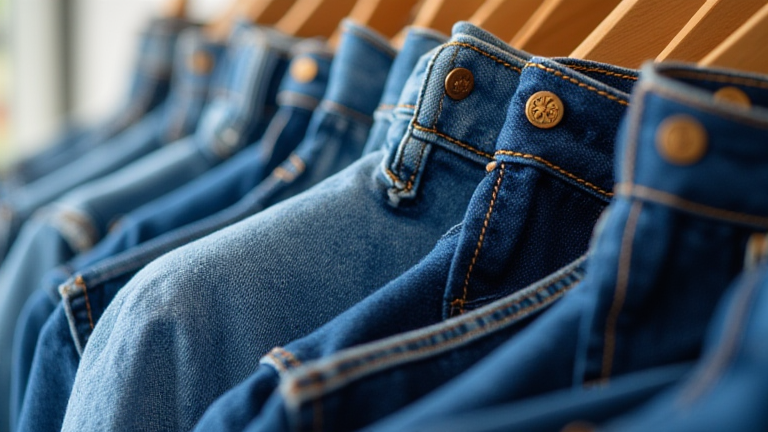
TL;DR: Used denim marketplaces like ThredUp are booming because consumer demand for sustainable fashion collides with a supply-chain glut of premium jeans, creating a price-disruption opportunity. Scalable AI-driven authentication and resale-as-a-service models have turned secondhand denim from a niche thrift habit into a $40B+ global category.
The New Denim Economy: From Landfill to Listing
Denim has always been a wardrobe staple—but it’s also one of the most resource-intensive garments to produce. A single pair of conventional jeans requires roughly 1,800 gallons of water and emits nearly 33 kg of CO2. That environmental weight is now driving a paradigm shift. According to ThredUp’s 2025 Resale Report, the secondhand apparel market is projected to hit $350 billion by 2028, and denim is the fastest-growing sub-category, expanding at a 22% compound annual growth rate—triple the rate of new-denim retail.
If you want to dig deeper, check out our guide on Why I Switched from Sugar to Substitutes: My Main Reason.
ThredUp, the largest online consignment platform, reports that denim listings have grown 47% year-over-year, with premium brands like Levi’s, Wrangler, and Frame accounting for over 60% of volume. The company’s “Resale-as-a-Service” division now powers denim resale for 15 major retailers, including Madewell and Gap, who use ThredUp’s logistics to buy back and re-list used jeans. This isn’t charity—it’s margin. Used jeans sell at 40–60% below retail but carry 70% gross margins for the platform, because sourcing costs are near zero.
Why Denim Specifically? The Perfect Storm
Three forces converge to make denim the ideal resale commodity. First, durability: jeans are built to last a decade, unlike fast-fashion tops that disintegrate. Second, style cycle: the “dad jean” and “baggy fit” revivals have made vintage cuts desirable, not just functional. Third, a supply glut: brands overproduced during the pandemic, leaving warehouses full of unsold stock that now floods liquidation channels—ThredUp captures this inventory at pennies on the dollar.
Expert insight from Alison Bringé, Chief Marketing Officer at ThredUp, underscores the shift: “Denim is the gateway drug to resale. Once a consumer buys one pair of used jeans, they’re 70% more likely to buy other used categories. We’re seeing repeat denim buyers outpace new-customer acquisition by 2.5x.” She adds that AI-powered “Fit Finder” technology—which predicts sizing from user-uploaded measurements—has reduced return rates on used jeans from 18% to 7%, removing the biggest friction point in online secondhand shopping.
Future Predictions: The Circular Denim Standard
By 2027, expect three structural changes. First, “denim-as-a-subscription” models will emerge: consumers pay a monthly fee for a rotating capsule of four pairs, with ThredUp handling cleaning and resale. Second, blockchain-based digital IDs will tag every pair—encoding wash history, ownership, and material composition—making authentication instant and fraud nearly impossible. Third, major denim mills (like Candiani) will begin manufacturing “designed-for-resale” jeans with detachable buttons and un-dyed warp threads, so that used pairs can be mechanically recycled into new yarn without losing value.
The caveat? Oversupply could deflate prices. If every brand launches buy-back programs simultaneously, the market may face a denim glut by 2029, pushing average resale prices down 15%. But ThredUp’s CEO James Reinhart remains bullish: “The boom isn’t about scarcity—it’s about convenience. The consumer who buys used denim today isn’t a bargain hunter; she’s a climate activist with a credit card. That demographic doesn’t shrink.”
FAQ
Q: Is used denim actually more sustainable than buying new?
A: Yes—extending a pair’s
Leave a Reply