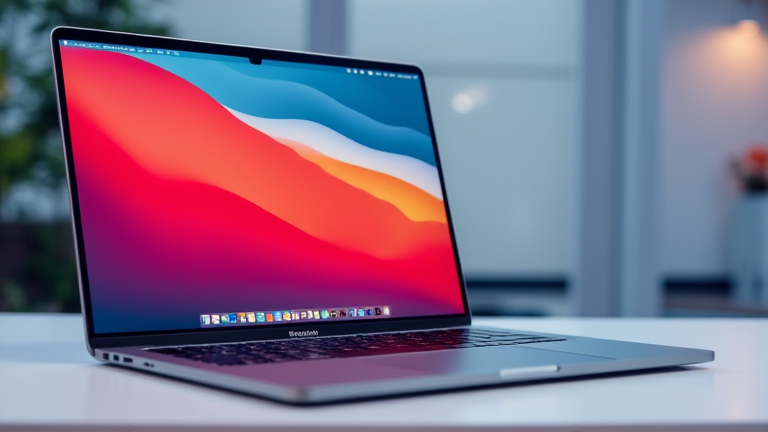
Why the MacBook Pro M3 Max Outperforms the M2 Pro
TL;DR: The M3 Max surpasses the M2 Pro due to its advanced 3-nanometer architecture and significantly higher memory bandwidth, which dramatically accelerates GPU and CPU tasks. This architectural leap allows for superior performance in professional video editing, 3D rendering, and AI workloads while maintaining exceptional power efficiency.
Since the introduction of Apple Silicon, the tech industry has witnessed a rapid evolution in mobile computing capabilities. The transition from the M2 Pro to the M3 Max represents a pivotal moment in this trajectory. While the M2 Pro established a strong foundation for high-performance laptop computing, the M3 Max redefines the boundaries of what a portable device can achieve. This article explores the specific technical advancements, updated specifications, and the broader industry impact of this generational shift.
If you want to dig deeper, check out our guide on Why the Dyson Airwrap Is the Only Hair Styler You Need.
Architectural Advancements and Process Node Efficiency
The core of the M3 Max’s superiority lies in its manufacturing process. While the M2 Pro utilized the 5-nanometer process, the M3 Max leverages the cutting-edge 3-nanometer technology. This reduction in transistor size allows for more transistors to be packed into the same die area, resulting in higher density and improved energy efficiency. The M3 Max features up to 92 billion transistors, a significant increase over its predecessor. This architectural refinement translates directly into better performance per watt, enabling the chip to sustain higher clock speeds for longer periods without throttling due to heat.
Key Specifications and Performance Metrics
When comparing specifications, the differences become stark. The M3 Max offers a CPU with up to 16 cores, consisting of 12 performance cores and 4 efficiency cores. In contrast, the M2 Pro typically featured 10 or 12 cores with a different performance-to-efficiency ratio. The GPU configuration is where the M3 Max truly shines, offering up to 40 cores with a dedicated Neural Accelerator in each core. This hardware-level support for AI tasks provides a substantial boost in machine learning inference and training capabilities. Furthermore, the unified memory bandwidth has been increased to up to 400GB/s, compared to the M2 Pro’s 200GB/s. This doubling of bandwidth is critical for data-heavy applications like 8K video editing and large-scale 3D rendering, ensuring that the GPU is never starved for data.
Industry Impact and Professional Workflows
The implications of these improvements extend beyond raw benchmark numbers. For professional users in industries such as film production, music production, and software development, the M3 Max reduces render times and compile times significantly. This efficiency gain translates into faster turnaround times for projects and lower energy costs for businesses. The enhanced support for external displays, allowing for up to four 6K displays simultaneously, also positions the M3 Max as a superior hub for complex studio setups. As AI integration becomes more prevalent in creative software, the dedicated neural accelerators in the M3 Max ensure that Apple’s ecosystem remains competitive with high-end desktop workstations.
FAQ
Q: Is the M3 Max compatible with older software?
A: Yes, the M3 Max is fully backward compatible with macOS and existing applications, though it may require specific updates to leverage the new neural accelerators for optimal AI performance.
Q: How does the battery life compare to the M2 Pro?
A: Despite the higher performance, the 3-nanometer efficiency allows the M3 Max to maintain or even slightly improve battery life compared to the M2 Pro under similar workloads.
Q: Can the M3 Max handle professional 8K video editing?
A: Absolutely, the increased memory bandwidth and GPU core count allow for smooth, real-time editing of 8K ProRes footage without significant lag or dropouts.
Leave a Reply