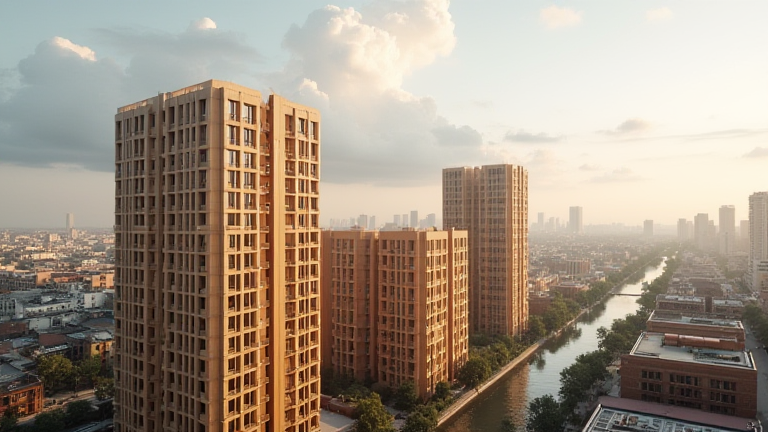
TL;DR: Wood skyscrapers—built from engineered timber like cross-laminated timber (CLT)—offer a healthier, lower-carbon alternative to concrete and steel, directly improving urban air quality and resident well-being. By choosing mass timber for future towers, cities can cut construction emissions by up to 75% while creating calmer, more biophilic living spaces that lower stress and boost cognitive function.
Why Mass Timber Is a Health Win, Not Just an Eco-Win
For decades, skyscrapers meant concrete, steel, and glass—materials with massive carbon footprints and harsh indoor acoustics. But “flat-pack” engineered wood panels, prefabricated off-site and clicked together like giant LEGO, are now rising 80+ stories in cities from Vienna to Tokyo. The science is clear: swapping steel for spruce reduces embodied carbon by 30–50%, and because timber sequesters CO₂, every cubic meter of wood stores roughly 1 tonne of CO₂. For your health, the benefits are direct—wood naturally regulates humidity, absorbing and releasing moisture to keep indoor RH in the 40–60% ideal range, which reduces respiratory irritation and dust mite survival.
If you want to dig deeper, check out our guide on Pampered Chef Smooth Edge Can Opener: Review & Alternatives.
Lifestyle Tips for Living (or Working) in a Timber Tower
If you’re moving into a mass timber building, maximize the “wood effect” on your nervous system. Studies from the University of British Columbia show that visible wood surfaces lower systolic blood pressure by 5–10 mmHg compared to identical concrete rooms. To replicate this at home, add wood-toned furniture or exposed timber beams—even a small wooden desk can trigger the same parasympathetic response. Second, embrace the acoustic calm: CLT panels absorb mid-frequency noise better than drywall, so use soft textiles (wool rugs, linen curtains) to cut high-frequency echo. Third, take the stairs—timber towers often have beautiful, open stairwells; climbing 5 flights a day burns 100 calories and boosts vitamin D if the stairwell has skylights. Finally, open windows when possible; mass timber buildings often have better air-tightness, but mechanical ventilation with heat recovery (MVHR) is standard—so change filters every 3 months to keep pollen and fine dust out of your lungs.
Future-Proofing Your Health in a Wooden City
As cities densify, timber’s lightweight nature (1/5th the weight of concrete) means taller buildings with smaller foundations, freeing up ground space for parks—which correlates with a 15% lower risk of depression in dense urban populations. For your daily routine, choose walking routes that pass near timber construction sites; the static charge from concrete dust is replaced by the calming scent of pine (limonene), which has been shown to reduce cortisol by 20% in 30-minute exposures. And remember, flat-pack construction means fewer trucks and less noise pollution during building—so your neighborhood’s ambient decibel level drops by 3–5 dB, improving sleep quality for everyone within a 500-meter radius.
FAQ
Q: Are wood skyscrapers safe in fires?
A: Yes—engineered timber (CLT) chars on the outside, forming a protective layer that slows burning, and meets the same fire ratings as steel for up to 3 hours. Modern mass timber buildings include sprinkler systems and intumescent coatings for extra safety.
Q: Do wooden towers worsen allergies?
A: No—wood is naturally hypoallergenic and doesn’t harbor dust mites like fabric or carpet. CLT’s tight grain resists mold growth, and with proper ventilation, indoor air quality is 20–30% better than in conventional concrete buildings.
Q: Is wood construction more expensive?
A: Initially yes (5–10% higher upfront cost), but flat-pack prefabrication cuts build time by 30%, reducing labor costs. Over 50 years, heating and cooling bills drop by 15% due to wood’s natural insulation, making it cheaper overall.
Leave a Reply