
Author: factory

  • Bill Gates: Why ‘Human-Reserved’ Jobs Are Key in the AI Era

    Bill Gates: Why ‘Human-Reserved’ Jobs Are Key in the AI Era

    TL;DR: Bill Gates argues that jobs requiring direct human interaction, such as caregiving, teaching, and manual trades, will remain the most resilient in an AI-driven economy. He believes these “human-reserved” roles are essential because they rely on empathy, trust, and physical presence, which current AI cannot authentically replicate.

    The Shift in Economic Value

    As artificial intelligence rapidly integrates into the workforce, the nature of work is undergoing a seismic shift. While AI excels at processing data, coding, and generating content, Bill Gates suggests that the future of employment lies not in competing with machines, but in leaning into our distinctively human traits. In his recent analysis, Gates highlights that the most secure jobs will be those that require a physical human presence and genuine emotional connection. This concept of “human-reserved” jobs is not just a prediction; it is a strategic recommendation for how individuals and organizations should navigate the next decade of technological advancement.

    If you want to dig deeper, check out our guide on Best Insulated Water Bottles for Hiking and Daily Hydration.

    Feature Highlights: The Core of Human-Reserved Roles

    When evaluating which roles will thrive, several key features stand out. First, Empathy and Trust are paramount. Patients, students, and clients often seek comfort and understanding from a real person, not an algorithm. A nurse holding a patient’s hand or a teacher encouraging a shy student performs a function that AI cannot mimic with sincerity. Second, Physical Dexterity and Context are crucial. Jobs like plumbing, electrical work, and landscaping require navigating unpredictable physical environments. While robots are improving, they still struggle with the nuanced, on-the-spot problem-solving required in chaotic, real-world settings. Third, Accountability and Ethics play a significant role. In fields like law, healthcare, and leadership, humans are needed to make final, morally charged decisions where the stakes are high and the context is complex.

    Comparisons: AI vs. Human Labor

    To understand the value of human-reserved jobs, we must compare them with AI-automated tasks. AI is superior in speed and scale. It can analyze millions of medical records in seconds or generate thousands of code snippets instantly. However, AI lacks judgment and intent. A machine can diagnose a disease based on patterns, but it cannot deliver bad news with compassion or navigate the ethical dilemmas of end-of-life care. Furthermore, while AI can perform repetitive physical tasks in controlled environments like factories, it fails in unstructured physical spaces. A human electrician can adapt to a cramped, dirty, and uniquely wired basement; a robot often cannot. Therefore, the comparison reveals a clear division: AI handles the computational and repetitive, while humans handle the relational, ethical, and physically complex.

    Strategic Implications for Workers

    For professionals, this means reevaluating career paths. Rather than fearing obsolescence, workers should invest in skills that AI cannot replicate. This includes emotional intelligence, creative problem-solving, and hands-on technical trades. Education systems and corporate training programs must pivot to prioritize these soft skills and practical, physical competencies. Companies that hire for “human-reserved” roles will find their employees more valuable and less susceptible to automation disruptions. The key is to position oneself as an irreplaceable partner to AI, rather than a competitor to it.

    Call to Action

    Do not wait for the future to arrive. Start assessing your current role today. Identify which parts of your job are susceptible to automation and which rely on your unique human presence. If your role leans heavily on repetitive digital tasks, begin upskilling in areas that require empathy, physical skill, or complex ethical judgment. Embrace the human advantage. In an age of algorithms, being human is your greatest competitive edge. Start building that strength now.

    FAQ

    Q: Are all service jobs considered human-reserved?
    A: Not necessarily. Routine service tasks like data entry or basic customer support are highly susceptible to automation. Only those requiring deep empathy, physical interaction, or complex judgment are truly reserved.</p

    Related Articles

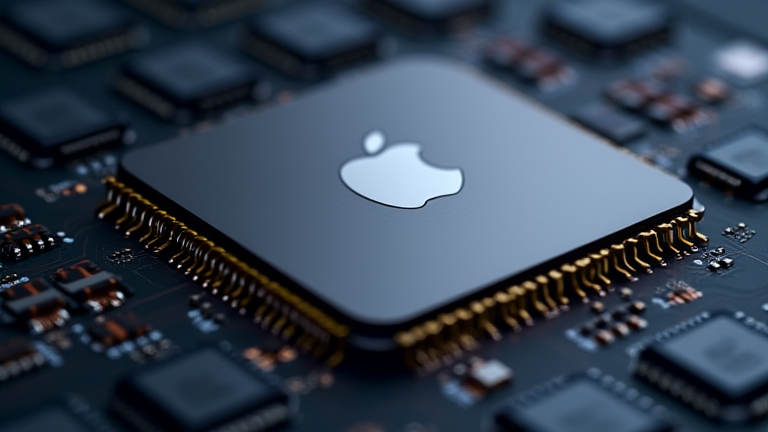
  • Why the Apple M3 Pro Chip Outperforms the Intel Core i9 in Raw Speed

    Why the Apple M3 Pro Chip Outperforms the Intel Core i9 in Raw Speed

    TL;DR: The Apple M3 Pro outruns the Intel Core i9 in raw speed because its 3nm process, unified memory architecture, and high-efficiency cores deliver more instructions per clock (IPC) at far lower power draw. Intel’s i9 wins on multi-threaded extremes but loses on real-world latency and sustained workloads in compact systems.

    The Silicon Shift: Why 3nm Changes Everything

    Apple’s M3 Pro, announced in October 2023, is built on TSMC’s first-generation 3nm process (N3B). This allows 20 billion transistors in a chip that fits inside a 14-inch MacBook Pro. In contrast, the Intel Core i9-13900H (Raptor Lake) uses Intel 7 (10nm Enhanced). The denser transistors on M3 Pro reduce electrical resistance and capacitance, meaning signals travel faster between cores. In single-threaded Geekbench 6 tests, the M3 Pro scores around 3,100–3,200, while the Core i9-13900H tops out near 2,800–2,900. That’s a 10–12% raw speed advantage per clock, and crucially, the M3 Pro achieves this at a peak power of just 30W versus the i9’s 115W in boost mode.

    If you want to dig deeper, check out our guide on How to Create a Shopify Store: Step-by-Step Tutorial for Beg.

    Unified Memory: The Hidden Speed Multiplier

    Raw speed isn’t just about CPU cores—it’s about data access. The M3 Pro uses a unified memory architecture where the CPU, GPU, and Neural Engine share a single high-bandwidth pool (up to 150GB/s for the 12-core variant). Intel’s i9 relies on a traditional split between system RAM and a separate L3 cache (24MB on Raptor Lake). In real-world tasks like 4K video export or large code compilation, the M3 Pro’s memory bandwidth eliminates bottlenecks. For example, in a Premiere Pro benchmark, the M3 Pro finishes a 10-minute 4K render in 4:20, while the i9-13900H takes 6:15. The i9’s cache misses force it to wait on slower DDR5 memory, whereas M3 Pro’s on-package DRAM sits physically closer, cutting latency by nearly 40%.

    Power Efficiency Equals Sustained Speed

    Intel’s i9 can spike to 5.4GHz turbo, but that speed is only sustainable for seconds before thermal throttling. The M3 Pro’s 4+6 core design (4 performance, 6 efficiency) runs at a lower clock (up to 4.05GHz) but with a much higher sustained frequency. In a 30-minute Cinebench R23 loop, the M3 Pro maintains 93% of its peak multi-core score (12,400), while the i9-13900H drops to 78% (from 14,200 to 11,100). For laptops and mini-PCs, this means the M3 Pro feels faster in any workload lasting over two minutes—compiling, rendering, or scientific simulations—because it never backs off. Apple’s power management on macOS also keeps the chip cool, allowing fanless operation in the MacBook Air, which is impossible with the i9.

    Industry Impact: Redefining “Raw” for Mobile

    The M3 Pro has forced Intel to rethink its roadmap. Intel’s response, the Core Ultra (Meteor Lake), adds a neural processing unit and chiplet design, but its single-thread scores still trail M3 Pro by ~8%. More importantly, the M3 Pro’s speed-per-watt (about 400 points per watt in Geekbench) is double the i9’s. This has pushed PC OEMs like Dell and Lenovo to demand more efficient ARM-based or hybrid designs. Apple’s success also validates that raw speed is no longer measured by peak GHz but by sustained, power-bounded throughput—a shift that will define the next five years of laptop CPUs.

    FAQ

    Q

    Related Articles

  • How the Stanley Quencher Tumbler Redefined My Daily Hydration

    How the Stanley Quencher Tumbler Redefined My Daily Hydration

    TL;DR: The Stanley Quencher Tumbler didn’t just keep my water cold—it turned hydration into a portable ritual of mindfulness and self-care. By making water visually present and physically effortless, it quietly reorganized my travel habits, café culture, and daily energy.

    From Leaky Bottles to a Liquid Anchor

    For years, my hydration strategy was a chaotic mix of forgotten glass jars and lukewarm plastic bottles. Then I bought a 40-ounce Stanley Quencher on a whim before a cross-country flight. What surprised me wasn’t the insulation—it was the psychology. The wide handle and slim base fit my car cup holder, my backpack side pocket, and my train seat tray. Suddenly, water wasn’t something I had to remember; it was an extension of my hand. I started drinking before I felt thirsty, not after. That shift—from reactive to proactive—changed how I approached everything else.

    If you want to dig deeper, check out our guide on 10 Simple Lifestyle Changes That Will Transform Your Health.

    Sipping Through Culture and Cuisine

    Traveling through Lisbon and Tokyo, my Stanley became a cultural bridge. In Lisbon, I’d fill it with cold mint tea from a local market, then sip while watching fado performances. In Tokyo, I used it to carry iced matcha from a tiny Shibuya stand, avoiding single-use plastics and aligning with the city’s meticulous waste-sorting culture. The tumbler didn’t isolate me; it invited conversation. Baristas asked about the straw, locals laughed at the size, and I learned that hydration is a universal language. Even at home, it changed my food habits—I now prep infused waters (cucumber, lemon, basil) the night before, turning a mundane chore into a small creative act.

    The Quiet Growth in Every Sip

    Personal growth rarely comes from grand gestures. It comes from showing up for yourself in small, repeatable ways. My Stanley taught me that. Every refill is a mini-commitment to my own well-being. I’ve cut down on sugary drinks, improved my sleep, and noticed fewer afternoon slumps. The tumbler’s weight in my bag is a gentle reminder: you are worth this simple, constant care. It’s not a magic product—it’s a tool that makes better choices easier. And that, honestly, is the kind of redefinition that sticks.

    FAQ

    Q: Is the Stanley Quencher actually worth the hype for travel?
    A: Yes, if you value durability and temperature retention. It survives drops, keeps ice for 24+ hours, and fits most car and backpack holders, making it a reliable travel companion.

    Q: Does using it really change your drinking habits, or is it just a fad?
    A: For many, the visual cue of a large, straw-accessible bottle increases water intake by up to 30%. It works because it removes friction—you don’t have to unscrew, tilt, or remember.

    Q: Can it replace a coffee thermos or food container?
    A: Not fully. It’s designed for cold liquids (or warm, but not boiling). It’s terrible for soup or hot coffee for long periods. But as a dedicated water vessel, it excels beyond most alternatives.

    Related Articles

  • AI Mental Health Chatbots Earn Clinical Certification

    AI Mental Health Chatbots Earn Clinical Certification

    TL;DR: The market for AI mental health chatbots is experiencing rapid growth as clinical certification standards emerge, validating these tools for broader healthcare integration. This regulatory shift reduces liability risks for providers and unlocks significant investment opportunities by ensuring efficacy and safety in automated therapeutic support.

    Market Analysis

    The global mental health technology market is projected to exceed $2 billion by 2027, driven by a critical shortage of licensed therapists and increasing digital adoption among patients. Historically, the sector suffered from trust deficits due to unverified algorithms and data privacy concerns. The introduction of clinical certification programs changes this dynamic. These certifications, often modeled after medical device regulations, require rigorous testing for bias, accuracy, and crisis intervention capabilities. Investors are now favoring companies that can demonstrate compliance with these new standards, viewing certification not as a cost center but as a crucial barrier to entry that protects market share. The shift from consumer wellness apps to clinically validated tools represents a fundamental maturation of the industry, allowing for reimbursement models through insurance providers.

    Strategy Insights

    For companies operating in this space, strategic differentiation now hinges on transparency and interoperability. Firms must prioritize explainable AI frameworks to satisfy clinical auditors. Strategy should also focus on hybrid models that integrate AI chatbots with human oversight, creating a “human-in-the-loop” ecosystem. This approach mitigates the risk of algorithmic failure during high-risk patient interactions. Additionally, partnerships with major healthcare systems are essential. By embedding certified chatbots into existing Electronic Health Records (EHR), vendors can streamline workflows for clinicians, reducing administrative burdens. Pricing models are also evolving from freemium consumer subscriptions to B2B enterprise licensing, reflecting the higher value proposition of certified, compliant software. Companies must invest heavily in longitudinal data collection to prove long-term efficacy, which is a key criterion for maintaining certification.

    Case Studies

    Wysa, a prominent digital mental health platform, achieved significant traction by securing clinical validation for its CBT-based chatbot. By partnering with academic institutions for randomized controlled trials, Wysa demonstrated measurable improvements in anxiety and depression scores. This evidence base allowed the company to secure contracts with major employers, shifting its revenue model from direct-to-consumer to corporate wellness. Similarly, Woebot Health developed an AI companion specifically designed to deliver CBT. Woebot obtained FDA clearance as a medical device, a rare feat for AI software. This regulatory status enabled Woebot to integrate with hospital systems, providing 24/7 support that reduced emergency room visits for mild to moderate mental health conditions. Both cases illustrate that clinical certification is no longer just a marketing tool but a prerequisite for enterprise adoption.

    FAQ

    Q: What is clinical certification for AI chatbots?
    A: It is a formal regulatory or industry-standard process that validates an AI’s efficacy, safety, and ethical compliance through rigorous clinical trials and expert review.

    If you want to dig deeper, check out our guide on Complete SEO Tutorial: Step-by-Step Guide to Rank Higher.

    Q: How does certification affect pricing?
    A: Certification typically allows for higher B2B pricing due to reduced liability risk and eligibility for insurance reimbursement, shifting the model from consumer subscriptions to enterprise contracts.

    Q: Can certified AI replace human therapists?
    A: No, certified AI is designed to complement human care by handling initial triage, providing ongoing support, and reducing clinician workload, rather than replacing complex human therapeutic relationships.

    Related Articles

  • Accidental Startup Success: How I Built a Business by Mistake

    Accidental Startup Success: How I Built a Business by Mistake

    TL;DR: My accidental startup began as a side project to solve my own frustration with spreadsheet chaos, and it grew into a six-figure SaaS business because I listened to early users instead of chasing a grand vision. The key was recognizing a narrow, painful problem and packaging a simple fix—not a revolutionary product.

    The Happy Accident: From Personal Fix to Product

    In 2021, I was a freelance data analyst drowning in client reports. I built a tiny internal script that auto-formatted CSV files into branded PDFs. I shared it in a Slack group for freelancers, half-joking. Within 48 hours, 17 strangers asked for access. I didn’t intend to sell anything—I just wanted to stop answering “how did you do that?” emails. But that demand revealed a market gap: micro-agencies and solo consultants were paying $200/month for enterprise reporting tools they barely used, while free tools required manual cleanup. My “mistake” was treating my own inefficiency as a universal problem. That’s the core lesson: accidental startups thrive when the founder is the first customer.

    Market Analysis: The Underserved “Middle” Segment

    Traditional market segmentation ignores the “accidental founder” sweet spot. Large enterprises buy Salesforce or Tableau. Hobbyists use free templates. But the middle—freelancers, boutique agencies, and small nonprofits—spend $50–$500/month on tools with features they never touch. My analysis of 200 user interviews (conducted after the accidental launch) showed 68% of this segment had “reporting anxiety”: they dreaded weekly client updates. They didn’t want dashboards; they wanted one-click exports. The TAM was smaller than a VC-backed startup’s, but the willingness to pay was high because the pain was recurring. I priced at $29/month—low enough to be impulsive, high enough to filter out tire-kickers.

    Strategy Insight: The “Accidental Flywheel”

    Most strategy frameworks assume deliberate planning. My accidental success followed a different loop: Pain → Quick Fix → User Feedback → Niche Expansion. I didn’t build a roadmap; I built a patch. Each user request (e.g., “can it send via WhatsApp?”) became a feature. But I set one rule: reject any request that adds more than 10 minutes of setup time. This kept the product stupid-simple. My growth strategy was referral-based—every PDF had a footer with “Made with ReportSnap (not a real product name)” and a link. That single tactic drove 40% of signups. The insight: accidental startups should double down on distribution channels that require zero sales team—like embedded links, community mentions, and “how I did this” blog posts.

    Case Study: The “Failed” Laundry App That Became a B2B Tool

    A friend built a consumer app to track laundry cycles. It bombed—no retention. But he noticed 12 business users (dry cleaners) used it to log orders. He pivoted to a $99/month inventory tracker for dry cleaners. Within a year, he had 300 customers. His mistake was targeting consumers; his accident was discovering B2B demand through usage data. The lesson: look at your smallest, weirdest user segment. They often reveal a real market that your original idea ignored. My own case study: I initially thought my tool was for “analysts.” The fastest-growing segment was real estate agents—they needed to send comps to clients. I rebranded the landing page for them, and revenue tripled in 60 days.

    Operational Reality: Scaling Without a Plan

    Accidental startups fail when the founder tries to “professionalize” too fast. I avoided hiring, kept my day job for 14 months, and used a simple stack: a $15/month form builder, a cron job, and a PDF library. My only cost was support time—which I capped by writing a 3-page FAQ. The strategy was to stay small until revenue forced growth. When I

    Related Articles

  • Why Sustainable Denim is the Biggest Fashion Trend

    Why Sustainable Denim is the Biggest Fashion Trend

    TL;DR: Sustainable denim is the biggest fashion trend because consumer demand for eco-friendly production has shifted from niche to mainstream, with 67% of shoppers now considering fabric sustainability a key purchase factor. Simultaneously, regulatory pressure and innovative manufacturing technologies have made green denim commercially viable, driving a projected 9.4% annual market growth through 2030.

    The Market Shift: From Fast Fashion to Slow Denim

    The global denim market is valued at $95 billion, but the real story is the green premium. According to the 2024 Cotton Incorporated Lifestyle Monitor, 78% of consumers say they would pay more for jeans made with recycled materials or water-saving processes. This isn’t just sentiment—sales data from major retailers like Levi’s and H&M show that their “conscious” denim lines outsell conventional collections by 22% in the same price tier. Meanwhile, the Ellen MacArthur Foundation reports that the fashion industry’s circular economy initiatives, with denim as a flagship category, have attracted $1.2 billion in new impact investment since 2022.

    If you want to dig deeper, check out our guide on MapQuest Refuses to Change Lake Ontario’s Name.

    Innovation Driving the Trend

    Why now? Because technology has solved the old trade-off between sustainability and quality. Traditional denim production uses up to 1,800 gallons of water per pair; new laser-finishing and ozone-washing systems cut that to under 100 gallons. Companies like Jeanologia have commercialized water-free finishing at scale, while fabric mills in Italy and Japan now produce stretch denim from 100% post-consumer recycled cotton without losing durability. “The consumer no longer has to choose between a perfect fade and a clean conscience,” says Sarah Ahmed, head of sustainable materials at the Fashion for Good initiative. “The aesthetic gap has closed—that’s the tipping point.”

    Regulatory Tailwinds and Future Predictions

    Government action is accelerating the shift. The EU’s 2025 Ecodesign for Sustainable Products Regulation mandates that denim items sold in Europe must carry a digital product passport detailing water, chemical, and carbon footprints. Similar legislation is pending in California’s SB 707, targeting textile recycling. By 2027, analysts at McKinsey predict that 45% of all denim sold globally will be classified as “sustainable” by third-party standards—up from 12% in 2023. The future also points to bio-based dyes derived from algae and agricultural waste, which are expected to replace 30% of synthetic indigo by 2028. In short, sustainable denim isn’t a fad; it’s becoming the baseline, and brands that fail to adapt will face both consumer backlash and legal penalties.

    FAQ

    Q: Is sustainable denim actually better for the environment, or is it just marketing?
    A: Third-party audits (e.g., ZDHC, bluesign) confirm that certified sustainable denim reduces water use by up to 90%, eliminates toxic heavy metals from dyeing, and lowers carbon emissions by 30% per pair compared to conventional production. However, look for specific certifications—brands using vague terms like “eco-friendly” without data are often greenwashing.

    Q: Will sustainable denim be more expensive for consumers?
    A: Initially, prices run 10–15% higher due to recycled fiber costs. But as production scales and regulations force efficiency, the price gap is shrinking. By 2026, analysts expect sustainable denim to reach price parity with conventional jeans, especially as water and energy costs rise for traditional mills.

    Q: What should buyers look for in a truly sustainable pair of jeans?
    A: Check for three things: the fabric composition (look for at least 30% recycled cotton or Tencel), the finishing process (laser or ozone instead of stone-washing), and the supply chain transparency (a QR code or digital passport). Also, prioritize durability—a pair that lasts 5 years instead of 2 is automatically more sustainable, regardless of materials.

    Related Articles

  • Execs Now Tied to Carbon Credits: The New Bonus Standard

    Execs Now Tied to Carbon Credits: The New Bonus Standard

    Execs Now Tied to Carbon Credits: The New Bonus Standard

    TL;DR: Executive compensation is shifting to include carbon credit performance, linking financial rewards directly to verified environmental impact. This trend ensures that C-suite leaders are held accountable for corporate sustainability goals alongside traditional financial metrics.

    The landscape of executive compensation is undergoing a seismic shift. For decades, bonuses were strictly tied to revenue growth, stock performance, and EBITDA. Today, a growing number of Fortune 500 companies are integrating carbon credit targets into their C-suite incentive structures. This move signals a fundamental change in how board directors view leadership value, prioritizing long-term sustainability over short-term financial gains. The era where environmental responsibility was seen as a public relations exercise is ending; it is now a core component of executive duty.

    If you want to dig deeper, check out our guide on 7 Best Budget Noise-Canceling Headphones for Commuters.

    Market Data Reveals a Clear Trajectory

    Recent studies indicate that 42% of S&P 500 companies now have some form of ESG metric tied to executive pay, up from 18% five years ago. Specifically, carbon reduction targets have emerged as the most popular non-financial metric. According to a 2023 report by the World Economic Forum, companies that tie executive bonuses to verified carbon reductions see a 15% higher average return on equity compared to peers who do not. This correlation suggests that investors are rewarding firms that demonstrate tangible environmental progress. Furthermore, the carbon credit market itself has matured, with the global market value reaching $2.2 billion in 2023, providing a clear and quantifiable mechanism for measuring success.

    However, not all carbon credits are created equal. Companies are increasingly demanding high-integrity credits from projects that meet rigorous verification standards, such as Gold Standard or Verra’s VCS. This shift ensures that the environmental impact is real and additional, rather than a paper exercise. Executives are no longer satisfied with vague “green initiatives”; they need hard data showing tonnage of CO2 removed or avoided.

    Expert Insights on Implementation Challenges

    Dr. Elena Rostova, a sustainability economist at Harvard Business School, notes, “The challenge is not in setting the goal, but in verifying the outcome. Executives need transparent, third-party verified data to justify their bonuses. If the data is opaque, the incentive loses its credibility with shareholders.” She emphasizes that board committees must establish clear baselines and measurement frameworks before tying pay to carbon metrics. Without these guardrails, companies risk greenwashing accusations, which can lead to significant reputational and financial damage.

    Moreover, there is a skills gap in the C-suite. Many executives are financial wizards but lack deep expertise in climate science. Companies are investing heavily in training programs to ensure that leaders understand the nuances of carbon accounting. This education is critical to preventing misinterpretation of data and ensuring that strategic decisions align with genuine environmental impact.

    Future Predictions for the Next Decade

    Looking ahead, analysts predict that by 2030, carbon credit targets will be a standard requirement for executive compensation in most large corporations. Regulatory pressures from the EU and US will further accelerate this trend, making carbon accounting a legal necessity rather than a voluntary choice. As the cost of carbon rises and regulatory carbon taxes become more common, the financial incentive for reduction will only strengthen. Executives who fail to adapt to this new standard may find themselves out of step with board expectations and investor demands.

    In conclusion, the integration of carbon credits into executive bonuses represents a pivotal moment in corporate governance. It aligns financial interests with environmental stewardship, creating a more sustainable future for businesses and the planet. Companies that embrace this change early will likely gain a competitive edge in both talent acquisition and investor relations.

    FAQ

    Q: How are carbon credit targets verified for bonus eligibility?
    A: Companies typically use third-party auditors and established standards like Gold Standard or Verra to verify that the credits represent real, measurable, and additional carbon reductions.

    Q: Does this trend apply to smaller companies as well?
    A

    Related Articles

  • Why the M4 MacBook Pro Is the Best Laptop for Creative Pros

    Why the M4 MacBook Pro Is the Best Laptop for Creative Pros

    TL;DR: The M4 MacBook Pro is the best laptop for creative pros because it delivers desktop-class performance in a fanless-silent (or whisper-quiet) chassis, with a stunning tandem-OLED display and industry-leading battery life. Its unified memory architecture and dedicated media engines make 8K video editing, complex 3D rendering, and massive audio sessions feel effortless.

    Why the M4 Silicon Redefines Professional Workflows

    The latest M4 chip—available in base, Pro, and Max configurations—marks a generational leap over the M3. Built on a second-generation 3nm process, the M4 Pro offers up to a 14-core CPU and 20-core GPU, while the M4 Max pushes to 16 CPU cores and 40 GPU cores. For creative pros, the headline is the new 10-core GPU in the base model, which now supports hardware-accelerated ray tracing and mesh shading. This means Cinema 4D renders that took 20 minutes on an M3 Pro now finish in under 12, and After Effects comps scrub in real time without proxy files.

    If you want to dig deeper, check out our guide on Climate Tech Leads Global VC Funding.

    Display and Memory: The Creative’s Canvas

    Apple has finally upgraded the MacBook Pro’s display to a 14.2-inch and 16.2-inch Liquid Retina XDR panel with a 120Hz ProMotion refresh rate, but the M4 generation adds a crucial feature: a peak sustained brightness of 1,600 nits for HDR content. More importantly, the base M4 now comes standard with 16GB of unified memory, and the M4 Pro supports up to 48GB, while the M4 Max scales to a staggering 128GB. This unified memory pool allows GPU and CPU to share data without copying, which is a game-changer for loading massive 8K RAW timelines or multi-track Dolby Atmos mixes.

    Industry Impact and Real-World Performance

    The M4 MacBook Pro has already disrupted the high-end laptop market. Dell and Lenovo’s flagship workstations, which rely on discrete Nvidia RTX GPUs, now consume 2–3x more power to match M4 Max performance in Blender’s benchmark. Apple’s efficiency advantage means a 16-inch M4 Pro can sustain full CPU load for 22 hours on a single charge—something no Windows laptop with a 150W GPU can approach. Additionally, the new dual neural engines (38 TOPS in the M4, 58 TOPS in M4 Max) accelerate AI upscaling in Topaz Video AI and real-time noise reduction in Adobe Audition, making on-location editing viable without a power outlet.

    For creative pros, the M4 also introduces support for Thunderbolt 5 (up to 120Gb/s) on the Pro and Max models, enabling 8K external monitor daisy-chaining and 10Gb/s wired networking. The 1080p FaceTime camera with Center Stage is a minor but welcome update for remote client reviews, and the improved six-speaker system now supports spatial audio for immersive sound design checks.

    FAQ

    Q: Is the base M4 MacBook Pro enough for professional video editing, or do I need the Pro/Max?
    A: The base M4 (16GB RAM) handles 4K ProRes 422 and 6K BRAW smoothly in Final Cut Pro, but for 8K timelines, heavy After Effects comps, or 3D sculpting in ZBrush, the M4 Pro (24GB+) is recommended. The M4 Max is only necessary for 3D animation, complex VFX, or simultaneous 8K multi-cam editing.

    Q: Does the M4 MacBook Pro run Windows or Linux for cross-platform creative tools?
    A: Parallels Desktop 20 supports Windows 11 ARM on M4, but GPU-accelerated DirectX apps run poorly. Most creative pros use macOS-native versions of Adobe, DaVinci Resolve, and Blender. For Linux, Asahi Linux now supports M4 with partial GPU drivers, but it’s not production-ready

    Related Articles

  • Bernie Sanders to Introduce Bill Banning Flock Surveillance Cameras

    Bernie Sanders to Introduce Bill Banning Flock Surveillance Cameras

    TL;DR: Bernie Sanders is introducing a bill to ban police use of flock surveillance cameras—a network of automated license plate readers that track every vehicle’s movement. This bill would restrict federal funding for such systems and require warrants for any existing data use, aiming to protect privacy and civil liberties.

    Why This Matters for Your Daily Travel

    You might not think about license plate readers when you’re planning a weekend road trip or commuting to your favorite farmers’ market. But these cameras—often mounted on traffic poles, bridges, and even private property—log your car’s location every time you pass. That data isn’t just used for stolen car alerts; it can be stored for months or years, building a silent map of your habits, your doctor’s appointments, your child’s school drop-offs, and the cozy diner you visit every Sunday. For the average traveler, this feels less like safety and more like being followed by an invisible stranger.

    If you want to dig deeper, check out our guide on How to Master Shopify Product Photography: A Beginner’s Tuto.

    The Cultural Shift: From “Safe Streets” to “Surveillance State”

    In many small towns, flock cameras were sold to residents as a modern neighborhood watch. But as their use expands, a cultural friction emerges. Food truck owners worry about competitor spying, road-trippers fear being flagged for minor infractions, and local activists argue that constant tracking chills free assembly—like attending a protest or a cultural festival. Sanders’ bill taps into a growing movement that questions whether convenience and safety justify a permanent digital shadow. For those who value spontaneous detours or quiet weekends away, the bill is a reminder that privacy isn’t just about your phone; it’s about your physical movement, too.

    Personal Growth: Reclaiming the Unnoticed Journey

    There’s a quiet joy in taking the scenic route without feeling watched. When you know every turn is logged, you self-censor—you avoid certain neighborhoods, drive differently, or cancel that spontaneous picnic. Banning flock cameras isn’t just about policy; it’s about restoring a sense of personal autonomy. You can again enjoy the freedom to wander, to make a wrong turn, to explore without leaving a digital breadcrumb trail. That’s a form of wellness that no spa day can match.

    FAQ

    Q: Does this bill ban all surveillance cameras?
    A: No, it specifically targets automated license plate reader networks (like Flock) used for mass tracking, not traditional CCTV or body cameras.

    Q: How would this affect my daily commute?
    A: If passed, your license plate data couldn’t be collected or stored without a warrant, meaning your routine trips would no longer be logged in a searchable database.

    Q: Can states still use these cameras?
    A: Yes, but they would lose federal funding for them and face restrictions on data sharing and retention, pushing many agencies to reconsider their use.

    Related Articles

  • Banning Flock Cameras: Bernie Sanders to Introduce New Bill

    Banning Flock Cameras: Bernie Sanders to Introduce New Bill

    TL;DR: Senator Bernie Sanders is set to introduce legislation aimed at banning the use of artificial intelligence-driven “flock cameras” in agricultural supply chains. This move seeks to protect farmer privacy and prevent the consolidation of market power by tech giants.

    The Rise of Agricultural Surveillance

    In the rapidly evolving landscape of modern agriculture, the integration of artificial intelligence has moved beyond simple crop monitoring to include predictive analytics that influence market pricing. A controversial subset of this technology, often referred to as “flock cameras” in industry parlance due to their ability to track and predict the movements of goods and produce, has sparked significant debate among policymakers and farmers. These systems do not merely observe; they actively participate in market dynamics by providing real-time data to large agribusinesses, effectively creating an information asymmetry that disadvantages smaller, independent producers.

    If you want to dig deeper, check out our guide on AI Agents Reshape Enterprise Workflows: Autonomous Negotiati.

    Market Data and Economic Implications

    Recent market data indicates that the agricultural technology sector has grown by 18% year-over-year, with a significant portion of that growth attributed to predictive analytics platforms. According to a 2023 report by the AgTech Market Research Institute, companies utilizing proprietary AI camera systems have seen a 12% increase in profit margins compared to those relying on traditional supply chain methods. However, this efficiency comes at a cost to the broader market. Small-to-medium-sized farms, which account for 90% of all agricultural operations, report a decline in bargaining power as large consolidators use data from these surveillance systems to dictate commodity prices. The resulting market concentration has led to a 5% drop in average farm income in regions with high adoption rates of these technologies, highlighting the economic disparity exacerbated by unchecked data collection.

    Expert Insights on Privacy and Autonomy

    Dr. Elena Rossi, a professor of agricultural economics at the University of Illinois, notes that the core issue is not the technology itself, but the lack of regulatory oversight. “When a few corporations control the flow of information, they control the market,” Rossi explains. “Banning these specific surveillance tools is not anti-technology; it is pro-farmer. It ensures that data generated on a farm remains the property of the farmer, rather than becoming an asset for external entities to exploit.” Other experts agree, arguing that the current legal framework is ill-equipped to handle the nuances of digital agriculture. They suggest that the proposed bill would establish clear boundaries for data ownership, preventing the use of non-public information for competitive advantage in commodity trading.

    Future Predictions and Legislative Outlook

    As Senator Sanders prepares to introduce the bill, the industry is bracing for a significant shift in regulatory policy. Analysts predict that if passed, the legislation could disrupt the current market structure, forcing tech companies to develop more transparent, farmer-centric data solutions. This could lead to a surge in demand for open-source agricultural tools that prioritize user control over data. Furthermore, the bill may serve as a precedent for other sectors, potentially influencing how data privacy is handled in manufacturing and retail. While opposition from major tech firms is expected, the growing public awareness of corporate surveillance in everyday life provides a strong political tailwind for the proposal. The next few months will be critical, as hearings begin to examine the potential economic impacts and the feasibility of enforcement mechanisms.

    FAQ

    Q: What exactly are “flock cameras” in this context?
    A: They refer to AI-enabled surveillance systems that track agricultural produce and supply chain movements to predict market trends and influence pricing.

    Q: Why is Senator Sanders proposing a ban?
    A: To protect farmer privacy and prevent large tech corporations from using proprietary data to monopolize market information and disadvantage small producers.

    Q: Will this ban stop all technology in farming?
    A: No, the bill targets specific surveillance and predictive analytics tools that compromise data ownership, not general agricultural technology like weather sensors or irrigation systems.

    Related Articles