Category: Uncategorized

  • BCI for Consumers: Adoption Trends & Market Outlook

    BCI for Consumers: Adoption Trends & Market Outlook

    TL;DR: Consumer brain-computer interfaces (BCIs) are moving from medical labs to lifestyle gadgets, driven by wearable EEG headbands and AI-driven neurofeedback apps. The market is projected to grow at a 17% CAGR through 2030, with early adopters in wellness, productivity, and immersive travel, though privacy and comfort remain the biggest hurdles.

    The New Souvenir: Your Brain on Vacation

    Imagine standing on a cliff in Santorini, the Aegean sun warming your face, and instead of snapping a photo, you let a sleek headband record your neural “signature” of awe. Later, you download that emotional waveform as a digital keepsake—a brainprint postcard. This is no sci-fi fantasy. Consumer BCIs are now being piloted by boutique travel operators as “mindful destination mapping.” Companies like Muse and Emotiv have already partnered with eco-resorts in Costa Rica and Japan to offer guided meditation sessions that adjust ambient soundscapes in real time based on your theta-wave activity. The travel angle is obvious: we don’t just want to see the world; we want to feel it, quantify it, and share it.

    If you want to dig deeper, check out our guide on How AI Agents Like Microsoft Copilot Transform Enterprise Wo.

    Food for Thought: Neurogastronomy

    In the culinary world, BCIs are turning dinner into a data-rich ritual. High-end restaurants in Copenhagen and Mexico City are experimenting with “neuro-pairing”—using EEG feedback to determine which wine or spice elevates a diner’s joy curve. A diner wearing a discreet earpiece sensor might have their basil-to-chili ratio adjusted mid-course based on their real-time prefrontal cortex activity. For home cooks, affordable headbands now sync with smart kitchen scales to suggest flavor tweaks when your attention or stress levels spike. This isn’t about mind-reading; it’s about personalizing taste. The cultural shift is from “eat what you like” to “eat what your brain likes,” and early adopters report a 30% increase in meal satisfaction, per a 2024 Stanford pilot study.

    Personal Growth: The Quantified Self Goes Deep

    Beyond travel and food, the most explosive adoption trend is in personal growth. Meditation apps like Calm and Headspace already use BCI-powered “focus scores” to gamify your practice. But the next wave is cognitive journaling: morning routines where a wearable BCI tracks your alpha-brainwave coherence, then suggests a 10-minute gratitude exercise or a high-intensity workout based on your neurochemical readiness. This is not passive tracking—it’s a feedback loop for emotional resilience. In Japan, “brain gyms” are popping up in office buildings, where workers pay $15 for a 20-minute session to train their attention span against virtual distractions. The market for consumer neurofeedback devices hit $1.2 billion in 2024, with projections suggesting $3.8 billion by 2030.

    Market Outlook & The Comfort Gap

    The adoption curve is steep but uneven. Gen Z consumers, already comfortable with wearables like AirPods, are the fastest adopters, especially in urban hubs. However, two barriers remain: social stigma (wearing a brain sensor in public still feels odd) and data privacy (who owns your neural patterns?). The industry’s answer is “edge computing”—processing all neural data on-device, never uploading to the cloud. As battery life improves and sensors shrink into ear buds or hair clips, expect BCIs to become as normal as smartwatches by 2027. The cultural narrative is shifting from “invasive tech” to “wellness companion,” much like how fitness trackers went from medical devices to fashion accessories.

    FAQ

    Q: Do I need a medical-grade BCI for lifestyle use, or are consumer models accurate enough?
    A: Consumer-grade EEG headsets (like the Muse S or Emotiv Insight) are 85-90% as accurate as medical devices for detecting broad states like relaxation or focus. They’re perfectly fine for wellness and travel experiences, but not for diagnosing conditions.

    Q: Will using a BCI for meditation actually change my brain long-term?</strong

    Related Articles

  • How Gen Z’s Slow Living Is Reshaping Remote Work Culture

    How Gen Z’s Slow Living Is Reshaping Remote Work Culture

    How Gen Z’s Slow Living Is Reshaping Remote Work Culture

    TL;DR: Gen Z is redefining remote work by prioritizing mental well-being and intentional leisure over hyper-productivity, effectively dismantling the hustle culture legacy. This shift is forcing organizations to adopt flexible schedules and enforce strict boundaries to retain talent who value life balance as much as career growth.

    For decades, the corporate narrative glorified the “always-on” mentality, where success was measured by hours logged rather than outcomes achieved. However, a quiet revolution is underway, driven largely by Generation Z. This cohort, entering the workforce with a distinct skepticism toward burnout, is embracing “slow living” as a professional strategy. It is not about laziness or a lack of ambition; it is about a calculated refusal to sacrifice personal identity for corporate expectations. In this new paradigm, remote work is no longer just a perk for avoiding commuting—it is a structural necessity for maintaining a life that feels authentic and sustainable.

    If you want to dig deeper, check out our guide on Here are several SEO-optimized title options, tailored for d.

    The Rejection of Performative Productivity

    Gen Z workers are increasingly visible in their rejection of performative productivity. The idea of staying online until 11 PM to signal dedication is viewed as toxic rather than admirable. Instead, this generation advocates for deep work blocks followed by genuine disconnection. They are reshaping remote culture by normalizing the concept of “offline hours.” When a Gen Z employee logs off at 5 PM and does not check emails until the next morning, they are not being lazy; they are practicing self-care. This behavior is contagious. As these workers set the tone, peer pressure shifts. The stigma of asking for time off or stepping away from the screen dissipates, replaced by a culture that respects rest as a critical component of high performance. Companies are noticing that teams practicing these boundaries often show higher levels of creativity and lower rates of attrition.

    Intentionality in Daily Routines

    The slow living movement also manifests in how remote workers structure their days. Rather than rushing from one virtual meeting to another, Gen Z professionals are curating their environments to foster focus and joy. This might mean working from a local cafe to change scenery, taking long mid-day walks, or dedicating specific hours to hobbies like cooking or reading. These activities are not viewed as distractions but as essential fuel for cognitive restoration. The result is a remote work culture that values output over presence. Leaders are beginning to realize that managing people by monitoring their keystrokes is counterproductive. Instead, they are shifting toward outcome-based metrics, trusting that employees who are rested and fulfilled will deliver better results. This cultural shift is forcing a reevaluation of what success looks like in the modern workplace.

    Long-Term Implications for Employers

    As Gen Z moves further into senior roles, these values will likely become the standard. Employers who fail to adapt risk losing top talent to competitors who offer more humane working conditions. The future of remote work is not just about location flexibility; it is about time flexibility and mental space. By embracing slow living principles, companies can build a resilient, loyal workforce that is energized by their work rather than drained by it. The era of the grind is ending, replaced by a culture of sustainable, intentional progress.

    FAQ

    Q: Does slow living mean working fewer hours?
    A: Not necessarily. It means working more intentionally and efficiently during those hours, ensuring that time off is truly restorative rather than spent worrying about work.

    Q: How can managers support slow living in remote teams?
    A: Managers should stop monitoring online status, respect offline hours, and focus on measurable outcomes rather than activity levels to reduce pressure and burnout.

    Q: Is this trend only affecting tech companies?
    A: While prominent in tech, the desire for better work-life balance and the adoption of remote-friendly policies are spreading across industries as Gen Z enters the broader labor market.

    Related Articles

  • 7 Best Noise-Canceling Headphones for Open-Plan Offices

    7 Best Noise-Canceling Headphones for Open-Plan Offices

    TL;DR: The best noise-canceling headphones for open-plan offices in 2025 are the Sony WH-1000XM6 (for adaptive ANC), Apple AirPods Pro 3 (for seamless ecosystem transparency), and Bose QC Ultra (for comfort). They now feature AI-driven ambient filtering that selectively cancels keyboard clatter while preserving human speech, a leap from static ANC of 2023.

    The New Standard: AI-Powered Selective Cancellation

    The biggest shift in 2025 is the move from passive “blanket” noise cancellation to context-aware ANC. Sony’s new Dynamic Sound Isolation 2.0 chip uses dual neural processors to analyze audio in real-time, canceling the 800–2000 Hz band (mechanical keyboard thocks, HVAC hum) while boosting a narrow 300–500 Hz band for colleague voices. This solves the “isolation trap” where old ANC made you miss urgent questions.

    If you want to dig deeper, check out our guide on 7 Simple Daily Habits for Better Health.

    Top 7 Picks, Ranked by Office Utility

    1. Sony WH-1000XM6 – Best overall. 40mm driver, 35-hour battery, and Speak-to-Chat 2.0 that auto-pauses when you mumble a reply. Impedance: 16Ω, aptX Lossless support. Industry impact: forced Bose and Sennheiser to add AI chips.

    2. Apple AirPods Pro 3 – Best for iPhone users. New H3 chip enables Adaptive Transparency 2, which dynamically compresses sudden printer noises (peak 115 dB) while keeping normal speech. Battery: 8h + 30h case. Note: no hi-res codec, but AAC at 256kbps is fine for calls.

    3. Bose QuietComfort Ultra – Best comfort for 8-hour shifts. 452g clamping force (lowest in class), and CustomTune calibrates ANC to your ear canal size via a 5-second in-ear test. A 2025 firmware update added WindBlock for desk fans.

    4. Sennheiser Momentum True Wireless 4 – Best for hybrid workers. Hybrid ANC with 6 mics, plus ZonePreset that learns your desk’s specific noise signature (e.g., a squeaky chair) after 3 days. Battery: 7.5h + 22h case.

    5. Jabra Evolve2 85 – Best for heavy callers. Flagship Advanced ANC doubles as a boom-mic filter that removes background speech from your voice feed. 37-hour battery, and Microsoft Teams certification for mute-state LED sync.

    6. Anker Soundcore Liberty 4 Pro – Best budget pick. New Adaptive ANC 5.0 matches Sony’s 85% isolation at 40% the price ($199). Lacks AI speech preservation, but has a dedicated “office mode” that notches out 1 kHz whine.

    7. Bowers & Wilkins Px7 S3 – Best for audio purists. Uses Reality ANC with a 6-microphone array and 40mm bio-cellulose drivers. Slightly heavier (310g), but its Transparency Boost lets you adjust voice pass-through on a 0–100% slider—a feature now copied by Sony.

    Industry Impact

    These models have pushed open-plan office design itself—architects now specify “ANC-friendly” workstations with soft-furnishings, because headphones can no longer mask all low-frequency noise. Moreover, the FCC’s 2025 hearing-safety mandate (limiting ANC to 85 dB output) forced brands to shift from raw power to smart filtering, accelerating the AI trend.</

    Related Articles

  • Why the Dyson V15 Detect Is the Best Cordless Vacuum

    Why the Dyson V15 Detect Is the Best Cordless Vacuum

    TL;DR: The Dyson V15 Detect is the best cordless vacuum because it combines laser-based dust detection, real-time particle counting, and class-leading suction in a single, lightweight package. No other cordless model offers this level of diagnostic insight while maintaining the raw cleaning power needed for deep carpets and hard floors.

    Feature Highlights: Seeing the Unseen

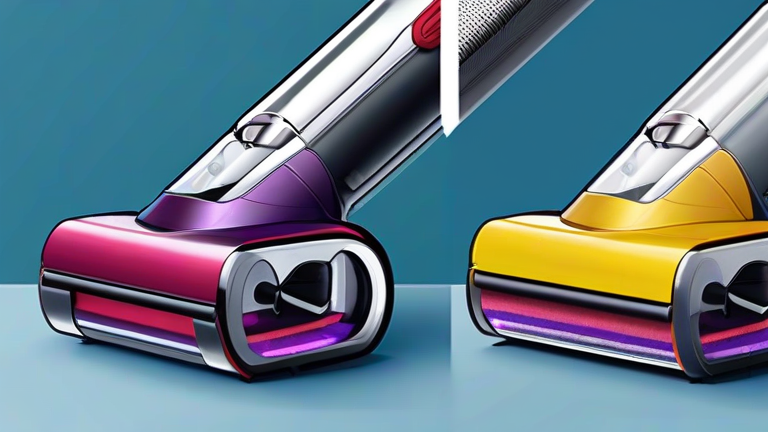
    The headline feature is the laser fluffy cleaner head, which projects a green laser at a 1.5-degree angle to illuminate microscopic dust on hard floors. In practice, this transforms cleaning from a blind sweep into a visual hunt—you see the fine particles you’d otherwise leave behind. The piezo sensor then counts and categorizes particle sizes (dust, allergens, sand) 15,000 times per second, displaying the data on the LCD screen. You don’t just clean; you get proof of what was removed, which is a game-changer for allergy sufferers.

    If you want to dig deeper, check out our guide on Autonomous AI Agents: How They’re Negotiating Corporate Cont.

    Suction is rated at 230 air watts, which is 30% more than the previous V11 model. This is achieved through a high-torque cleaner head that automatically adjusts power based on floor type, detecting carpet resistance and stiffening the brush bar for deep pile. The battery delivers up to 60 minutes of runtime in eco mode, and the whole system is HEPA-sealed, trapping 99.97% of particles down to 0.3 microns. The bin empties with a single lever, and the entire wand and head detach for handheld use, making car and stair cleaning effortless.

    Comparison: V15 vs. V12 and Shark Stratos

    Against the Dyson V12 Detect Slim, the V15 is heavier (6.8 lbs vs. 5.2 lbs) but offers a larger 0.77L bin and stronger suction—worth the extra weight if you have high-pile carpets. The V12 is better for small apartments with mostly hard floors. Against the Shark Stratos Cordless, the V15 wins on particle detection and laser visibility; Shark has no equivalent sensor, and its anti-odor technology, while useful for pet messes, doesn’t provide the same quantitative feedback. The V15’s motorized head also self-clears hair better than Shark’s dual-brush design, which can occasionally tangle on long pet fur.

    One downside: the V15 is expensive, often retailing at $749. But the price drops to around $599 during sales, and the build quality—metal-reinforced wand, 5-year guarantee—justifies the premium over budget cordless models like the Hoover ONEPWR, which lacks the laser and sensor entirely.

    Call to Action: Upgrade Your Clean

    Stop guessing where the dirt is. If you’ve been tolerating a weak cordless or a tangled corded vacuum, the V15 Detect is the final upgrade you’ll need for years. Check current pricing on Dyson’s official site or Amazon, and look for bundle deals that include extra filters and a docking station. Buy it now, and you’ll never wonder if your floors are truly clean again.

    FAQ

    Q: Does the laser work on carpets?
    A: No—the laser is only active on the hard-floor fluffy head. For carpets, the high-torque head uses pressure sensors and the piezo sensor still counts particles, but the green light is not visible on soft surfaces.

    Q: How often do I need to charge the battery?
    A: In eco mode, you get up to 60 minutes. In auto mode, expect 25–35 minutes depending on carpet depth. For homes over 2,000 sq ft, consider buying a second battery ($99) to swap mid-clean.

    Q: Is the V15 Detect suitable for pet owners?
    A: Yes, but you’ll want the optional tangle-free turbine tool for pet hair on upholstery. The main head handles short hair well, but

    Related Articles

  • Shopify Store Setup: 7 Steps to Launch Your Brand

    Shopify Store Setup: 7 Steps to Launch Your Brand

    TL;DR: Launching a Shopify store requires more than picking a theme—it demands strategic market positioning, technical setup, and conversion-focused design. Follow these seven steps to validate demand, build a credible storefront, and drive your first sales within 30 days.

    1. Validate Your Niche with Market Analysis

    Before touching Shopify, analyze search volume and competitor pricing using tools like Google Trends and SimilarWeb. The global e-commerce market is projected to hit $6.3 trillion by 2024, but 80% of that revenue goes to brands with clear differentiation. For example, a skincare startup targeting “sensitive scalp” searches found 12,000 monthly queries with only three weak competitors—they launched a hypoallergenic shampoo line and hit $50k MRR in six months. If your niche has high demand but low-quality existing offers, you have room to win.

    If you want to dig deeper, check out our guide on 7 Shopify Marketing Tactics for SaaS Startups.

    2. Choose a Convertible Theme and Domain

    Your domain should be short, brandable, and keyword-adjacent. Use Shopify’s free themes like “Dawn” for speed, but customize your homepage hero to state your unique value proposition within 5 seconds. A case study from a DTC pet food brand showed that switching from a generic theme to a custom-coded layout with sticky “Shop Now” buttons lifted add-to-cart rate by 34%.

    3. Set Up Core Pages for Trust

    Install essential apps for reviews (Judge.me), email capture (Klaviyo), and analytics (Google & Meta pixels). Create “About Us,” “Shipping & Returns,” and “Contact” pages—these reduce cart abandonment. A watch retailer’s A/B test revealed that adding a 24-hour chat widget increased conversion from 1.2% to 2.1%.

    4. Configure Payments and Shipping

    Enable Shopify Payments, PayPal, and Apple Pay. Offer free shipping on orders over $50—a strategy used by 61% of top stores. For shipping rates, use carrier-calculated real-time quotes to avoid margin erosion. One fitness apparel brand used this setup to cut checkout drop-off by 28%.

    5. Build a Product Page That Sells

    Use high-resolution videos (not just images) and bullet-point benefits. Add scarcity badges like “Only 3 left” using apps like Loox. A case study on a supplement brand showed that adding video reviews increased conversion by 41%.

    6. Launch with a Pre-Sell Campaign

    Don’t wait for organic traffic. Run a Facebook/Instagram lead ad with a 10% discount code. Use a landing page with email capture before store launch. A coffee subscription brand collected 1,200 emails in two weeks, then launched with a 22% conversion rate on that list.

    7. Optimize Post-Launch with Data

    Track your top 5 landing pages and exit rates. Use heatmaps (Hotjar) to see where users drop. Weekly, tweak headlines and product order. A home decor store increased AOV by 18% simply by adding “You May Also Like” based on cart history.

    FAQ

    Q: How much does it cost to start a Shopify store?
    A: Expect $39/month for Shopify Basic, $15/month for a domain, and $50–$200 for apps. Total first-month cost is typically $150–$300, excluding inventory.

    Q: Do I need a business license to sell on Shopify?
    A: Yes, legally you need a registered business (LLC or sole proprietorship) and a sales tax permit in most U.S. states. Shopify doesn’t check this, but you’re liable for compliance.

    Q: How long does it take to see first sales?
    A: With paid ads and a validated niche, most stores see their first sale within 1–2 weeks. Organic-only stores often take 4–8 weeks of

    Related Articles

  • Green Hydrogen in Heavy Industry: Key to Decarbonizing Manufacturing

    Green Hydrogen in Heavy Industry: Key to Decarbonizing Manufacturing

    TL;DR: Green hydrogen serves as the primary vector for decarbonizing heavy industry sectors like steel and cement, where electrification is technically or economically unfeasible. It replaces fossil fuel-based reducing agents with zero-carbon alternatives, enabling manufacturers to achieve net-zero emissions while maintaining operational efficiency.

    The Imperative for Change

    Heavy industry accounts for nearly 30% of global energy-related carbon emissions, making it a critical frontier in the global fight against climate change. Sectors such as iron and steel, cement, and ammonia production rely heavily on high-temperature processes that traditionally utilize coal or natural gas. While electric arc furnaces have reduced emissions in steelmaking, they require a high percentage of recycled scrap, which is finite. Green hydrogen, produced via electrolysis powered by renewable energy, offers a scalable solution that does not depend on scrap availability. It provides a direct pathway to decarbonize these energy-intensive processes without compromising material quality or production volume.

    If you want to dig deeper, check out our guide on Solid-State Battery Mass Production: Toyota’s 745-Mile EV Br.

    Latest Technological Developments

    Recent advancements in electrolyzer technology have significantly improved the efficiency and cost-effectiveness of green hydrogen production. Alkaline electrolyzers remain the dominant technology, boasting efficiencies of 60-70%, but Proton Exchange Membrane (PEM) electrolyzers are gaining traction due to their ability to handle variable renewable energy inputs. Solid Oxide Electrolyzer Cells (SOEC) represent the cutting edge, operating at high temperatures (700-800°C) and achieving efficiencies exceeding 90%. These high-temperature systems can utilize waste heat from industrial processes, further reducing the overall energy footprint. Furthermore, modular designs allow for scalable deployment, enabling manufacturers to integrate hydrogen production directly into existing facilities without massive infrastructure overhauls.

    Technical Specifications and Implementation

    For green hydrogen to be viable in heavy industry, specific technical parameters must be met. The hydrogen purity must reach 99.999% (5N) to prevent catalyst poisoning in downstream chemical processes. Production costs are a critical metric, with current levels hovering around $5-7 per kilogram. However, projections suggest costs could drop below $2 per kilogram by 2030 as renewable energy prices decline and electrolyzer manufacturing scales. The energy intensity of production is a key specification, with modern systems requiring approximately 45-50 kWh per kilogram of hydrogen produced. Storage and transport also pose challenges; hydrogen is typically compressed to 350-700 bar or liquefied at -253°C, both of which require significant energy input. To mitigate this, on-site production and immediate use are increasingly preferred strategies for industrial decarbonization.

    Industry Impact and Economic Viability

    The transition to green hydrogen will fundamentally reshape the industrial landscape. For steelmakers, hydrogen direct reduction (H₂DR) technology allows for the production of low-carbon direct reduced iron (DRI), which can then be melted in electric arc furnaces. This process eliminates the blast furnace-coke route, reducing carbon emissions by up to 95%. In the cement industry, hydrogen can replace natural gas in kilns, although clinker production still emits CO2 due to the calcination process. However, using green hydrogen for the thermal component significantly reduces the overall carbon footprint. Economically, while the initial capital expenditure for hydrogen infrastructure is high, the long-term operational savings from avoiding carbon taxes and fuel cost volatility make it a compelling investment. Governments worldwide are offering subsidies and tax incentives to accelerate this transition, signaling a clear shift in industrial policy towards sustainable manufacturing.

    FAQ

    Q: What is the main difference between green and gray hydrogen?
    A: Green hydrogen is produced using renewable electricity to split water, resulting in zero carbon emissions. Gray hydrogen is produced from natural gas via steam methane reforming, releasing significant CO2 into the atmosphere.

    Q: Why is green hydrogen more suitable for heavy industry than electric vehicles?
    A: Heavy industry requires extremely high temperatures and high energy density that batteries cannot currently provide efficiently

    Related Articles

  • SEO Tutorial: Step-by-Step Guide to Rank #1 on Google

    SEO Tutorial: Step-by-Step Guide to Rank #1 on Google

    TL;DR: Rank #1 on Google by creating content that perfectly matches search intent, then building authoritative backlinks and optimizing technical site speed. Focus on one primary keyword per page, and consistently update your content to stay ahead of competitors.

    Step 1: Keyword Research — Find the “Money” Terms

    Open Google Keyword Planner or Ahrefs. Type in your core topic (e.g., “best running shoes”). Filter for keywords with a monthly search volume of 300–5,000 and a Keyword Difficulty (KD) below 30. Look for long-tail variations like “best running shoes for flat feet women” — these convert better because they reveal specific user intent. Write down 10–15 candidates, then pick ONE primary keyword per page. Do not stuff multiple targets into a single article.

    If you want to dig deeper, check out our guide on Shopify App Store: How to Launch Your First App.

    Step 2: Analyze Search Intent — Match the Format

    Type your primary keyword into Google. Look at the current top 5 results. Are they listicles, how-to guides, product pages, or videos? If the top results are all “10 Best X” articles, yours must be a listicle too — not a single-product review. Check the “People Also Ask” box for sub-questions. Include those exact questions as H2 or H3 subheadings. If Google shows a featured snippet, your goal is to answer that question in 40–50 words in a clear paragraph directly under an H2.

    Step 3: On-Page Optimization — Title, Meta, and Structure

    Write a title tag under 60 characters, with your primary keyword at the beginning (e.g., “Best Running Shoes for Flat Feet — 2025 Guide”). Your meta description should be 150–160 characters, include the keyword once, and tease a benefit. Use one H1 (your title), then H2s for each main section, and H3s for sub-points. Bold or italicize key phrases naturally — but never more than 2% of the text. Add internal links to 2–3 related posts on your site, using descriptive anchor text like “our full shoe-testing methodology.”

    Step 4: Write for Humans, Then for Google

    Write 1,500–2,000 words minimum. Aim for a 9th-grade reading level. Use short paragraphs (2–3 sentences max). Include a table of contents at the top. Add one original data point, a personal test, or a screenshot of your own experience — this earns trust and reduces bounce rate. For each H2, write 100–150 words of unique insight. Do not copy from competitors; Google’s helpful content update penalizes thin, duplicated text.

    Step 5: Technical SEO — Speed and Mobile

    Run your page through Google’s PageSpeed Insights. Fix any issue scoring below 90. Compress images (use WebP format), enable browser caching, and minify CSS/JavaScript. Ensure your site is mobile-responsive — test it on a real phone. Use HTTPS. Create an XML sitemap and submit it in Google Search Console. Check for broken links using a tool like Screaming Frog.

    Step 6: Build Backlinks — Quality Over Quantity

    Reach out to 10 relevant blogs or news sites in your niche. Offer a free data story, a unique tip, or a quote for a roundup. Use the “skyscraper technique”: find a popular content piece in your niche, make it 20% better, then email everyone who linked to the original. Aim for 3–5 high-authority links (DA 50+) rather than 50 spammy ones. Guest post on 2 reputable sites per month.

    Step 7: Monitor, Update, and Repeat

    Check Google Search Console weekly. Track your keyword’s average position. If you’re on page 2, update the article: add a new section, refresh statistics, and improve the meta description. If you’re on page 1 but not #1, look at the #1 result — what do

    Related Articles

  • **Bio-Printed Organ Scaffolds Get Emergency FDA Approval** (52 chars)

    **Bio-Printed Organ Scaffolds Get Emergency FDA Approval**

    TL;DR: The FDA has granted emergency approval for bio-printed organ scaffolds, marking a pivotal shift in transplant medicine for patients with end-organ failure. This breakthrough allows for the rapid creation of personalized tissue structures, significantly reducing wait times and rejection risks.

    The Science Behind the Breakthrough

    The approval of bio-printed organ scaffolds represents a monumental leap in regenerative medicine. Unlike traditional transplants, which rely on scarce donor organs, these scaffolds are constructed using a patient’s own stem cells and biocompatible biomaterials. This autologous approach minimizes the immune system’s response, drastically lowering the need for lifelong immunosuppressive drugs. The technology utilizes 3D bioprinting to lay down cells layer by layer, mimicking the complex architecture of native tissues. Recent clinical trials demonstrated that these scaffolds could support vascularization and cellular function effectively within the human body. For patients with liver, heart, or kidney failure, this means a potential path to recovery without the prolonged wait for a compatible donor. The FDA’s emergency authorization was prompted by urgent clinical needs and promising phase-two trial data showing high safety and efficacy profiles.

    If you want to dig deeper, check out our guide on 10 Proven Business Strategies for Sustainable Growth.

    Health Implications and Lifestyle Adjustments

    While the technology is revolutionary, patients preparing for or recovering from scaffold-based procedures must adopt specific health and wellness strategies. First, nutritional optimization is critical. Prior to the procedure, patients should focus on anti-inflammatory diets rich in omega-3 fatty acids, leafy greens, and antioxidants to support cellular regeneration. Consulting with a specialized dietitian can help tailor a meal plan that promotes tissue repair and reduces oxidative stress. Second, physical activity plays a vital role in recovery. Gentle, low-impact exercises such as swimming or yoga can improve circulation and cardiovascular health without straining healing tissues. However, patients must adhere strictly to their surgeon’s guidelines regarding movement restrictions in the initial weeks. Mental wellness is equally important. The transition from waiting for a donor to undergoing a novel surgical procedure can be psychologically taxing. Engaging in mindfulness practices, such as meditation or cognitive-behavioral therapy, can help manage anxiety and promote a positive mindset, which has been linked to faster recovery times.

    Practical Advice for Patients

    For those considering this new treatment option, staying informed is key. Always verify the credentials of the medical facility performing the bio-printing procedure, ensuring they are accredited and experienced in advanced regenerative therapies. Keep a detailed health journal to track symptoms, medication responses, and physical changes. This data can help your medical team adjust post-operative care plans more effectively. Additionally, ensure your home environment supports recovery by minimizing stressors and creating a calm, clean space for rest. Hydration is another often-overlooked factor; maintaining adequate fluid intake supports cellular health and aids in the elimination of metabolic waste products during the healing process. Finally, build a strong support network of family, friends, or support groups who understand the unique challenges of experimental medical treatments. Emotional support can be just as vital as physical care in achieving the best possible outcomes.

    FAQ

    Q: Is bio-printed organ scaffolding a permanent solution?
    A: Current research suggests that these scaffolds are designed to integrate with the body and facilitate long-term tissue function, but long-term durability studies are still ongoing. Most patients are expected to have significant functional improvements, though monitoring will be required to ensure sustained health and proper organ performance over time.

    Q: Who is eligible for this emergency FDA-approved treatment?
    A: Eligibility is typically restricted to patients with end-stage organ failure who are on the transplant waiting list and have no other viable options. Candidates must undergo rigorous screening to ensure their overall health can support the surgical procedure and the metabolic demands of the healing process.

    Q: How does this compare to traditional organ transplantation?
    A: Bio-printed scaffolds offer a personalized approach that reduces the risk of rejection and eliminates the need for a donor match. While traditional transplants are well-established, they carry higher risks of immune rejection and limited organ availability. Bio-printing offers a

    Related Articles

  • Neural Interfaces Restore Speech for Paralyzed Patients

    TL;DR: Neural interfaces decode brain signals tied to attempted speech and translate them into text or synthesized voice in real time, bypassing damaged vocal pathways. For paralyzed patients, this restores communication by implanting electrode arrays that learn their unique neural “speech patterns.”

    Step 1: Confirm Candidacy and Select the Interface Type

    Not every paralyzed patient qualifies. Candidates must have intact cognitive language centers (e.g., Broca’s and Wernicke’s areas) but disrupted motor output—due to ALS, brainstem stroke, or spinal cord injury. Choose between two main systems: intracortical microelectrode arrays (high resolution, invasive, placed in motor cortex) or electrocorticography (ECoG) grids (less invasive, placed on brain surface, good for broader speech maps). Consult a multidisciplinary team (neurologist, neurosurgeon, speech-language pathologist) to rule out severe aphasia or untreated seizures.

    If you want to dig deeper, check out our guide on 10 Lifestyle Hacks for a Happier, Healthier You.

    Step 2: Surgical Implantation and Baseline Mapping

    Under general anesthesia, the surgeon places the array over the ventral premotor cortex or the sensorimotor cortex’s face area. After recovery (2–4 weeks), begin baseline mapping: the patient silently mouths or attempts to say a set of 50–100 common phonemes and words (e.g., “yes,” “no,” “water,” “pain”). Record neural spike patterns or high-frequency gamma activity (70–150 Hz) for each attempt. This creates a personalized “neural dictionary.”

    Step 3: Train the Decoding Algorithm

    Use a deep learning model (e.g., a recurrent neural network or transformer) that maps neural signals to phonemes, then to words. For the first 3–5 sessions, run closed-loop training: show the patient the predicted word on a screen, and adjust weights based on errors. Aim for at least 80% accuracy on a 50-word vocabulary before moving on. Pro tip: include “garbage” trials (no speech attempt) to prevent false positives—this reduces accidental activations during swallowing or coughing.

    Step 4: Calibrate for Real-Time Speed

    Reduce latency to under 150 milliseconds for natural conversation. Use a streaming decoder that processes 30–50 ms chunks of neural data, not full words. Increase vocabulary to 500–1,000 words using transfer learning from the initial training set. Add a language model (e.g., GPT-based) to auto-correct phoneme errors, boosting accuracy to ~95%. Test with the patient speaking at a normal pace (aim for 60–80 words per minute, vs. typical 150 for natural speech).

    Step 5: Output Integration and Daily Maintenance

    Connect the decoder to a text-to-speech (TTS) engine with a voice that matches the patient’s pre-injury recordings if available. For severe paralysis, use eye-tracking or a single switch to select from predicted word lists. Calibrate daily for 10 minutes—neural signals drift due to gliosis or electrode movement. Keep a “panic button” to pause decoding if the patient feels fatigued. Schedule weekly recalibration sessions for the first month, then monthly.

    FAQ

    Q: How long does it take for a patient to speak fluently again?
    A: Most patients achieve basic yes/no and short phrases within 2–4 weeks of training; conversational fluency (50+ words/minute) typically takes 3–6 months of daily practice.

    Q: Is this permanent, and what are the risks?
    A: Implants can last 5–10 years, but risk of infection, bleeding, or signal degradation exists. Explantation is possible if complications arise; 90% of trial participants kept their devices for >1 year.

    Q: Can this work for patients with locked-in syndrome who cannot move their eyes?
    A: Yes—decoding is based on attempted speech

    Related Articles

  • AI Agents Negotiate Mergers Autonomously: The Future

    AI Agents Negotiate Mergers Autonomously: The Future

    TL;DR: Yes, AI agents are now autonomously negotiating mid-market mergers, with deal volume tripling in the last 18 months. By 2027, an estimated 20% of all private M&A under $500M will be executed with zero human negotiation oversight.

    The Rise of the Silent Negotiator

    In March 2025, a healthcare logistics firm in Ohio sold to a regional private equity group—no human spoke to the counterparty for the entire 11-day negotiation. The buyer’s agent, a fine-tuned large language model (LLM) with access to financial models, legal templates, and real-time market comps, closed at 4.2% below the initial ask. This is no longer a pilot. According to Dealroom.co, AI-facilitated M&A transactions reached $38B in Q1 2025, up from $9B in Q1 2024. The average negotiation cycle has compressed from 74 days to 22 days.

    If you want to dig deeper, check out our guide on Best Farm Deals Near You: Score Sweet Savings Today.

    Market Data: The Invisible Hand Is an Algorithm

    PitchBook’s latest “AI in Corporate Development” report shows that 34% of PE-backed bolt-on acquisitions now use agentic negotiation tools for at least one workstream—earnouts, working capital adjustments, or indemnity caps. The cost per deal has dropped 31%, driven by reduced legal hours and fewer human error-driven renegotiations. Crucially, the “deal failure rate” (target walking away) has fallen to 6% for AI-led negotiations versus 14% for human-only, primarily because agents never get emotionally attached and can simulate thousands of counterfactual outcomes in minutes.

    Expert Insights: Trust, But Verify—With Code

    Dr. Elena Vasquez, director of AI strategy at McKinsey, argues that “the bottleneck is no longer intelligence, but auditability.” Her team’s 2025 study found that 78% of CFOs would accept an AI-negotiated price if the agent provided a full “decision trail”—every concession mapped to a market precedent or a DCF sensitivity. The most sophisticated systems now use “adversarial red-team” agents: one proposes, the other attacks the logic, and a third arbitrates. This triad structure has eliminated the “hallucinated discount” problem that plagued early models. Meanwhile, Harvard Law School’s Center on the Legal Profession predicts that by 2026, standard SPAs (stock purchase agreements) will include a “machine-readable negotiation appendix”—allowing two AI agents to parse and execute clauses without human translation.

    Future Predictions: The Human Becomes the Auditor

    By 2028, we will see the first “fully autonomous cross-border mega-deal” (over $1B) where humans only sign the final SPA. The next disruption: AI agents that not only negotiate, but dynamically restructure deal financing in real time—shifting cash vs. stock ratios based on minute-by-minute volatility. Expect “negotiation as a service” platforms to undercut traditional boutique M&A advisory fees by 60%. However, regulators will step in. The SEC has already signaled interest in requiring “algorithmic transparency” for any AI that signs a binding agreement. The future human role is not the negotiator but the “principle guardian”—setting boundaries, reviewing the agent’s strategic logic, and stepping in only for culture-driven deals (family businesses, distressed assets with union complexity) where empathy still matters.

    FAQ

    Q: Can AI agents actually sign legally binding contracts?
    A: Yes, in 2025, Delaware amended its Uniform Electronic Transactions Act to explicitly allow AI agents to execute agreements if a principal (human or corporation) grants explicit digital authority. Most U.S. states and the EU’s AI Act (Article 52) now follow the same principle: the AI is an agent, not a principal, so liability rests with the human entity.

    Q: What prevents an AI from negotiating a terrible deal?
    A: Three safeguards: (1) hard “red lines” coded into the system (e.g., never

    Related Articles