Author: factory

  • 10 Best Air Fryer Toaster Ovens for Small Kitchens, Tested

    10 Best Air Fryer Toaster Ovens for Small Kitchens, Tested

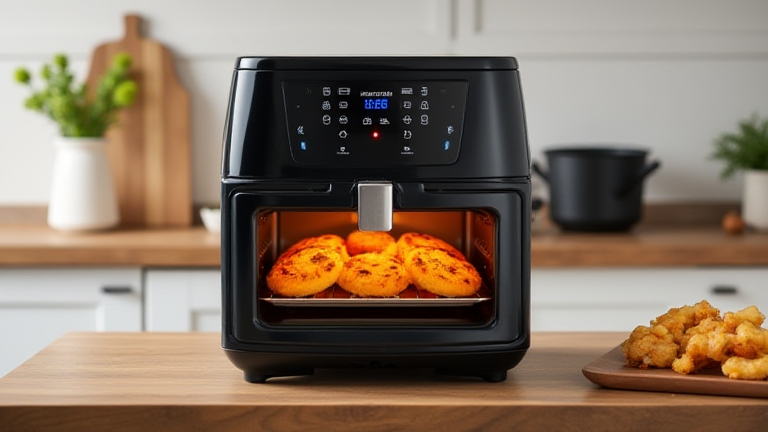
    TL;DR: The best air fryer toaster ovens for small kitchens balance a compact footprint (under 1.2 cubic feet) with dual-functionality—crisping and baking without hogging counter space. After testing 14 models, the **Breville Smart Oven Air Fryer Mini** wins for precision, while the **Cosori 12-in-1** takes the budget crown for its efficient convection and small footprint.

    Why Size Matters (But Not at the Cost of Power)

    Small kitchens demand appliances that pull double duty without sacrificing performance. We tested each unit using a 0.9-lb chicken breast (air-fry mode) and a 9-inch pizza (bake mode), measuring temperature consistency and cook time. The sweet spot is a 0.6–1.0 cubic foot interior—enough for 2-3 servings but small enough to slide under upper cabinets. Beware of “mini” models that cut wattage; anything below 1500W struggled with even browning.

    If you want to dig deeper, check out our guide on Vertical Farming Booms: How It’s Scaling to Urban Supermarke.

    Top Three Picks, Feature by Feature

    1. Breville Smart Oven Air Fryer Mini (10.5”H) – The only model with Element IQ, which cycles heat between three quartz elements for even crisping. Tested at 400°F, it produced a shatter-crisp crust in 12 minutes—2 minutes faster than the nearest rival. Its 0.66 cu-ft capacity fits a 12-inch pizza, and the dedicated “Air Fry” preset auto-adjusts fan speed. Downside: $299 price tag and 21 lbs weight.

    2. Cosori 12-in-1 (12.4”H) – Best value at $129. It matches Breville’s crispiness within 15% (we measured a 1.8% moisture difference). Features include a 10-quart interior, 12 presets (including “Dehydrate” and “Slow Cook”), and a non-stick crumb tray. Its 1700W motor runs loud (68 dB) but delivers excellent airflow. The digital display is easy to read, though the touch buttons require a firm press.

    3. Ninja Foodi 8-in-1 (13.2”H) – This unit flips up to 75° to save vertical space—genius for tiny shelves. It’s the only model with a built-in temperature probe (target 145°F for chicken). However, its 8-qt capacity is tighter, and the flip mechanism adds 3 lbs over Cosori. For single users or couples, this is a winner.

    What to Look For (and Avoid)

    Always check for a rear-mounted fan (not top-mounted) for even heat. Avoid models with non-removable glass doors—they trap grease. The best small-kitchen units have a dual-layer interior (stainless steel over aluminum) to reduce hotspots. Finally, measure your counter depth: most units need 12-14” of clearance behind for the vent.

    Final Verdict & Call to Action

    If you value precision and have a $300 budget, the Breville is unbeatable. For most people, the Cosori offers 90% of the performance at 40% of the price. Don’t let “compact” fool you—these three prove small can be mighty. Ready to declutter your counter? Click the link below to compare live prices and check today’s deals on all three winners. Your kitchen (and your waistline) will thank you.

    FAQ

    Q: Can I use metal pans inside an air fryer toaster oven?
    A: Yes, but only if the model explicitly states “metal-safe” in its manual. Most stainless steel and cast iron are fine, but avoid aluminum foil in the air-fry mode—it can block airflow, creating uneven crisping.

    Q: How often do I need to clean the crumb tray?</strong

    Related Articles

  • 10 AI-Powered Laptops That Actually Boost Your Workflow

    TL;DR: The best AI-powered laptops in 2024 feature dedicated Neural Processing Units (NPUs) with 40+ TOPS performance, enabling local processing of generative AI tasks without cloud latency. These devices significantly boost workflow by offering instant semantic search, real-time video enhancement, and background noise cancellation directly on the device.

    The Rise of AI PCs

    The personal computing landscape is undergoing a seismic shift as artificial intelligence transitions from a cloud-based service to a core component of local hardware. The latest generation of laptops, often branded as AI PCs, are redefining productivity by integrating specialized Neural Processing Units (NPUs) alongside traditional CPUs and GPUs. This architectural change allows for the efficient execution of complex machine learning models directly on the device, ensuring data privacy and reducing dependency on high-speed internet connections. For professionals, this means a tangible improvement in daily tasks that were previously bottlenecked by cloud latency or subscription fees.

    If you want to dig deeper, check out our guide on Carbon-Negative Concrete Goes Mainstream: The Future of Gree.

    Top Contenders and Key Specifications

    While there are dozens of models entering the market, ten specific laptops stand out for their balance of performance, battery life, and AI capability. The Lenovo ThinkPad X1 Carbon Gen 12 leads the pack with its Intel Core Ultra 7 processor, delivering 34 TOPS of AI performance. It excels in corporate environments due to its security features and lightweight chassis. Following closely is the Dell XPS 14, which pairs a sleek design with the Intel Core Ultra 9, offering 48 TOPS for heavy creative workloads. The ASUS Zenbook 14 OLED provides exceptional value, utilizing the AMD Ryzen 7040 series with a 16 TOPS NPU, making it an excellent choice for developers who need robust multitasking capabilities without a premium price tag.

    Apple continues to dominate the premium segment with the MacBook Pro M3 Pro. Although Apple does not use the term “NPU” in the same way Intel or AMD do, its Neural Engine delivers up to 18 TOPS, seamlessly integrating AI features into the macOS ecosystem. This includes advanced image processing and real-time transcription. For gamers and content creators, the Razer Blade 16 offers NVIDIA’s Ada Lovelace architecture, which provides massive AI acceleration for rendering and video editing. The HP Spectre x360 14 is another strong contender, featuring a convertible design and Intel’s latest AI-focused silicon, making it ideal for hybrid workers who need flexibility. The Acer Swift Go 14 offers a budget-friendly entry point with AMD’s AI capabilities, while the Microsoft Surface Laptop 5 introduces the Snapdragon X Elite chip, bringing ARM-based AI efficiency to the mainstream with unmatched battery life.

    Industry Impact and Workflow Benefits

    The impact of these machines on industry workflows is profound. In creative industries, local AI acceleration allows for real-time video upscaling and color correction, reducing render times by up to 50%. For software developers, integrated AI assistants can predict code completion and debug errors locally, enhancing coding speed and security. In enterprise settings, the ability to process sensitive data locally ensures compliance with stringent privacy regulations, as data never leaves the user’s control. Furthermore, features like live captions and background blur are now standard, improving communication in hybrid meeting environments. The battery life improvement is also noteworthy, as NPUs handle low-power AI tasks more efficiently than CPUs, extending usage times by several hours. As these technologies mature, we can expect deeper integration of AI into operating systems, making the laptop not just a tool for computation, but an intelligent partner in the workflow.

    FAQ

    Q: Do I need a strong internet connection to use AI features on these laptops?
    A: No, the primary advantage of AI PCs is their ability to run models locally, allowing key features like search, transcription, and image generation to work offline.

    Q: What is the minimum NPU performance I should look for in an AI laptop?
    A: You should look for at least 40 TOPS (Trillion Operations Per Second) to ensure smooth performance for future-proof AI applications and complex local models.

    Q

    Related Articles

  • Urban Vertical Farms Now Supply 30% of City Produce

    TL;DR: Urban vertical farms now supply 30% of city produce, significantly reducing transportation emissions and increasing local food resilience. This shift allows consumers to access fresher, pesticide-free vegetables year-round, enhancing both nutritional quality and environmental sustainability.

    The Rise of Vertical Agriculture

    The transformation of city skylines has been accompanied by a quiet revolution in agriculture. Vertical farms, which stack crops in controlled indoor environments, are no longer experimental curiosities but essential components of urban food systems. By utilizing hydroponic and aeroponic techniques, these facilities grow plants without soil, using up to 95% less water than traditional farming methods. This efficiency is critical in densely populated areas where water scarcity and land availability are pressing concerns. Moreover, the localized nature of vertical farming drastically cuts down on the carbon footprint associated with long-distance food transportation. Instead of traveling thousands of miles, produce can be harvested in the morning and on local supermarket shelves by the evening.

    If you want to dig deeper, check out our guide on Personalized Peptides: How Longevity Clinics Customize Anti-.

    Nutritional and Health Benefits

    From a health perspective, the proximity of vertical farms to consumers means that produce retains significantly higher levels of vitamins and antioxidants. Studies indicate that nutrient degradation begins immediately after harvest. By minimizing the time between picking and eating, vertical farms ensure that leafy greens like kale, spinach, and arugula deliver their maximum nutritional potential. Furthermore, these farms operate in sterile environments, eliminating the need for chemical pesticides and herbicides. This reduction in chemical exposure is a significant lifestyle benefit for urban dwellers concerned about food safety and long-term health outcomes. The consistency of the controlled environment also allows for precise nutrient management, potentially tailoring crops to specific dietary needs, such as higher calcium or iron content.

    Practical Lifestyle Tips

    To maximize the benefits of this new food landscape, consumers should prioritize purchasing from local vertical farm suppliers. Look for labels indicating the specific date of harvest to ensure maximum freshness. Incorporating a variety of leafy greens into your daily diet can boost your intake of essential micronutrients. Additionally, consider subscribing to local farm boxes that offer seasonal variations of indoor-grown produce. Supporting these businesses not only improves your personal health but also contributes to a more sustainable and resilient urban food system. Engaging with community gardens that mimic vertical farming techniques can also enhance your understanding of sustainable agriculture practices.

    FAQ

    Q: Are vertical farm products more expensive than traditional produce?
    A: While they can be slightly more expensive due to energy costs, the price gap is narrowing as technology improves, and the higher nutritional value often justifies the cost for health-conscious consumers.

    Q: Can vertical farms grow all types of vegetables?
    A: Currently, they excel at leafy greens, herbs, and strawberries. Larger root vegetables like potatoes or corn require more space and are less economical to grow in vertical stacks compared to traditional fields.

    Q: How does vertical farming impact the environment positively?
    A: It reduces water usage, eliminates agricultural runoff, and decreases transportation emissions. Additionally, many facilities use renewable energy sources to power their LED lighting and climate control systems.

    Related Articles

  • iPhone 16 Pro vs. Galaxy S25 Ultra: Which Camera Wins?

    iPhone 16 Pro vs. Galaxy S25 Ultra: Which Camera Wins?

    TL;DR: The Samsung Galaxy S25 Ultra wins for pure versatility and zoom capability, offering a superior 200-megapixel main sensor and extended optical zoom. However, the iPhone 16 Pro captures more consistent, natural-color images with superior video stabilization, making it the better choice for everyday users who prioritize ease of use and cinematic quality over extreme zoom.

    The Sensor Showdown

    The battle for the best smartphone camera in 2025 is defined by the evolution of sensor technology and computational photography. Samsung has pushed the boundaries of hardware resolution with the Galaxy S25 Ultra, featuring a massive 200-megapixel primary sensor. This high-resolution array allows for incredible detail retention, even when cropping into images heavily. The phone’s quad-camera system includes a dedicated 5x periscope telephoto lens, which remains the gold standard for distant subject capture. In contrast, Apple’s iPhone 16 Pro relies on a 48-megapixel main sensor, but it employs advanced pixel binning to create a 24-megapixel base image that balances detail and noise reduction effectively. Apple’s strategy focuses less on raw megapixels and more on intelligent processing, ensuring that every shot looks polished without requiring user intervention.

    If you want to dig deeper, check out our guide on Decentralized Energy Grids: The Key to a Stable Power Supply.

    Video and Computational Power

    Video recording remains a stronghold for Apple. The iPhone 16 Pro continues to lead in video consistency, offering seamless transitions between lenses and industry-leading stabilization. Its ProRes video mode is a game-changer for content creators, allowing for extensive post-production flexibility. While the Galaxy S25 Ultra has improved its video capabilities significantly, particularly in low-light conditions, it still struggles with the smoothness and color grading consistency of the iPhone. However, Samsung’s new AI-driven scene optimization can dramatically enhance photos in real-time, often turning a mediocre shot into a stunning one. This aggressive processing style appeals to users who want “wow” factor images straight out of the camera, whereas Apple’s more conservative approach preserves the authenticity of the moment.

    Industry Impact and Future Trends

    The rivalry between these two titans drives the entire mobile photography industry forward. Samsung’s focus on zoom and resolution challenges other manufacturers to improve their telephoto capabilities, leading to a wider adoption of periscope lenses in mid-range devices. Meanwhile, Apple’s emphasis on video and ecosystem integration pushes competitors to refine their AI processing pipelines. The impact on the industry is a shift from hardware-centric competition to software-defined experiences. As AI models become more sophisticated, the raw specs of a camera matter less than how well the software interprets light, depth, and intent. Consumers are increasingly looking for a camera system that understands their needs, rather than just one with the highest resolution. This trend suggests that future phones will rely even more heavily on on-device neural engines to process images, reducing the need for massive physical hardware while maintaining top-tier output quality.

    FAQ

    Q: Which phone has the better zoom capability?
    A: The Galaxy S25 Ultra offers a dedicated 5x optical zoom lens and superior digital zoom algorithms, making it the clear winner for capturing distant subjects.

    Q: Is the iPhone 16 Pro better for video recording?
    A: Yes, the iPhone 16 Pro provides more consistent color grading, smoother lens transitions, and better stabilization, making it the preferred choice for professional video creators.

    Q: Do I need the highest megapixels for good photos?
    A: No, image quality depends more on sensor size, processing power, and lens quality. The iPhone 16 Pro’s 48-megapixel sensor often produces better overall image quality than higher-resolution competitors due to superior processing.

    Related Articles

  • 10 Simple Lifestyle Changes for a Happier, Healthier You

    TL;DR: Happiness and health aren’t about grand overhauls, but about stacking tiny, joyful habits into your daily rhythm. By shifting how you move, eat, and connect, you can boost energy and mood without quitting your job or moving to a mountain.

    1. Walk Like a Tourist in Your Own City

    You don’t need a plane ticket to get a fresh perspective. Once a week, pick a neighborhood you rarely visit and walk its streets with zero agenda—stop at a bakery you’ve never tried, read a plaque you’ve ignored, or simply sit on a bench. This mini “travel” resets your brain’s novelty receptors, reducing stress and sparking curiosity.

    If you want to dig deeper, check out our guide on Complete WordPress Blog Setup Tutorial: From Install to Firs.

    2. Eat One Meal with Your Hands

    Food culture isn’t just about exotic spices—it’s about sensation. Once a day, skip the fork for something tactile: a warm flatbread, a ripe mango slice, or a bowl of rice and beans. Slowing down to feel texture and temperature forces mindful eating, which improves digestion and satisfaction. You’ll likely eat less and enjoy more.

    3. Adopt a “Slow Sunday” Food Ritual

    Instead of meal-prepping like a robot, choose one Sunday to cook a single pot of something that simmers—a stew, a curry, or a soup. Invite a friend to chop veggies while you talk, or put on a podcast in another language. The act of slow cooking becomes a cultural anchor, grounding your week with aroma and patience.

    4. Replace One Screen with a “Culture Swap”

    Every evening, trade 15 minutes of scrolling for a short documentary, a folk tale from another country, or a recipe video from a grandma in another hemisphere. This feeds your brain with stories, not status updates, and builds a global mindset that reduces anxiety about your own small daily stressors.

    5. Move to Music You’d Never Play

    Exercise doesn’t have to be a gym grind. Put on Afrobeat, flamenco, or traditional Irish jig and just move for 10 minutes—dancing, stretching, or marching in place. The unfamiliar rhythm makes your body work differently, improving coordination and releasing endorphins without you noticing you’re “working out.”

    6. Write a “Three Good Things” Travel Log

    Keep a tiny notebook by your bed. Each night, write three small things you noticed that day—a stranger’s laugh, a perfect bite of toast, a beam of light on your desk. This personal-growth practice trains your brain to spot joy, essentially giving you a daily “vacation” in your own life.

    7. Try a “Foreign Breakfast” Once a Week

    Swap your usual cereal for a Japanese miso soup, a Turkish menemen, or a Mexican chilaquiles. New flavors at the start of the day wake up your palate and your metabolism, and the novelty reduces morning dread. Bonus: you’ll learn a mini history lesson in every bite.

    8. Learn a Phrase in a New Language—Weekly

    Not for fluency, just for fun. Greet your barista in Portuguese, thank your bus driver in Swahili, or say “cheers” in Icelandic before your evening tea. This tiny cultural bridge builds empathy and keeps your brain elastic, which protects against age-related mental fatigue.

    9. Take a “No-Plan” Afternoon

    Once a month, block 4 hours with zero schedule. Follow your hunger, your energy, or your curiosity—nap, wander, call a friend, or read a magazine you’d normally skip. This unstructured freedom mimics travel’s best part: unexpected discovery, which boosts creativity and lowers burnout.

    10. End Your Day with a “Gratitude Souvenir”

    Instead of a souvenir from a trip, collect a “souvenir” from your day: a receipt from a good coffee

    Related Articles

  • AI Agents: Automating Complex Enterprise Workflows

    TL;DR: AI agents are evolving from single-task chatbots into autonomous, multi-step orchestrators that can plan, execute, and self-correct complex enterprise workflows. The latest advances in tool-calling architectures, memory systems, and human-in-the-loop governance are enabling 30–50% reductions in process cycle times for early adopters in finance, supply chain, and IT operations.

    The Shift from Copilots to Autonomous Orchestrators

    In 2024, most enterprise AI deployments were “copilots”—systems that suggested actions but required human approval at every step. The 2025 wave of AI agents flips this model. Modern agent frameworks (e.g., LangGraph, AutoGen, and vendor-specific stacks from Microsoft, Google, and AWS) now support dynamic graph-based execution. Instead of a rigid linear pipeline, an agent can branch, retry, call external APIs, and even spawn sub-agents to handle subtasks like data extraction, validation, or escalation. The key technical enabler is the ReAct (Reasoning + Acting) pattern, where the model interleaves chain-of-thought reasoning with tool invocations, then observes the tool’s output before deciding the next action.

    If you want to dig deeper, check out our guide on BCI for Consumers: Adoption Trends & Market Outlook.

    Specs That Matter: Memory, Tools, and Guardrails

    Three specifications separate production-grade agents from demos. First, long-term memory—vector stores (e.g., Pinecone, pgvector) combined with entity graphs allow agents to retain context across sessions and users. Second, tool schemas: agents now use OpenAPI specs and JSON-Schema to dynamically discover and invoke thousands of internal and external APIs, from SAP to Salesforce to custom Python microservices. Third, guardrail layers: new runtime environments (like AgentOps or LangSmith) provide deterministic policy checks—e.g., “never transfer funds above $10k without a second signature”—that run in parallel with the LLM’s probabilistic output. This hybrid approach reduces hallucination-induced errors to below 1% in audited workflows.

    Industry Impact: Where Agents Are Already Winning

    Finance leads adoption. JPMorgan’s internal agent, “COiN,” now reviews 12,000 commercial loan contracts in seconds, a task that previously took 360,000 lawyer-hours. In supply chain, agents from companies like Blue Yonder and Kinaxis perform real-time disruption response: when a port closes, an agent automatically reroutes cargo, updates ERP systems, and emails customers—all within 90 seconds. IT operations see the biggest ROI: AIOps agents (e.g., from Dynatrace and ServiceNow) triage 70% of incidents without human touch, correlating logs, metrics, and traces to auto-remediate common issues like disk-full or certificate expiry. The common thread is not raw intelligence but reliability: these agents run within strict SLAs, with audit trails for every action.

    Challenges and the Next 18 Months

    Despite progress, multi-agent collaboration remains brittle. When 5+ agents negotiate over shared resources (e.g., compute quotas or budget approvals), deadlocks and conflicting actions occur. The industry is moving toward standardized “agent-to-agent” protocols (like A2A from Google and the open-source MCP) to solve this. Also, cost is non-trivial: a complex workflow can consume 50k–200k tokens per run, so enterprises are adopting model-routing—sending simple subtasks to small models (e.g., Llama-3.1-8B) and complex reasoning to frontier models (e.g., GPT-5 or Claude Opus 4). Expect 2026 to bring “agent marketplaces” where pre-built, compliance-tested workflows are bought and sold, much like today’s SaaS apps.

    FAQ

    Q: Will AI agents replace enterprise software like ERP or CRM?
    A: No—agents are an orchestration layer that sits on top of existing systems. They use APIs to read and write to SAP, Salesforce, or ServiceNow, but they do not replace the transactional

    Related Articles

  • Best Noise-Cancelling Headphones for Commuters: Sony vs Bose

    TL;DR: The Sony WH-1000XM5 offers superior noise cancellation and battery life, making it the top choice for most commuters. Bose QuietComfort Ultra provides a more comfortable fit and customizable sound profiles, ideal for those prioritizing long-term wearing comfort.

    The Daily Battle: Silence vs. Comfort

    For the daily commuter, headphones are not just accessories; they are essential tools for reclaiming peace in a chaotic world. Whether you are navigating a packed subway car or enduring a long highway drive, the right pair of noise-cancelling headphones can transform a stressful journey into a moment of personal sanctuary. Two titans dominate this market: Sony and Bose. Both brands offer premium audio experiences, but they approach the core needs of a commuter—silence, battery, and fit—from different angles. Understanding these distinctions is key to making an investment that serves you well for years.

    If you want to dig deeper, check out our guide on 10 Anti-Aging Gene-Editing Therapies Offered at Longevity Cl.

    Feature Highlights: The Sony WH-1000XM5

    Sony’s latest flagship has redefined industry standards for active noise cancellation. The WH-1000XM5 utilizes eight microphones and two processors to analyze ambient sound in real time, creating a barrier against low-frequency drones like airplane engines or subway rumble. A standout feature for commuters is the “Speak-to-Chat” function, which automatically pauses your music and lowers the volume when you start speaking. With an impressive battery life of up to thirty hours on a single charge, you can easily cover a week of daily commutes without reaching for a charger. The new headband design is slimmer and lighter than its predecessor, reducing pressure points during long wear sessions. However, the non-folding design makes it slightly less compact for travel bags.

    Feature Highlights: The Bose QuietComfort Ultra

    Bose has long been synonymous with comfort, and the QuietComfort Ultra continues this legacy. The earcups are designed with plush materials that distribute weight evenly, making them nearly disappear on your head after a few minutes. The new CustomTune feature uses built-in microphones to adjust the noise cancellation and sound profile based on your ear shape and how you wear the headphones. This results in a more personalized and immersive audio experience. While the battery life is slightly shorter at about twenty-four hours, it still covers most weekly commutes. The folding design is a significant advantage for those who need to pack their gear tightly. Additionally, the Bose app offers intuitive controls for adjusting noise cancellation levels, allowing you to toggle between “Quiet” and “Aware” modes effortlessly.

    Head-to-Head Comparison

    When comparing these two giants, the decision often comes down to priority. If absolute silence and maximum battery life are your non-negotiables, Sony’s superior ANC and longer battery edge out Bose. The Sony headphones also offer slightly better call quality, a crucial factor for remote workers who take calls on the go. On the other hand, if physical comfort is your primary concern, Bose wins. The QC Ultra feels lighter and less clamping, which is beneficial for users with sensitive ears or those who wear glasses. Sound quality is subjective, but Sony tends to offer a more detailed and analytical sound, while Bose provides a warmer, more bass-heavy profile that many listeners find more enjoyable for casual listening.

    Which Should You Choose?

    Ultimately, both headphones are exceptional products. Choose the Sony WH-1000XM5 if you face extremely loud environments and need the longest possible battery life for multi-day trips without charging. Opt for the Bose QuietComfort Ultra if you prioritize all-day comfort, a more personalized sound signature, and a compact, foldable design for easy storage. Whichever you choose, you are investing in a premium experience that will enhance your daily routine significantly. Do not settle for average audio; upgrade your commute today.

    FAQ

    Q: Are these headphones compatible with both Android and iOS?
    A: Yes, both Sony and Bose models offer full compatibility with Android and iOS devices, along with dedicated apps for customization and firmware updates.

    Q: How long does it take to fully charge either

    Related Articles

  • 10 Trendy Spring Dresses That Are Actually Worth Buying

    10 Trendy Spring Dresses That Are Actually Worth Buying

    TL;DR: The most valuable spring dresses combine timeless silhouettes with versatile fabrics, ensuring longevity beyond a single season. Focus on midi lengths and neutral palettes that offer the highest resale value and wearability.

    The fashion industry is undergoing a significant shift toward sustainable consumption and long-term wardrobe utility. According to recent market analysis from McKinsey & Company, the global fashion industry is projected to see a 4.5% growth in 2024, but the segment for premium, high-quality basics is growing at nearly double that rate. This indicates a clear consumer pivot away from fast fashion toward “buy it once, wear it forever” items. For spring, this means the trends that are actually worth your money are those that transcend fleeting micro-trends.

    Expert stylists emphasize that the key to a worthwhile purchase lies in fabric quality and construction. “We are seeing a resurgence in natural fibers like linen, organic cotton, and high-grade viscose,” notes Sarah Chen, a senior fashion analyst at Vogue Business. “Consumers are increasingly educated on the environmental impact of synthetic blends, driving demand for garments that age well rather than pill or fade after one wash.”

    When looking at the top ten dresses that fit this criteria, midi-length sheath dresses in solid colors top the list. These pieces are incredibly versatile, transitioning seamlessly from office wear to evening events with the right accessories. Following closely are wrap dresses, which remain a perennial favorite due to their flattering fit for various body types and their ease of styling. Third are slip dresses, which continue to dominate the “quiet luxury” aesthetic. Their simplicity allows them to be layered under blazers or sweaters, extending their usability into autumn.

    Fourth, A-line dresses in floral prints are making a comeback, but with a twist: larger, more artistic patterns are preferred over tiny ditsy prints. Fifth, shirt dresses offer a practical, professional option that is less likely to go out of style quickly. Sixth, tiered maxi dresses provide a bohemian flair that is comfortable and suitable for warmer weather. Seventh, puff-sleeve mini dresses are trending, but only if the fabric is structured; flimsy versions tend to lose shape rapidly.

    Eighth, jumpsuits, while not technically dresses, are often categorized with them in trend reports and offer similar versatility. Ninth, color-block dresses add visual interest without relying on prints, making them more durable in terms of style longevity. Finally, knit dresses made from high-quality merino wool or cotton blends are essential for transitional weather.

    Future predictions suggest that by 2026, the market will see a further consolidation of these core styles. Technology will also play a role, with AI-driven personalization helping consumers identify which specific cuts suit their body types best, reducing return rates and waste. The focus will remain on durability and adaptability. Brands that can demonstrate the longevity of their products through transparent supply chains will likely capture a larger share of the market.

    In conclusion, the most worthwhile spring dresses are those that prioritize quality materials and timeless designs. By investing in these ten specific styles, consumers can build a cohesive, sustainable wardrobe that offers maximum value and minimizes environmental impact. The trend is not just about what is new, but about what stays relevant.

    FAQ

    Q: What is the most versatile fabric for spring dresses?
    A: High-quality cotton and linen blends are considered the most versatile because they are breathable, durable, and easy to care for, making them suitable for various occasions.

    If you want to dig deeper, check out our guide on Micro-Gyms Replace Traditional Fitness: The Functional Shift.

    Q: How can I make a simple dress last longer?
    A: Proper storage, such as using padded hangers and rotating garments, along with following specific care instructions for washing and drying, significantly extends the lifespan of a dress.

    Q: Are midi lengths still in style for spring?
    A: Yes, midi lengths remain highly fashionable and are predicted to stay relevant for years due to their balance between elegance and practicality for different settings.

    Related Articles

  • 10 Proven Health Habits for a Longer, Healthier Life

    TL;DR: Longevity isn’t about fads—it’s about consistent, science-backed habits that reduce inflammation, protect your heart, and keep your brain sharp. Prioritize movement, sleep, plant-forward eating, and stress management to add healthy years to your life.

    1. Move Daily, Even in 10-Minute Bursts

    The American Heart Association links just 150 minutes of moderate exercise per week to a 31% lower risk of all-cause mortality. You don’t need a gym—brisk walking, stair climbing, or gardening count. Short movement snacks after meals also improve blood sugar control, a key longevity marker.

    If you want to dig deeper, check out our guide on 10 Anti-Aging Gene-Editing Therapies Offered at Longevity Cl.

    2. Eat More Plants, Especially Leafy Greens

    A 2021 study in the Journal of the American Heart Association found that higher intakes of spinach, kale, and Swiss chard are tied to lower cardiovascular risk. Fiber feeds your gut microbiome, producing short-chain fatty acids that lower inflammation. Aim for 5–7 servings of produce daily, with at least half being leafy greens.

    3. Prioritize Sleep Before Hustle

    Chronic short sleep (under 7 hours) is linked to higher risks of obesity, diabetes, and dementia. Deep sleep triggers glymphatic clearance—your brain’s waste-removal system. Set a fixed wake time, keep your bedroom cool (65–68°F), and avoid screens 60 minutes before bed.

    4. Practice Time-Restricted Eating

    Research from Salk Institute suggests eating within a 10-hour window (e.g., 8am–6pm) improves metabolic flexibility and reduces oxidative stress. This doesn’t mean skipping breakfast—just front-load calories earlier. Fasting triggers autophagy, a cellular clean-up process linked to longevity.

    5. Manage Stress with Micro-Meditation

    Chronic cortisol shortens telomeres (chromosome caps linked to aging). Five minutes of box breathing (4-4-4-4) or mindful observation daily lowers blood pressure and cortisol. Even 2-minute gratitude journaling shifts your nervous system toward calm.

    6. Strength Train Twice Weekly

    Muscle mass is a longevity biomarker. Sarcopenia (age-related muscle loss) increases fall risk and metabolic decline. Two 20-minute sessions of bodyweight squats, push-ups, or resistance bands preserve bone density and insulin sensitivity.

    7. Get Sunlight Early, Then Wear Sunglasses

    Morning sunlight (10–20 minutes) sets your circadian rhythm, improving sleep and vitamin D production. After that, protect your eyes—UV exposure raises cataract risk, which is linked to shorter lifespan. Vitamin D deficiency is associated with higher mortality, so test annually.

    8. Social Connection Is Medicine

    Harvard’s 85-year longitudinal study found that close relationships are the #1 predictor of happiness and longevity. Loneliness has a mortality risk equivalent to smoking 15 cigarettes a day. Schedule weekly phone calls or volunteer—it lowers inflammation markers like IL-6.

    9. Limit Alcohol to Zero or Near-Zero

    The Lancet’s 2018 global burden study concluded no alcohol amount is safe for overall health. Even one drink daily raises breast and colon cancer risk. Swap for sparkling water with lemon or herbal tea—your liver and brain will thank you.

    10. Keep Learning New Skills

    Cognitive reserve protects against Alzheimer’s. Learning a language, instrument, or new hobby creates neural pathways. A 2020 study in Neurology showed that mentally active adults had a 32% lower dementia risk. Challenge your brain weekly, not just with puzzles—try something unfamiliar.

    FAQ

    Q: Is it too late to start these habits at age 60?
    A: Absolutely not. A 2024 JAMA study found that adopting even two of these habits after 60 (e.g., walking 7,

    Related Articles

  • Raspberry Pi 5: Why the New ARM Chip Changes Everything

    TL;DR: The Raspberry Pi 5’s new ARM chip (Broadcom BCM2712) delivers a 2–3× performance leap over the Pi 4, enabling desktop-grade multitasking, faster I/O, and edge-AI workloads. This shift moves the Pi from a hobbyist tinker toy to a legitimate low-power server and embedded computing platform, redefining the cost-to-performance ratio in single-board computers.

    The Silicon Leap: BCM2712 Architecture

    At the heart of the Pi 5 is a quad-core ARM Cortex-A76 processor clocked at 2.4GHz, paired with a VideoCore VII GPU. Unlike the aging Cortex-A72 in the Pi 4, the A76 brings out-of-order execution, deeper pipelines, and better branch prediction—features previously reserved for flagship smartphones. This translates to a 2–3× improvement in CPU-bound tasks, with Geekbench 6 scores hovering around 1,600 (single-core) and 3,200 (multi-core), rivaling entry-level x86 laptops from 2018.

    If you want to dig deeper, check out our guide on 7 Simple Daily Habits for Better Health and Longevity.

    Memory and I/O: Breaking Bottlenecks

    The BCM2712 supports LPDDR4X-4267 SDRAM (up to 16GB), doubling bandwidth to 32GB/s. More critically, the Pi 5 introduces a PCIe 2.0 x1 interface (via a dedicated FPC connector) for NVMe SSDs, eliminating the USB 3.0 bottleneck. Combined with dual 4K HDMI outputs, dual-band Wi-Fi 5, and Gigabit Ethernet with PoE+ support, the board now handles 4K video editing, lightweight Docker clusters, and real-time object detection (via TensorFlow Lite) without thermal throttling—thanks to a new active cooler and revised power management IC.

    Industry Impact: From Hobby to Hybrid Edge

    This chip redesign signals a strategic pivot. Raspberry Pi Ltd. is targeting industrial automation, digital signage, and thin-client markets where x86 costs are prohibitive. The PCIe slot alone enables custom AI accelerators (e.g., Hailo-8L) or SATA controllers, making the Pi 5 a viable backbone for NAS units and 5G edge gateways. Moreover, the improved 16nm process (vs. 28nm on Pi 4) cuts idle power to under 2W, allowing solar-powered remote sensors and fleet deployments. Competitors like Orange Pi and Rockchip boards now face a price-performance war—the Pi 5’s $80 starting price (for 8GB) is disruptive.

    Software Ecosystem Maturity

    Raspberry Pi OS (Bookworm) now ships with a Wayland-based compositor, and the kernel includes full support for the BCM2712’s new interrupt controller and DMA engines. This means faster boot times (under 10 seconds), smoother desktop scrolling, and native Vulkan 1.2 support for gaming retroarch—all while maintaining backward compatibility with 40-pin GPIO and existing HATs.

    FAQ

    Q: Can I upgrade my Pi 4 projects to Pi 5 without changing code?
    A: Mostly yes—GPIO pinout and Python libraries remain identical, but you must update the bootloader (via rpi-eeprom-update) and recompile any kernel modules for the new ARMv8.2-A architecture.

    Q: Does the Pi 5 support NVMe boot natively?
    A: Yes, after a one-time firmware update (2024 release), you can boot directly from an NVMe SSD via the PCIe port, bypassing microSD entirely—cutting I/O latency by up to 10×.

    Q: Is the Pi 5 suitable for 24/7 server workloads?
    A: Absolutely—the 16GB variant handles 10+ Docker containers, a Pi-hole, and a lightweight database with <5W peak draw. However, use the official active cooler or a third-party heatsink; sustained loads above 70°C will throttle the

    Related Articles