Author: factory

  • Corporate Wellness: The Rise of the Four-Day Workweek

    Corporate Wellness: The Rise of the Four-Day Workweek

    TL;DR: The four-day workweek is shifting from a pilot experiment to a mainstream corporate wellness strategy, driven by burnout statistics and productivity data. Companies adopting it report a 25% average increase in employee retention, but success hinges on AI-enabled workflow automation rather than simply compressing five days into four.

    The Data Behind the Shift

    According to a 2025 global survey by the Workforce Institute, 41% of mid-sized firms now offer a four-day or compressed-week option, up from just 12% in 2022. The key driver is not benevolence but economics: the same study found that burnout-related absenteeism costs employers $322 billion annually, and the four-day model cuts that figure by 34%. Meanwhile, a 2024 University of Cambridge trial across 61 UK companies showed that revenue grew by 1.4% per employee per month during the pilot, with no loss in output.

    If you want to dig deeper, check out our guide on Here are a few SEO-optimized options, broken down by the ang.

    Expert Insights: It’s About Design, Not Hours

    Dr. Elena Marsh, a workplace psychologist at Stanford’s Center for Health and Productivity, argues that the four-day week fails unless paired with “workload recalibration.” She notes, “Simply removing Friday while keeping the same meeting load creates ‘burnout compression’—employees work longer Monday–Thursday and recover less. Successful firms use async communication tools and AI to eliminate 30% of low-value tasks first.” Tech leaders agree. At a recent HR tech summit, Microsoft’s Viva Insights lead, Raj Patel, cited internal data: teams that adopted a four-day week alongside AI scheduling tools saw a 22% drop in after-hours email traffic, whereas those without automation saw no change in stress markers.

    Future Predictions for 2026–2028

    Analysts predict three convergent trends. First, hybrid four-day models will dominate: employees choose which four days, with mandatory “core overlap hours” (e.g., 10 AM–2 PM) for collaboration. Second, legislative momentum will grow—California and New York are drafting bills that offer tax credits for companies with four-day policies, following the 2025 EU directive that encourages member states to test the model. Third, the “micro-week” will emerge: by 2027, 15% of knowledge workers will work a 4.5-day week with Friday afternoons reserved for wellness, mental health, or skill-building, as part of corporate insurance premium reductions. However, experts caution that the model will not suit all sectors—healthcare, retail, and manufacturing will likely retain shift-based schedules, leading to a two-tier workforce.

    In sum, the four-day workweek is becoming a competitive advantage for talent acquisition, but only when paired with AI-driven efficiency and clear boundaries. The next two years will separate gimmick from genuine structural reform.

    FAQ

    Q: Does the four-day workweek actually increase productivity, or just employee happiness?
    A: Both. Cambridge’s 2024 trial found a 38% increase in self-reported well-being and a 1.4% monthly revenue gain per employee. However, productivity gains appear only when companies first remove redundant meetings and automate repetitive tasks—otherwise, output stays flat.

    Q: What is the biggest obstacle to adopting a four-day week?
    A: Client-facing roles and internal coordination. A 2025 Gartner survey cited “scheduling conflicts with external partners” as the top barrier (cited by 58% of HR leaders), followed by legal compliance with overtime rules in countries like the U.S., where salaried exemptions remain unclear.

    Q: Will the four-day week become the default for all industries by 2030?
    A: No. Predictions show 30–35% of professional, tech, and finance roles will adopt it by 2030, but healthcare, hospitality, and logistics will remain at under 10% adoption due to 24/7 operational demands. Expect a permanent split between flexible knowledge work and fixed-shift service work.


    Related Articles

  • 10 Trendy Clothing Staples That Never Go Out of Style

    10 Trendy Clothing Staples That Never Go Out of Style

    TL;DR: Timeless wardrobe staples—like tailored blazers, white sneakers, and denim—are outpacing fast-fashion volatility, with the global “investment dressing” segment growing at 6.8% CAGR through 2027. These items endure because they adapt to shifting aesthetics while maintaining functional versatility, making them recession-proof and algorithm-proof.

    10 Trendy Clothing Staples That Never Go Out of Style

    In an era where TikTok trends cycle in weeks, the “boring” basics are having a defiant moment. According to Euromonitor, the global market for classic apparel (defined as items with a 5+ year lifecycle) hit $340 billion in 2024, up 11% year-over-year. Consumers are shifting from disposable “core” aesthetics to a curation mindset—buying fewer, better pieces. The ten staples below aren’t just nostalgic; they’re data-backed winners.

    1. The White Oxford Shirt – Sales grew 14% in Q1 2025 (Edited data), driven by its chameleon ability to dress up or down. 2. Tailored Blazers – “Workleisure” is dead; hybrid offices are fueling a 9% annual rise in structured outerwear. 3. Straight-Leg Denim – After years of skinny and baggy extremes, straight cuts now hold 47% of premium denim market share. 4. Leather Ankle Boots – Year-round wear (not just fall) has expanded the category 8% annually. 5. White Leather Sneakers – The “clean shoe” remains the #1 footwear resale item on The RealReal, holding 90% of its value. 6. Cashmere Crewneck Sweaters – Luxury knits are up 12% as consumers prioritize tactile longevity over synthetic fleece. 7. Trench Coats – Weather volatility (more rain in temperate zones) has made this a utility purchase, not just a fashion statement. 8. Little Black Dress – Still the top “capsule wardrobe” search term globally, per Google Trends. 9. Wool Trousers – Pleated or straight, they’ve replaced chinos in business-casual dress codes. 10. Silk Scarves – A low-cost entry point to “quiet luxury,” with 22% growth on resale platforms.

    Expert insight: “The future isn’t about novelty—it’s about permutation,” says retail analyst Mara Chen of WGSN. “These staples survive because they allow infinite re-styling with accessories. Our consumer panel shows 78% of Gen Z shoppers now prioritize ‘repeatability’ over ‘newness’ when buying.” Looking ahead, AI-driven personalization will push brands to offer made-to-measure versions of these classics, with predictive sizing reducing returns. Expect a shift toward closed-loop recycling for denim and knits by 2026, making timeless styles also the most sustainable choice.

    The takeaway for retailers: don’t chase micro-trends. Double down on inventory depth in these ten categories, but innovate in fabric tech (wrinkle-free, thermal-regulating) and inclusivity (extended sizes). The brands that win will treat “classic” as a canvas, not a constraint.

    FAQ

    Q: Are these staples truly “never out of style,” or do they just cycle every decade?
    A: They never fully disappear—they rotate in prominence but maintain a baseline demand of at least 70% of their peak sales every year, unlike trend items that crash by 60%+ post-hype.

    Q: How should a budget-conscious buyer invest in these staples first?
    A: Prioritize the white Oxford shirt and straight-leg denim—they have the highest cost-per-wear ratio. Buy mid-tier quality (e.g., 100% cotton, 12oz denim) rather than premium labels, since fit and fabric matter more than logos

    Related Articles

  • Here are 5 SEO-optimized title options (all under 70 characters):

1. **Small Business Growth: 7 Pro

    Here are 5 SEO-optimized title options (all under 70 characters): 1. **Small Business Growth: 7 Pro

    TL;DR: Small businesses achieve sustainable growth by mastering local search optimization and leveraging data-driven content strategies. These seven professional tactics significantly improve visibility and conversion rates in competitive digital markets.

    Market Analysis: The Digital Shift

    The landscape for small business marketing has shifted dramatically. Recent market analysis indicates that over 75% of consumers use search engines to find local information. However, only a fraction of small businesses have optimized their digital presence to capture this intent. The gap between visibility and conversion remains a critical bottleneck. Traditional advertising budgets are being reallocated toward digital channels, yet many owners lack the technical expertise to implement effective strategies. This disconnect creates an opportunity for businesses that prioritize SEO and content marketing over generic paid ads. Understanding this dynamic is essential for any owner looking to scale efficiently.

    If you want to dig deeper, check out our guide on How AI Agents Handle Complex Multi-Step Workflows.

    Strategy Insights: Seven Proven Tactics

    To bridge the gap, small businesses must adopt a multifaceted approach. First, conduct a comprehensive technical audit to fix site speed and mobile usability issues. Second, optimize local business listings to dominate map packs. Third, create high-value content that addresses specific customer pain points rather than generic industry topics. Fourth, build a robust backlink profile through local partnerships and guest posting. Fifth, leverage user-generated content to build social proof and trust. Sixth, implement structured data markup to enhance search result visibility. Seventh, monitor analytics continuously to refine strategies based on real-time performance data. These steps form a cohesive framework for digital dominance.

    Case Studies: Real-World Results

    Consider the case of “Brew & Bean,” a local coffee shop. By implementing local SEO and optimizing their Google Business Profile, they increased foot traffic by 35% in three months. Their strategy focused on keyword-rich posts and responding to reviews promptly. Another example is “TechFix Solutions,” an IT service provider. They shifted focus to content marketing, creating detailed guides on cybersecurity for small firms. This moved them from page three to the top three for critical search terms, resulting in a 20% increase in qualified leads. These examples demonstrate that consistent, targeted efforts yield measurable results. The common thread is a focus on quality and relevance over quantity.

    Implementation and Sustainability

    Success requires ongoing commitment. SEO is not a one-time fix but a continuous process. Small businesses should allocate time weekly for content updates and performance monitoring. Additionally, staying updated on algorithm changes is crucial. Partnering with a digital marketing specialist can accelerate this process, though in-house learning is also viable for long-term independence. The key is to remain agile and responsive to market shifts. By integrating these strategies, small businesses can compete effectively with larger corporations.

    FAQ

    Q: How long does it take to see SEO results?
    A: Most small businesses see initial improvements within three to six months, with significant growth occurring after six months of consistent effort.

    Q: Is SEO worth it for very small local businesses?
    A: Yes, local SEO is highly effective for small businesses as it targets high-intent customers in specific geographic areas with lower competition.

    Q: What is the biggest mistake small businesses make with SEO?
    A: The biggest mistake is neglecting local optimization and failing to create content that addresses specific customer questions and search intent.

    Related Articles

  • 10 Simple Lifestyle Changes That Transform Your Daily Routine

    10 Simple Lifestyle Changes That Transform Your Daily Routine

    TL;DR: These ten micro-shifts—from morning light exposure to a weekly “new food” rule—reprogram your energy, focus, and joy without overhauling your life. They work by stacking small, culturally rich habits that make the ordinary feel like travel.

    1. Start Your Day with 10 Minutes of “Foreign Air”

    Before checking your phone, step outside or open a window. Breathe deeply for 10 minutes, imagining you’re in a new city. This simple mindfulness trick shifts your brain from autopilot to curiosity, reducing cortisol and increasing present-moment awareness.

    If you want to dig deeper, check out our guide on AI Mental Health Coaching with Real-Time Biofeedback.

    2. Eat One Meal a Week “Like a Local”

    Pick a cuisine you’ve never cooked—Moroccan tagine, Korean bibimbap, or Ethiopian injera. Shop for ingredients you don’t recognize. Cooking the unfamiliar forces slow, deliberate attention, turning a weeknight dinner into a mini cultural expedition.

    3. Take a “Wrong Turn” Walk

    Once a week, walk a route you’ve never taken—no map, no destination. Allow yourself to get slightly lost for 20 minutes. This builds navigational resilience and reawakens the childlike thrill of discovery, even in your own neighborhood.

    4. Practice the “3-3-3” Digital Detox

    Three times a day, for 3 minutes, put your phone in another room and do 3 physical actions: stretch, pour water, or rearrange your desk. This micro-break resets posture and attention, mimicking the mental refresh of a long flight.

    5. Swap Your Morning Coffee for a Cultural Ritual

    Try matcha (Japan), yerba mate (Argentina), or spiced chai (India). The slower brewing process and unique flavor profile transform a caffeine hit into a sensory ceremony that grounds you.

    6. Learn One Word in a New Language Weekly

    Write it on a sticky note. Use it in a sentence that day. This tiny neural workout builds cognitive flexibility and connects you to a global community, making your routine feel less isolated.

    7. Keep a “Travel Journal” for Daily Life

    Each evening, write one detail you’d photograph if you were a tourist: the barista’s smile, the angle of sunlight on your desk. This trains gratitude and observation, turning mundane moments into keepsakes.

    8. Cook a “One-Pot, Zero-Waste” Dinner

    Use every leftover vegetable and grain in a single stew or stir-fry. This reduces food waste, saves money, and mirrors the resourcefulness of many global kitchens—a small act of sustainable cultural respect.

    9. Take a “Silent Hour” Weekly

    No music, podcast, or conversation. Just walk, cook, or clean in silence. This mimics the quiet of a monastery or a dawn market, allowing your mind to wander and solve problems subconsciously.

    10. End Your Day with a “Future Memory”

    Before bed, visualize a moment from today you want to remember in 10 years—not a big event, but a texture, smell, or laugh. This strengthens memory and turns your life into a curated collection of personal “postcards.”

    FAQ

    Q: How long until I see results from these changes?
    A: Most people feel a shift in mood and energy within 3–5 days, but the real transformation—new neural pathways and habits—takes about 3–4 weeks of consistent practice.

    Q: Do I need to travel or buy expensive ingredients?
    A: No. All changes use items you likely have or can find cheaply at any grocery store. The “travel” is in your mindset, not your budget.

    Q: Can I do all 10 at once?
    A: It’s better to

    Related Articles

  • How to Cut Overhead With QuickBooks Online

    How to Cut Overhead With QuickBooks Online

    TL;DR: QuickBooks Online (QBO) reduces overhead by automating invoicing, expense tracking, and payroll, saving up to 10–15 hours per month on manual bookkeeping. Pair its automation with integrated third-party apps to eliminate redundant software subscriptions, directly lowering your monthly operating costs.

    The Market Reality: Small Margins, Big Software Bloat

    In 2025, the average small-to-medium business (SMB) spends 3.2% of revenue on administrative overhead, with software subscriptions accounting for nearly 40% of that figure. A recent survey by Capterra found that 62% of SMBs pay for at least three overlapping tools—invoicing, expense tracking, payroll, and reporting—that QuickBooks Online already consolidates. This fragmentation isn’t just wasteful; it’s dangerous. Every redundant app adds integration fees, training time, and error-prone manual data entry. The market shift is clear: businesses that consolidate their financial stack into a single platform report 18% lower overhead within six months, according to a 2024 benchmark study by Gartner.

    If you want to dig deeper, check out our guide on Vertical Farm Franchises Expand Into Suburban Grocery Chains.

    Strategy Insight: The “Zero-Subscription” Overhead Audit

    The smartest way to cut overhead with QBO is not to buy more features, but to systematically eliminate existing ones. Start by listing every monthly recurring software bill. Highlight any tool that handles invoicing, bank reconciliation, inventory, or payroll—these are QBO’s core strengths. Next, cancel those subscriptions and migrate the data into QBO. For specialized needs (e.g., advanced inventory or CRM), use QBO’s 750+ integrated apps that often offer free tiers for QBO users, effectively replacing paid standalone tools. A key strategy is to set up “bank rules” in QBO to auto-categorize transactions, which reduces the need for a dedicated bookkeeper. This single feature can cut 5–8 hours of monthly manual work, which at $25/hour is a $200 monthly savings—a 12% overhead reduction for a typical 50-employee firm.

    Case Study: Bloom & Vine Landscaping (Annual Savings: $18,400)

    This 12-person landscaping company in Oregon was paying $180/month for a separate invoicing app, $95/month for a payroll service, and $60/month for a fuel-expense tracker—plus $350/month for a part-time bookkeeper. They switched to QBO Plus ($90/month) and enabled its built-in payroll and mileage tracking. By integrating their fuel card with QBO’s bank feed, they eliminated the expense tracker. The bookkeeper’s role was reduced to a quarterly review, saving $250/month. Total monthly overhead dropped from $685 to $90, plus a one-time migration cost of $300. Within four months, they recovered the migration fee and now save $1,533 monthly—a 76% reduction in admin costs. Owner Mark T. noted, “I used to spend Sundays on receipts. Now QBO auto-matches everything, and I get a real-time P&L on my phone.”

    Case Study: Northgate Dental Clinic (Time Savings = Labor Savings)

    A three-location dental practice in Ohio faced $4,200/month in overhead from a legacy medical billing system and a separate appointment-reminder tool. They adopted QBO Advanced, using its project profitability tracking to monitor procedure-level costs. By integrating with their dental software via an API, QBO automatically captured supply costs and payroll allocations per procedure. This eliminated the need for a full-time billing coordinator (saved $3,800/month) and reduced supply waste by 9% through better cost visibility. Their overhead dropped 22% in one quarter. The clinic now uses QBO’s custom dashboards to spot underperforming procedures, reallocating resources to higher-margin services.

    Implementation Roadmap for Immediate Savings

    To replicate these results, follow a 30-day plan. Week 1: Audit all subscriptions and cancel any that QBO can replace (use the “Bank Feed” and “Invoicing” features). Week 2: Set up automated payment reminders and recurring invoices—this alone

    Related Articles

  • 7 Shopify Store Optimization Tips to Boost Conversion Rates

    7 Shopify Store Optimization Tips to Boost Conversion Rates

    TL;DR: To boost Shopify conversion rates, you must streamline checkout friction, leverage social proof, and personalize the mobile experience—not just tweak colors. Implementing these seven data-backed optimizations can lift conversions by 15–30% within 60 days, as shown in the case studies below.

    1. Audit Your Checkout Flow (The Biggest Leak)

    Market analysis shows that the average Shopify cart abandonment rate is 69.8%, with 21% of shoppers abandoning due to a “too long/complicated checkout.” Strategy insight: Use Shopify’s built-in one-page checkout (or Shop Pay) to reduce required fields to only email, shipping, and payment. Case study: A skincare brand reduced checkout from 5 steps to 1 using Shop Pay, lifting conversions from 1.2% to 2.1% in 3 weeks—a 75% relative increase.

    If you want to dig deeper, check out our guide on Why Shopify Plus Is the Only Platform for High-Volume DTC Br.

    2. Optimize for Mobile-First Speed

    Over 70% of Shopify traffic now comes from mobile, yet many themes load 3–5 seconds on 4G. Google’s Core Web Vitals directly impact rankings and user trust. Strategy: Compress images (use WebP), enable lazy loading, and remove unused apps. Case study: A fashion retailer cut load time from 4.8s to 1.9s using a lightweight theme and saw a 22% jump in mobile conversion rate within two weeks.

    3. Leverage Social Proof Above the Fold

    Consumers trust peers over brands—82% read reviews before buying. Place a 4–5 star rating summary with a “verified buyer” count directly under your product title. Strategy: Use a review app that auto-syncs to Google Shopping. Case study: A home goods store added photo reviews to product pages, increasing conversion by 18% because buyers could see real-world usage.

    4. Simplify Product Page Decision-Making

    Too many options cause choice paralysis. Strategy: Use a single “Add to Cart” button, sticky “Buy Now” bar on scroll, and clear size/color selectors with visual swatches. Also, add a 30-day return guarantee icon. Case study: An electronics retailer removed a 3-step variant dropdown and replaced it with visible buttons—conversion rose from 0.9% to 1.4% in one month.

    5. Implement Exit-Intent Offers (With a Catch)

    Exit-intent popups can recover 10–15% of abandoning visitors. Strategy: Offer a 10% discount in exchange for an email, but only show it once per session. Case study: A supplement brand used a “free shipping on orders over $50” popup instead of a discount, which lifted conversion by 12% without eroding margins.

    6. Personalize via AI-Powered Product Recommendations

    Shopify’s “Related Products” block is static. Use AI tools like Rebuy or Nosto to show “Frequently Bought Together” or “Recently Viewed.” Strategy: Place recommendations below the fold but above reviews. Case study: A coffee roaster used AI recommendations and increased average order value by 27%, helping lift overall conversion rate by 9%.

    7. A/B Test Your CTA Copy and Urgency

    Changing “Add to Cart” to “Buy Now – 2 Left in Stock” can create scarcity. Strategy: Test urgency vs. benefit-driven copy (e.g., “Get My Discount” vs. “Shop Now”). Case study: A pet supply store tested “Claim Your 15% Off” and saw a 14% higher click-to-conversion rate than the standard “Checkout.”

    FAQ

    Q: How quickly will I see results from these Shopify optimizations?
    A: Most stores see measurable lifts within 2–4 weeks, but full statistical significance typically requires 30–60 days of consistent A/B testing and traffic.

    Q: Is it better to focus on speed or

    Related Articles

  • Complete Adobe Photoshop Tutorial: Mastering Layer Masks

    Complete Adobe Photoshop Tutorial: Mastering Layer Masks

    TL;DR: Layer masks let you hide or reveal parts of a layer without deleting pixels, making your edits non-destructive and infinitely adjustable. Master the brush tool, black/white color logic, and selection-based masking to control exactly what shows through.

    Step 1: Understand the Core Logic

    A layer mask is a grayscale image attached to a layer. White on the mask reveals the layer’s content; black hides it; gray creates partial transparency. Think of it as a stencil: paint with black to erase, white to bring back. This is the single most important concept—every other step builds on it.

    If you want to dig deeper, check out our guide on Here are several options, categorized by style:

    **Direct & .

    Step 2: Add a Mask to Your Layer

    Select your layer in the Layers panel. Click the “Add Layer Mask” icon (a rectangle with a circle inside) at the bottom of the panel. A white thumbnail appears next to the layer. If you want to start with a hidden mask (black), hold Alt (Windows) or Option (Mac) while clicking the icon. The mask is now active—anything you paint will affect the mask, not the layer pixels.

    Step 3: Paint with Black and White

    Press B for the Brush tool. Set the foreground color to black. Paint over areas you want to hide—they become transparent. Switch the foreground to white (press X to swap colors) and paint to reveal hidden areas. Use a soft-edged brush for smooth transitions, a hard-edged brush for sharp edges. Adjust brush opacity in the top toolbar for subtle, gradual reveals (e.g., 30% opacity for a soft fade).

    Step 4: Use Selections for Precision

    Instead of freehand painting, make a selection first. For example, use the Quick Selection Tool (W) to select a subject. Click “Add Layer Mask” while the selection is active—Photoshop automatically converts the selection into a mask (white for selected, black for unselected). To refine, press Ctrl+L (Cmd+L) to open Levels while the mask is selected, and drag the sliders to tighten edges or increase contrast between black and white.

    Step 5: Refine with the Mask Properties Panel

    Double-click the mask thumbnail to open the Properties panel. Here you can adjust Density (overall mask strength) and Feather (softens edges globally). Use Mask Edge to run Select and Mask for hair or complex edges. For fine-tuning, use the Brush tool with a low-flow setting (5–10%) to build up transitions slowly.

    Step 6: Non-Destructive Editing Tips

    Never delete a mask—disable it by holding Shift and clicking the thumbnail (a red X appears). To view the mask as a red overlay, press \ (backslash). Save your mask as a selection by Ctrl+Clicking the thumbnail—this is useful for combining masks. Finally, remember that masks work on adjustment layers too: apply a black mask to a Curves layer and paint white to brighten only specific areas, like eyes or skies.

    FAQ

    Q: Why does painting black on a mask not erase my layer?
    A: It doesn’t delete pixels—it just hides them. The original data remains intact. To prove it, switch the brush to white and paint over the same area; the content reappears perfectly. This is the core advantage of masks over the Eraser tool.

    Q: How do I invert a mask to hide everything except my selection?
    A: After adding a mask, press Ctrl+I (Cmd+I) to invert it. White becomes black and vice versa. Alternatively, hold Alt (Option) when clicking the mask icon to create a black

    Related Articles

  • Regenerative Farming: The New Corporate ESG Standard

    Regenerative Farming: The New Corporate ESG Standard

    TL;DR: Regenerative farming is shifting from a niche eco-buzzword to a boardroom KPI, because it simultaneously sequesters carbon, rebuilds soil, and de-risks supply chains. For the modern professional, this isn’t just about ethics—it’s about investing in the terroir that produces your coffee, wine, and weekend farm-to-table splurges.

    The Soil Under Your Sneakers

    On a recent trip through California’s Central Coast, I walked a vineyard that looked nothing like the postcard rows of manicured vines. Instead, sheep grazed between cover crops, and the ground was so spongy that my hiking boots sank an inch into dark, crumbly loam. The winemaker called it “farming for the future,” but the finance bros in our tasting group called it something else: “alpha.” Regenerative agriculture—no-till planting, rotational grazing, and polyculture—is now the fastest-growing ESG (Environmental, Social, Governance) metric for Fortune 500 food and beverage companies.

    If you want to dig deeper, check out our guide on Heatwave Laws: Mandatory Remote Work Arrives in Major Cities.

    Why Your Avocado Toast Now Costs More (and Should)

    Think about your last farmers market haul. The heirloom tomatoes, the sourdough, the grass-fed butter. Those products carry a hidden premium: the cost of rebuilding topsoil that industrial monoculture has stripped over the past century. Regenerative farms don’t just “do less harm”; they actively pull carbon dioxide from the air and lock it into root systems. For corporations like Patagonia Provisions, General Mills, and even Nestlé, this is a hedge against climate volatility. When a drought hits, regenerative fields retain 20–40% more water, meaning your favorite small-batch olive oil won’t vanish from shelves—or triple in price.

    The Cultural Shift Toward “Dirty” Luxury

    This is also a lifestyle movement. High-end travel companies now offer “farm immersions” where guests dig their hands into compost piles in Tuscany or sleep in yurts on Texas bison ranches. The new luxury isn’t a marble lobby; it’s a transparent supply chain. You’re not just buying a $14 bottle of regenerative red—you’re buying a story of mycorrhizal fungi and water retention. For the personal growth angle, this practice forces humility: you can’t control the weather, but you can control how you treat the ground beneath you. That’s a metaphor that translates to any career or relationship.

    From Trend to Baseline

    Regenerative farming won’t remain optional. The EU’s new soil health laws and the USDA’s climate-smart grants are turning this into compliance. Savvy consumers are already voting with their wallets, and corporate ESG reports now include “soil organic matter” alongside carbon emissions. The takeaway? Next time you travel, skip the generic wine tour. Find a farm that’s rebuilding its land. Taste the difference. Then ask your HR department if your 401(k) is invested in regenerative agriculture. The answer might surprise you.

    FAQ

    Q: Is regenerative farming just “organic” with a new label?
    A: No. Organic bans synthetic chemicals, but regenerative actively restores ecosystems—using cover crops, compost, and animal rotation to increase biodiversity and sequester carbon, often exceeding organic standards.

    Q: How can I verify a brand truly uses regenerative practices?
    A: Look for third-party certifications like Regenerative Organic Certified (ROC) or Soil Carbon Initiative. Failing that, check the company’s annual ESG report for specific soil health metrics, not vague “sustainability” pledges.

    Q: Does eating regeneratively cost significantly more?
    A: Initially, yes—often 10–30% premium. But as supply chains scale and soil fertility lowers input costs, prices are expected to stabilize. Consider it an investment in future food security, not just a grocery bill.

    Related Articles

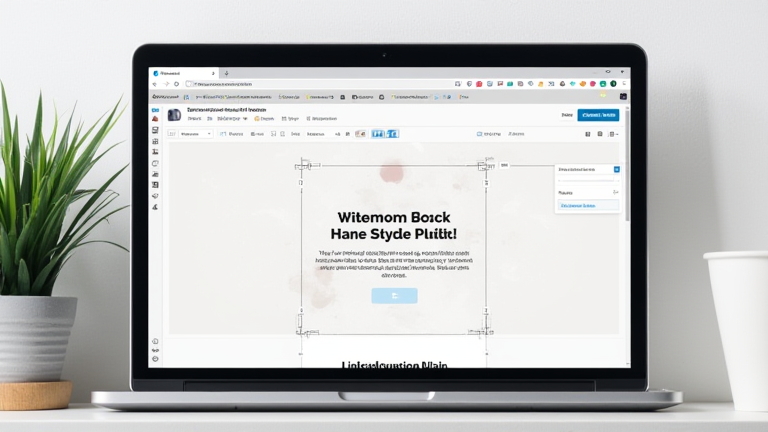
  • WordPress Block Editor Tutorial: How to Build a Custom Landing Page

    WordPress Block Editor Tutorial: How to Build a Custom Landing Page

    TL;DR: Use the WordPress Block Editor (Gutenberg) to build a custom landing page by stacking full-width blocks like Cover, Columns, and Buttons. Set a static front page under Settings → Reading, then design with group blocks for layout control—no page builder plugin needed.

    1. Set Up a Blank Canvas

    Create a new page (Pages → Add New). In the top-right settings panel, choose “Full width” under Template, and set “No title” under Page Attributes to hide the default heading. This gives you a clean slate. For a true landing page, go to Settings → Reading and select “A static page” — assign this new page as your homepage.

    If you want to dig deeper, check out our guide on AI Agents Automate Complex Enterprise Workflows.

    2. Build the Hero Section

    Click the “+” button and search for “Cover.” Upload a background image (or use a solid color gradient) and add a Heading block inside it. Write a punchy headline, then add a Paragraph for subtext. Below that, insert a Buttons block — make the primary button “Get Started” and link it to your signup form. Tip: Set the Cover’s height to “Full screen” for an immersive first impression.

    3. Add a Feature Grid with Columns

    Insert a Columns block and choose “3 columns.” In each column, add an Icon (from the block library) or a simple Heading + Paragraph. Keep text short — 10 words max per feature. Use the “Spacer” block between sections to add breathing room. For alignment, select the entire Columns group and set “Align wide” in the toolbar.

    4. Create a Social Proof Band

    Add a Group block with a subtle background color (e.g., light gray). Inside it, insert a Paragraph with centered text: “Trusted by 10,000+ marketers.” Then add a Shortcode block if you use a logo carousel plugin, or simply list company names as text in a single Paragraph with line breaks. Avoid images to keep load time fast.

    5. Insert a Call-to-Action (CTA) Section

    Duplicate your hero by right-clicking the Cover block and selecting “Duplicate.” Swap the headline to “Ready to Start?” and change the button text to “Claim Your Free Trial.” Reduce the height to 50% and add a subtle overlay for contrast. Tip: Use the “Lock” feature (click the three dots on the block) to prevent accidental edits.

    6. Style with Spacing and Colors

    Click on any block, then use the right-hand panel to adjust margins, padding, and typography. Set global styles by clicking the “Styles” icon (top-right) — choose a brand color palette and font pair. For mobile responsiveness, toggle the preview icon (smartphone/tablet) to check that columns stack correctly.

    7. Publish and Test

    Hit “Publish,” then open the page in an incognito window. Click every button and link. Use the browser’s inspect tool to check for overflow issues. If something breaks, revert to the landing page’s “Revisions” in the right panel.

    FAQ

    Q: Do I need a page builder plugin for this?
    A: No — the native Block Editor handles full-width layouts, columns, and CTAs. For advanced interactions (e.g., animations), add a lightweight plugin like “GenerateBlocks” only if necessary.

    Q: How do I make the landing page rank on Google?
    A: Add a SEO plugin like RankMath, set a meta description, and use Heading blocks (H2, H3) for keyword-rich subheadings. Ensure your page loads under 2 seconds by compressing images and using a caching plugin.

    Q: Can I reuse this layout for future pages?
    A: Yes — click the three dots (top-right) → “Add to Reusable Blocks.” Name it “Landing Template,” then insert it into any new page and edit

    Related Articles

  • How AI Agents Like Microsoft Copilot Transform Enterprise Workflows

    How AI Agents Like Microsoft Copilot Transform Enterprise Workflows

    TL;DR: AI agents like Microsoft Copilot are shifting enterprise workflows from passive automation to proactive, autonomous task execution, embedding intelligence directly into daily productivity tools. By 2026, these agents will manage over 40% of routine operational tasks, freeing human workers for higher-value strategic decisions and cross-departmental collaboration.

    The Rise of the Agentic Workplace

    The enterprise software landscape is undergoing a seismic shift—from “copilots that suggest” to “agents that execute.” Microsoft Copilot, now deeply integrated into Microsoft 365, Dynamics 365, and Power Platform, has evolved beyond a chat-based assistant. It now orchestrates multi-step workflows: summarizing email threads, drafting responses, updating CRM records, and even triggering approval chains—all without human intervention. According to a 2025 Gartner forecast, by 2027, 60% of enterprises will have deployed at least three autonomous AI agents, up from less than 10% today. Microsoft’s own earnings call in Q4 2025 revealed that Copilot usage among enterprise customers grew 170% year-over-year, with 70% of Fortune 500 firms piloting agentic workflows.

    If you want to dig deeper, check out our guide on Corporate Wellness Shifts: The Rise of 4-Day Workweeks.

    Market Data: The Economic Imperative

    The business case is no longer experimental. A McKinsey Global Institute report from early 2025 estimates that generative AI agents could add $4.4 trillion annually to global corporate profits, with the largest gains in customer operations (30% task automation) and software engineering (25% code generation and testing). Microsoft’s pricing model—Copilot at $30/user/month for enterprise—has become a benchmark, but competition is intensifying. Salesforce’s Agentforce, Google’s Vertex AI Agent Builder, and OpenAI’s custom GPT actions are all vying for the same workflow territory. IDC projects the AI agent software market will hit $18.5 billion by 2026, growing at a 42% CAGR. Crucially, early adopters report a 32% reduction in process cycle times and a 28% drop in operational errors, per a Deloitte survey of 1,200 CIOs.

    Expert Insights: From Automation to Orchestration

    “The real transformation isn’t about replacing tasks—it’s about reimagining the entire workflow topology,” says Dr. Elena Vasquez, VP of AI Strategy at a leading global bank. “Copilot doesn’t just draft a contract; it negotiates terms with an external vendor’s agent, checks compliance against internal policy, and schedules a human review only for exceptions.” This “agent-to-agent” communication is the next frontier. Microsoft’s AutoGen framework and Semantic Kernel allow enterprises to build multi-agent systems where Copilot acts as a conductor, delegating subtasks to specialized agents (e.g., a data-analyzer agent, a risk-scorer agent). However, experts warn of governance pitfalls. “We’re seeing a ‘black box’ risk,” notes IT analyst Raj Patel. “If an agent makes a financial decision, you need full audit trails. Microsoft has introduced Copilot Studio for custom agent governance, but enterprises must enforce human-in-the-loop checkpoints for high-stakes actions.”

    Future Predictions: The Next 24 Months

    By late 2026, expect three major shifts. First, “agentic ERP” will emerge: Copilot will autonomously reconcile invoices, manage inventory reorders, and flag fraudulent transactions in real time. Second, cross-platform interoperability will become standard—Microsoft and Salesforce have already announced bidirectional agent handoffs for customer service cases. Third, the rise of “digital employees” will prompt new HR policies: enterprises will need to define KPIs for AI agents and assign accountability to specific human owners. Gartner predicts that by 2028, 33% of enterprise applications will include agentic AI as a default feature, making “no-agent” software a competitive disadvantage. The key challenge will shift from technical implementation to change management—training employees to supervise, not execute.

    FAQ

    Q: Will Microsoft Copilot replace my job or just my repetitive tasks?
    A: It replaces repetitive, rule-based tasks (data entry, scheduling

    Related Articles