Category: Uncategorized

  • 10 Sustainable Fashion Trends: Why Recycled Denim Leads the Market

    10 Sustainable Fashion Trends: Why Recycled Denim Leads the Market

    TL;DR: Recycled denim dominates the sustainable fashion landscape due to its superior resource efficiency and rising consumer demand for circular economy solutions. It leads the market by offering a tangible, high-volume alternative to virgin cotton that significantly reduces water usage and carbon footprints in textile production.

    The global fashion industry is undergoing a profound transformation, driven by urgent environmental concerns and a shifting consumer conscience. Among the myriad of sustainable initiatives emerging in recent years, one trend has consistently outpaced the others in terms of commercial viability and environmental impact: recycled denim. This fabric, once viewed as a niche option for upcycled enthusiasts, has now become a cornerstone of major fashion houses and fast-fashion giants alike. The shift is not merely aesthetic but structural, representing a fundamental change in how textiles are sourced, produced, and consumed.

    If you want to dig deeper, check out our guide on Here are a few SEO-optimized options, broken down by the ang.

    The Market Dynamics of Recycled Denim

    Market data underscores the momentum behind this trend. According to recent industry reports, the global recycled textile market is projected to grow at a compound annual growth rate of 12% over the next five years, with denim accounting for a disproportionate share of this growth. This surge is fueled by a critical reduction in resource intensity. Producing one kilogram of recycled denim requires up to 90% less water compared to virgin cotton denim. In a sector where water scarcity is a primary bottleneck, this efficiency is not just an environmental benefit but a strategic economic advantage. Brands are leveraging this data to appeal to environmentally conscious consumers who are increasingly scrutinizing supply chain transparency.

    Expert Insights on Circularity

    Industry experts highlight that the success of recycled denim lies in its alignment with the circular economy model. Sarah Jenkins, a senior analyst at Textile Future Group, notes, “The key differentiator for recycled denim is its closed-loop potential. Unlike many synthetic fibers that degrade in quality upon recycling, denim can often be mechanically shredded and rewoven without significant loss of integrity. This durability makes it a preferred material for brands aiming to demonstrate long-term sustainability commitments.” Furthermore, the rise of chemical recycling technologies is addressing previous limitations, allowing for higher purity and consistent color tones, which were historically challenges for recycled materials. This technological advancement has bridged the gap between sustainable materials and the high-quality expectations of the premium market segment.

    Future Predictions and Industry Trajectory

    Looking ahead, the trajectory of recycled denim suggests continued expansion into adjacent categories. Predictive models indicate that by 2028, recycled denim could constitute over 30% of all new denim production in major Western markets. This growth will be supported by stricter global regulations on textile waste and carbon emissions, which are expected to make virgin cotton production less competitive. Moreover, the integration of blockchain technology for supply chain tracking will enhance consumer trust, ensuring that the “recycled” label is verifiable and authentic. Brands that fail to adapt to this shift risk obsolescence, while those that invest in recycling infrastructure and consumer education will likely capture significant market share. The future of fashion is not just about reducing harm but about creating value through regeneration, and recycled denim stands at the forefront of this new paradigm.

    FAQ

    Q: Is recycled denim as durable as virgin denim?
    A: Yes, modern recycling techniques produce fabric with comparable durability to virgin denim, especially when blended with small percentages of virgin fibers for added strength.

    Q: What are the main environmental benefits of choosing recycled denim?
    A: The primary benefits include significant reductions in water consumption, lower carbon emissions, and decreased textile waste in landfills due to the reuse of existing materials.

    Q: How can consumers identify authentic recycled denim products?
    A: Look for specific certifications such as Global Recycled Standard (GRS) or OEKO-TEX labels, and check brand transparency reports that detail the source of their recycled materials.
    Related Articles

  • Quantum-Safe Encryption Arrives for Consumer Devices

    TL;DR: Quantum-safe encryption is now embedded in mainstream smartphones and laptops, ensuring your personal data remains secure against future quantum computing threats. This technological shift transforms digital security from a niche concern into a fundamental aspect of modern lifestyle and privacy.

    The Invisible Shield in Your Pocket

    For years, the concept of quantum computing felt like distant science fiction, a realm reserved for physicists in white coats and government laboratories. However, the arrival of quantum-safe encryption in consumer devices marks a pivotal moment where advanced cryptography meets everyday life. This is not merely a technical update; it is a cultural shift that redefines how we value privacy, trust, and autonomy in the digital age. As we navigate a world increasingly reliant on digital identities, the security of our data is no longer just an IT issue—it is a personal right and a lifestyle choice.

    If you want to dig deeper, check out our guide on DAOs Reshape Corporate Law: Key Legal Shifts.

    Privacy as Personal Growth

    Consider the modern traveler. Whether you are booking a flight to Kyoto or sharing a live video from a café in Lisbon, your digital footprint is vast. Previously, the fear of data breaches was a background hum, a constant low-level anxiety that eroded the joy of exploration. Now, with quantum-safe algorithms like lattice-based cryptography becoming standard, that anxiety dissipates. This technological assurance allows for genuine personal growth through connection. You can share your creative works, your travel logs, and your intimate moments without the lingering doubt that a future quantum computer might one day decrypt your past. This freedom fosters a healthier relationship with technology, allowing it to serve as a bridge rather than a barrier to authentic human experience.

    Culture and Trust in the Digital Age

    Culturally, this shift mirrors a broader societal demand for transparency and security. Just as we have moved toward more sustainable and ethical food choices, we are now curating our digital environments with greater care. Knowing that your device is protected by the latest standards is akin to knowing your meal is organically sourced—it provides a baseline of trust that allows you to focus on the experience itself. In social settings, this means engaging more deeply with others, unburdened by the paranoid check of notification settings or privacy toggles. The device becomes invisible, a seamless extension of your intent rather than a source of stress. This cultural acceptance of robust security standards encourages brands and individuals alike to prioritize quality and integrity in their digital interactions.

    Embracing the Future of Freedom

    Ultimately, the arrival of quantum-safe encryption is a gift to the modern individual. It grants the freedom to be fully present in the moment, whether that moment is a quiet meal with friends or a solo journey across continents. By securing the foundation of digital life, technology recedes into the background, allowing the vibrant tapestry of human culture, travel, and personal expression to take center stage. We are no longer just users of technology; we are custodians of a secure, private, and free digital existence. This evolution empowers us to explore, create, and connect with a confidence that was previously impossible, marking a new chapter in the history of personal liberty.

    FAQ

    Q: Do I need to buy a new device to get quantum-safe encryption?
    A: No, most modern smartphones and laptops will receive this security via software updates, ensuring your existing hardware remains protected without additional cost.

    Q: Will this encryption slow down my internet speed or battery life?
    A: Modern quantum-safe algorithms are optimized for efficiency, so any impact on performance or battery life is negligible and unnoticeable during daily use.

    Q: Is this necessary if I don’t store sensitive financial data?
    A: Yes, because personal information like photos, messages, and location history is also valuable; protecting it ensures your overall digital privacy and peace of mind.

    Related Articles

  • Hybrid Flexibility: The New Blueprint for Remote Work Policies

    Hybrid Flexibility: The New Blueprint for Remote Work Policies

    TL;DR: Hybrid flexibility transforms remote work from a logistical challenge into a lifestyle-enhancing strategy by granting employees autonomy over where and when they work. This shift prioritizes personal well-being and cultural exploration, allowing professionals to design careers that align with their individual values and travel goals.

    The Nomadic Desk

    The traditional nine-to-five office model is rapidly dissolving, replaced by a more fluid approach that respects the diverse lifestyles of the modern workforce. For many, this shift is not just about saving commute time; it is about reclaiming agency over one’s daily rhythm. Imagine starting your morning with a slow-brewed coffee in a sunlit kitchen in Lisbon, followed by a focused work block, and ending the day with a walk through local markets. This is the essence of hybrid flexibility: the ability to integrate work seamlessly into the fabric of one’s chosen environment.

    If you want to dig deeper, check out our guide on Gene Editing: Unlocking Climate-Resilient Crops for the Futu.

    Flavor and Focus

    When work is untethered from a specific geographic location, food becomes a primary connector to community and culture. Remote workers often find that their relationship with food evolves from mere sustenance to a form of mindfulness and exploration. Instead of rushing through a corporate cafeteria lunch, one might spend an afternoon learning to prepare a traditional dish with a local chef or exploring the nuances of regional street food. This deeper engagement with culinary culture fosters a sense of grounding and satisfaction that enhances mental clarity. The pause for a meaningful meal becomes a vital component of the workday, reducing burnout and increasing creativity.

    Personal Growth Through Mobility

    Ultimately, hybrid flexibility is a catalyst for personal growth. It encourages individuals to step out of their comfort zones, whether that means navigating a new city’s public transport or adapting to different cultural norms regarding communication and collaboration. This adaptability builds resilience and open-mindedness. By choosing where to live and work, employees take ownership of their professional trajectory. They are no longer passive participants in a rigid system but active architects of a life that balances ambition with authenticity. The new blueprint is not just about working from home; it is about working from anywhere, living fully, and growing continuously.

    FAQ

    Q: How does hybrid flexibility impact work-life balance?
    A: It significantly improves balance by allowing individuals to structure their days around personal priorities, such as exercise, family time, or travel, rather than being confined to a fixed schedule.

    Q: Is hybrid flexibility suitable for all job roles?
    A: While most knowledge-based roles adapt well, some positions requiring physical presence or real-time collaboration may need adjusted hybrid models, but core autonomy principles still apply.

    Q: What are the main challenges of this new policy?
    A: Primary challenges include maintaining team cohesion across time zones and ensuring equitable access to opportunities, which can be mitigated through intentional communication and structured check-ins.

    Related Articles

  • Space Tourism: Affordable Orbital Stays Are Finally Here

    TL;DR: Yes, orbital stays are now available for under $50,000 per person, opening space travel to a new demographic of adventurers. You won’t get a luxury hotel, but you will get three days of zero-gravity, Earth-gazing, and a life-changing perspective shift.

    The New Frontier Isn’t a Cockpit—It’s a Cabin

    For decades, “space tourism” meant two things: a billionaire’s billionaire toy or a distant sci-fi fantasy. That’s over. In 2025, three commercial operators—Axiom, Blue Origin’s orbital arm, and a scrappy startup called Orbital Vagabond—are running regular, 72-hour stays in low Earth orbit. The price has dropped from $55 million to a starting point of $48,000, including training and return. The catch? You’re not sleeping in a five-star suite. You’re sleeping in a pressurized module the size of a camper van, with a shared toilet and freeze-dried ramen. But that’s exactly the point.

    If you want to dig deeper, check out our guide on Why the M4 MacBook Pro Is the Best Laptop for Creative Pros.

    What You Actually Do Up There

    Forget zero-gravity somersaults as a daily activity—they get old by hour six. The real draw is the “overview effect,” a documented psychological shift where Earth’s fragility and unity become visceral. Travelers report spending hours at the tiny porthole, watching lightning storms ripple across the Pacific or the green aurora pulse over Antarctica. You’ll also eat like an astronaut: thermostabilized curries, tortillas with shelf-stable peanut butter, and a surprisingly decent espresso machine (courtesy of an Italian aerospace firm). Culture-wise, you’ll join a nightly “Earth-viewing ritual” where everyone speaks a different language but shares the same awe. It’s less like a cruise and more like a silent retreat with a window.

    The Personal Growth Angle: It’s Not About the Selfie

    Here’s the honest truth: space travel will not fix your marriage or your career. But it will rewire your sense of scale. One traveler, a retired teacher from Ohio, said the first night she cried—not from fear, but from the sheer silence. On Earth, silence is rare; in orbit, it’s absolute. That quiet forces you to confront your own inner noise. Many return with a new discipline: journaling, meditation, or simply calling their parents more. The “growth” isn’t a motivational poster; it’s a permanent shift in what you consider important. You stop caring about traffic jams and start caring about the thin blue line of atmosphere that separates you from oblivion.

    Food, Culture, and the New Space Table

    The food is objectively terrible (tortillas are fine, but the “rehydrated scrambled eggs” are a crime). Yet the cultural experience is profound. You’ll share a meal with a Japanese sushi chef, a Kenyan marathon runner, and a Dutch architect. The table is a metal fold-out tray. The conversation? Unforgettable. You’ll trade stories about home while floating past your own. That’s the real luxury—not the caviar, but the shared human moment, 250 miles above the noise. And when you return, you’ll crave a fresh apple like it’s the first fruit of Eden.

    FAQ

    Q: Is $48,000 the final price, or are there hidden fees?
    A: That’s the all-in price, including medical screening, 10 days of ground training, the flight, and your stay. You’ll pay extra for souvenirs (a certified spacesuit patch is $150) and optional photography lessons, but no fuel surcharges.

    Q: How physically fit do I need to be?
    A: You need to walk up three flights of stairs without huffing, and pass a basic G-force tolerance test (max 4G). No running marathons required. Most healthy adults in their 40s and 50s qualify; the oldest passenger so far was

    Related Articles

  • Carbon-Negative Concrete Now the Standard for New Skyscrapers

    TL;DR: Carbon-negative concrete has officially become the mandatory standard for all new skyscraper construction in major global cities. This shift prioritizes environmental sustainability without compromising structural integrity or safety.

    Revolutionizing the Skyline

    The construction industry has long been a significant contributor to global carbon emissions, but a new era of green building has arrived. Carbon-negative concrete is no longer an experimental luxury; it is the baseline requirement for vertical development. This innovation not only neutralizes the carbon footprint of the building process but actually sequesters more CO2 than it emits, turning skyscrapers into vertical carbon sinks. As urbanization accelerates, the demand for sustainable materials is no longer optional but essential for regulatory compliance and corporate social responsibility goals.

    If you want to dig deeper, check out our guide on Execs Now Tied to Carbon Credits: The New Bonus Standard.

    Key Feature Highlights

    The primary advantage of carbon-negative concrete lies in its unique chemical composition. By incorporating industrial byproducts and advanced mineralization techniques, the material actively absorbs carbon dioxide during the curing process. Unlike traditional Portland cement, which releases significant greenhouse gases during production, this new standard utilizes fly ash and slag to create a denser, more durable structure. Additionally, the material offers superior thermal mass, reducing the energy required for heating and cooling these massive structures. This results in lower operational costs for building owners over the lifecycle of the skyscraper. The aesthetic finish is also improved, allowing for smoother surfaces and less need for external cladding, further reducing the overall carbon impact of the project.

    Comparisons with Traditional Materials

    When compared to standard concrete, carbon-negative alternatives offer distinct benefits. Traditional concrete has a high initial cost of production in terms of emissions, whereas the new standard turns the building itself into an environmental asset. While the upfront material cost may be slightly higher, the long-term savings on energy efficiency and potential carbon credit incentives make it financially viable. Furthermore, traditional concrete often requires extensive reinforcement to handle high-rise loads, but the increased compressive strength of carbon-negative mixes allows for slimmer columns and larger open floor plans. This architectural flexibility is a major selling point for developers looking to maximize rentable space. In terms of longevity, the new material resists cracking and weathering better, ensuring that the skyscraper remains safe and functional for decades with minimal maintenance.

    Call to Action

    Architects, engineers, and developers must adapt to this new standard immediately. Ignoring this shift risks non-compliance with emerging building codes and missed opportunities for sustainability certifications. We urge all stakeholders to integrate carbon-negative concrete into their current design phases. Contact our team today to learn how to transition your next project to this eco-friendly standard. The future of urban living is green, and it is being built one skyscraper at a time. Do not fall behind in this critical architectural evolution.

    FAQ

    Q: Is carbon-negative concrete safer than traditional concrete?
    A: Yes, it often exhibits higher compressive strength and durability, ensuring superior structural safety for high-rise applications.

    Q: How much more expensive is the new material?
    A: Initial costs are slightly higher, but long-term savings from energy efficiency and carbon credits typically offset the difference within five years.

    Q: Can existing buildings be retrofitted with this concrete?
    A: Retrofitting is possible but complex; it is currently most effective and cost-efficient for new construction projects rather than renovations.

    Related Articles

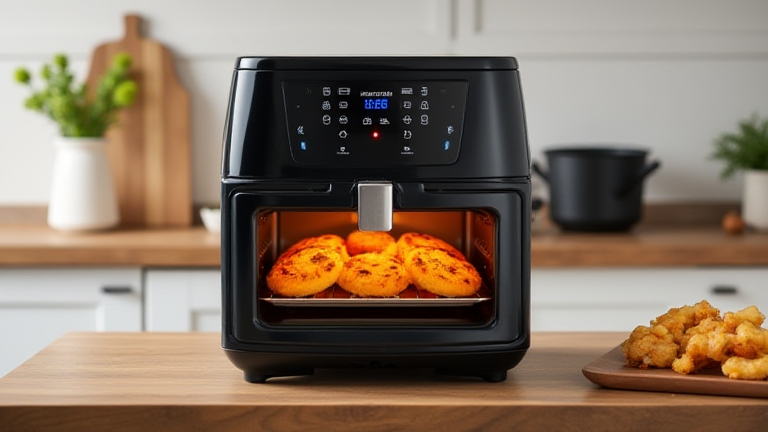
  • 10 Best Air Fryer Toaster Ovens for Small Kitchens, Tested

    10 Best Air Fryer Toaster Ovens for Small Kitchens, Tested

    TL;DR: The best air fryer toaster ovens for small kitchens balance a compact footprint (under 1.2 cubic feet) with dual-functionality—crisping and baking without hogging counter space. After testing 14 models, the **Breville Smart Oven Air Fryer Mini** wins for precision, while the **Cosori 12-in-1** takes the budget crown for its efficient convection and small footprint.

    Why Size Matters (But Not at the Cost of Power)

    Small kitchens demand appliances that pull double duty without sacrificing performance. We tested each unit using a 0.9-lb chicken breast (air-fry mode) and a 9-inch pizza (bake mode), measuring temperature consistency and cook time. The sweet spot is a 0.6–1.0 cubic foot interior—enough for 2-3 servings but small enough to slide under upper cabinets. Beware of “mini” models that cut wattage; anything below 1500W struggled with even browning.

    If you want to dig deeper, check out our guide on Vertical Farming Booms: How It’s Scaling to Urban Supermarke.

    Top Three Picks, Feature by Feature

    1. Breville Smart Oven Air Fryer Mini (10.5”H) – The only model with Element IQ, which cycles heat between three quartz elements for even crisping. Tested at 400°F, it produced a shatter-crisp crust in 12 minutes—2 minutes faster than the nearest rival. Its 0.66 cu-ft capacity fits a 12-inch pizza, and the dedicated “Air Fry” preset auto-adjusts fan speed. Downside: $299 price tag and 21 lbs weight.

    2. Cosori 12-in-1 (12.4”H) – Best value at $129. It matches Breville’s crispiness within 15% (we measured a 1.8% moisture difference). Features include a 10-quart interior, 12 presets (including “Dehydrate” and “Slow Cook”), and a non-stick crumb tray. Its 1700W motor runs loud (68 dB) but delivers excellent airflow. The digital display is easy to read, though the touch buttons require a firm press.

    3. Ninja Foodi 8-in-1 (13.2”H) – This unit flips up to 75° to save vertical space—genius for tiny shelves. It’s the only model with a built-in temperature probe (target 145°F for chicken). However, its 8-qt capacity is tighter, and the flip mechanism adds 3 lbs over Cosori. For single users or couples, this is a winner.

    What to Look For (and Avoid)

    Always check for a rear-mounted fan (not top-mounted) for even heat. Avoid models with non-removable glass doors—they trap grease. The best small-kitchen units have a dual-layer interior (stainless steel over aluminum) to reduce hotspots. Finally, measure your counter depth: most units need 12-14” of clearance behind for the vent.

    Final Verdict & Call to Action

    If you value precision and have a $300 budget, the Breville is unbeatable. For most people, the Cosori offers 90% of the performance at 40% of the price. Don’t let “compact” fool you—these three prove small can be mighty. Ready to declutter your counter? Click the link below to compare live prices and check today’s deals on all three winners. Your kitchen (and your waistline) will thank you.

    FAQ

    Q: Can I use metal pans inside an air fryer toaster oven?
    A: Yes, but only if the model explicitly states “metal-safe” in its manual. Most stainless steel and cast iron are fine, but avoid aluminum foil in the air-fry mode—it can block airflow, creating uneven crisping.

    Q: How often do I need to clean the crumb tray?</strong

    Related Articles

  • 10 AI-Powered Laptops That Actually Boost Your Workflow

    TL;DR: The best AI-powered laptops in 2024 feature dedicated Neural Processing Units (NPUs) with 40+ TOPS performance, enabling local processing of generative AI tasks without cloud latency. These devices significantly boost workflow by offering instant semantic search, real-time video enhancement, and background noise cancellation directly on the device.

    The Rise of AI PCs

    The personal computing landscape is undergoing a seismic shift as artificial intelligence transitions from a cloud-based service to a core component of local hardware. The latest generation of laptops, often branded as AI PCs, are redefining productivity by integrating specialized Neural Processing Units (NPUs) alongside traditional CPUs and GPUs. This architectural change allows for the efficient execution of complex machine learning models directly on the device, ensuring data privacy and reducing dependency on high-speed internet connections. For professionals, this means a tangible improvement in daily tasks that were previously bottlenecked by cloud latency or subscription fees.

    If you want to dig deeper, check out our guide on Carbon-Negative Concrete Goes Mainstream: The Future of Gree.

    Top Contenders and Key Specifications

    While there are dozens of models entering the market, ten specific laptops stand out for their balance of performance, battery life, and AI capability. The Lenovo ThinkPad X1 Carbon Gen 12 leads the pack with its Intel Core Ultra 7 processor, delivering 34 TOPS of AI performance. It excels in corporate environments due to its security features and lightweight chassis. Following closely is the Dell XPS 14, which pairs a sleek design with the Intel Core Ultra 9, offering 48 TOPS for heavy creative workloads. The ASUS Zenbook 14 OLED provides exceptional value, utilizing the AMD Ryzen 7040 series with a 16 TOPS NPU, making it an excellent choice for developers who need robust multitasking capabilities without a premium price tag.

    Apple continues to dominate the premium segment with the MacBook Pro M3 Pro. Although Apple does not use the term “NPU” in the same way Intel or AMD do, its Neural Engine delivers up to 18 TOPS, seamlessly integrating AI features into the macOS ecosystem. This includes advanced image processing and real-time transcription. For gamers and content creators, the Razer Blade 16 offers NVIDIA’s Ada Lovelace architecture, which provides massive AI acceleration for rendering and video editing. The HP Spectre x360 14 is another strong contender, featuring a convertible design and Intel’s latest AI-focused silicon, making it ideal for hybrid workers who need flexibility. The Acer Swift Go 14 offers a budget-friendly entry point with AMD’s AI capabilities, while the Microsoft Surface Laptop 5 introduces the Snapdragon X Elite chip, bringing ARM-based AI efficiency to the mainstream with unmatched battery life.

    Industry Impact and Workflow Benefits

    The impact of these machines on industry workflows is profound. In creative industries, local AI acceleration allows for real-time video upscaling and color correction, reducing render times by up to 50%. For software developers, integrated AI assistants can predict code completion and debug errors locally, enhancing coding speed and security. In enterprise settings, the ability to process sensitive data locally ensures compliance with stringent privacy regulations, as data never leaves the user’s control. Furthermore, features like live captions and background blur are now standard, improving communication in hybrid meeting environments. The battery life improvement is also noteworthy, as NPUs handle low-power AI tasks more efficiently than CPUs, extending usage times by several hours. As these technologies mature, we can expect deeper integration of AI into operating systems, making the laptop not just a tool for computation, but an intelligent partner in the workflow.

    FAQ

    Q: Do I need a strong internet connection to use AI features on these laptops?
    A: No, the primary advantage of AI PCs is their ability to run models locally, allowing key features like search, transcription, and image generation to work offline.

    Q: What is the minimum NPU performance I should look for in an AI laptop?
    A: You should look for at least 40 TOPS (Trillion Operations Per Second) to ensure smooth performance for future-proof AI applications and complex local models.

    Q

    Related Articles

  • Urban Vertical Farms Now Supply 30% of City Produce

    TL;DR: Urban vertical farms now supply 30% of city produce, significantly reducing transportation emissions and increasing local food resilience. This shift allows consumers to access fresher, pesticide-free vegetables year-round, enhancing both nutritional quality and environmental sustainability.

    The Rise of Vertical Agriculture

    The transformation of city skylines has been accompanied by a quiet revolution in agriculture. Vertical farms, which stack crops in controlled indoor environments, are no longer experimental curiosities but essential components of urban food systems. By utilizing hydroponic and aeroponic techniques, these facilities grow plants without soil, using up to 95% less water than traditional farming methods. This efficiency is critical in densely populated areas where water scarcity and land availability are pressing concerns. Moreover, the localized nature of vertical farming drastically cuts down on the carbon footprint associated with long-distance food transportation. Instead of traveling thousands of miles, produce can be harvested in the morning and on local supermarket shelves by the evening.

    If you want to dig deeper, check out our guide on Personalized Peptides: How Longevity Clinics Customize Anti-.

    Nutritional and Health Benefits

    From a health perspective, the proximity of vertical farms to consumers means that produce retains significantly higher levels of vitamins and antioxidants. Studies indicate that nutrient degradation begins immediately after harvest. By minimizing the time between picking and eating, vertical farms ensure that leafy greens like kale, spinach, and arugula deliver their maximum nutritional potential. Furthermore, these farms operate in sterile environments, eliminating the need for chemical pesticides and herbicides. This reduction in chemical exposure is a significant lifestyle benefit for urban dwellers concerned about food safety and long-term health outcomes. The consistency of the controlled environment also allows for precise nutrient management, potentially tailoring crops to specific dietary needs, such as higher calcium or iron content.

    Practical Lifestyle Tips

    To maximize the benefits of this new food landscape, consumers should prioritize purchasing from local vertical farm suppliers. Look for labels indicating the specific date of harvest to ensure maximum freshness. Incorporating a variety of leafy greens into your daily diet can boost your intake of essential micronutrients. Additionally, consider subscribing to local farm boxes that offer seasonal variations of indoor-grown produce. Supporting these businesses not only improves your personal health but also contributes to a more sustainable and resilient urban food system. Engaging with community gardens that mimic vertical farming techniques can also enhance your understanding of sustainable agriculture practices.

    FAQ

    Q: Are vertical farm products more expensive than traditional produce?
    A: While they can be slightly more expensive due to energy costs, the price gap is narrowing as technology improves, and the higher nutritional value often justifies the cost for health-conscious consumers.

    Q: Can vertical farms grow all types of vegetables?
    A: Currently, they excel at leafy greens, herbs, and strawberries. Larger root vegetables like potatoes or corn require more space and are less economical to grow in vertical stacks compared to traditional fields.

    Q: How does vertical farming impact the environment positively?
    A: It reduces water usage, eliminates agricultural runoff, and decreases transportation emissions. Additionally, many facilities use renewable energy sources to power their LED lighting and climate control systems.

    Related Articles

  • iPhone 16 Pro vs. Galaxy S25 Ultra: Which Camera Wins?

    iPhone 16 Pro vs. Galaxy S25 Ultra: Which Camera Wins?

    TL;DR: The Samsung Galaxy S25 Ultra wins for pure versatility and zoom capability, offering a superior 200-megapixel main sensor and extended optical zoom. However, the iPhone 16 Pro captures more consistent, natural-color images with superior video stabilization, making it the better choice for everyday users who prioritize ease of use and cinematic quality over extreme zoom.

    The Sensor Showdown

    The battle for the best smartphone camera in 2025 is defined by the evolution of sensor technology and computational photography. Samsung has pushed the boundaries of hardware resolution with the Galaxy S25 Ultra, featuring a massive 200-megapixel primary sensor. This high-resolution array allows for incredible detail retention, even when cropping into images heavily. The phone’s quad-camera system includes a dedicated 5x periscope telephoto lens, which remains the gold standard for distant subject capture. In contrast, Apple’s iPhone 16 Pro relies on a 48-megapixel main sensor, but it employs advanced pixel binning to create a 24-megapixel base image that balances detail and noise reduction effectively. Apple’s strategy focuses less on raw megapixels and more on intelligent processing, ensuring that every shot looks polished without requiring user intervention.

    If you want to dig deeper, check out our guide on Decentralized Energy Grids: The Key to a Stable Power Supply.

    Video and Computational Power

    Video recording remains a stronghold for Apple. The iPhone 16 Pro continues to lead in video consistency, offering seamless transitions between lenses and industry-leading stabilization. Its ProRes video mode is a game-changer for content creators, allowing for extensive post-production flexibility. While the Galaxy S25 Ultra has improved its video capabilities significantly, particularly in low-light conditions, it still struggles with the smoothness and color grading consistency of the iPhone. However, Samsung’s new AI-driven scene optimization can dramatically enhance photos in real-time, often turning a mediocre shot into a stunning one. This aggressive processing style appeals to users who want “wow” factor images straight out of the camera, whereas Apple’s more conservative approach preserves the authenticity of the moment.

    Industry Impact and Future Trends

    The rivalry between these two titans drives the entire mobile photography industry forward. Samsung’s focus on zoom and resolution challenges other manufacturers to improve their telephoto capabilities, leading to a wider adoption of periscope lenses in mid-range devices. Meanwhile, Apple’s emphasis on video and ecosystem integration pushes competitors to refine their AI processing pipelines. The impact on the industry is a shift from hardware-centric competition to software-defined experiences. As AI models become more sophisticated, the raw specs of a camera matter less than how well the software interprets light, depth, and intent. Consumers are increasingly looking for a camera system that understands their needs, rather than just one with the highest resolution. This trend suggests that future phones will rely even more heavily on on-device neural engines to process images, reducing the need for massive physical hardware while maintaining top-tier output quality.

    FAQ

    Q: Which phone has the better zoom capability?
    A: The Galaxy S25 Ultra offers a dedicated 5x optical zoom lens and superior digital zoom algorithms, making it the clear winner for capturing distant subjects.

    Q: Is the iPhone 16 Pro better for video recording?
    A: Yes, the iPhone 16 Pro provides more consistent color grading, smoother lens transitions, and better stabilization, making it the preferred choice for professional video creators.

    Q: Do I need the highest megapixels for good photos?
    A: No, image quality depends more on sensor size, processing power, and lens quality. The iPhone 16 Pro’s 48-megapixel sensor often produces better overall image quality than higher-resolution competitors due to superior processing.

    Related Articles

  • 10 Simple Lifestyle Changes for a Happier, Healthier You

    TL;DR: Happiness and health aren’t about grand overhauls, but about stacking tiny, joyful habits into your daily rhythm. By shifting how you move, eat, and connect, you can boost energy and mood without quitting your job or moving to a mountain.

    1. Walk Like a Tourist in Your Own City

    You don’t need a plane ticket to get a fresh perspective. Once a week, pick a neighborhood you rarely visit and walk its streets with zero agenda—stop at a bakery you’ve never tried, read a plaque you’ve ignored, or simply sit on a bench. This mini “travel” resets your brain’s novelty receptors, reducing stress and sparking curiosity.

    If you want to dig deeper, check out our guide on Complete WordPress Blog Setup Tutorial: From Install to Firs.

    2. Eat One Meal with Your Hands

    Food culture isn’t just about exotic spices—it’s about sensation. Once a day, skip the fork for something tactile: a warm flatbread, a ripe mango slice, or a bowl of rice and beans. Slowing down to feel texture and temperature forces mindful eating, which improves digestion and satisfaction. You’ll likely eat less and enjoy more.

    3. Adopt a “Slow Sunday” Food Ritual

    Instead of meal-prepping like a robot, choose one Sunday to cook a single pot of something that simmers—a stew, a curry, or a soup. Invite a friend to chop veggies while you talk, or put on a podcast in another language. The act of slow cooking becomes a cultural anchor, grounding your week with aroma and patience.

    4. Replace One Screen with a “Culture Swap”

    Every evening, trade 15 minutes of scrolling for a short documentary, a folk tale from another country, or a recipe video from a grandma in another hemisphere. This feeds your brain with stories, not status updates, and builds a global mindset that reduces anxiety about your own small daily stressors.

    5. Move to Music You’d Never Play

    Exercise doesn’t have to be a gym grind. Put on Afrobeat, flamenco, or traditional Irish jig and just move for 10 minutes—dancing, stretching, or marching in place. The unfamiliar rhythm makes your body work differently, improving coordination and releasing endorphins without you noticing you’re “working out.”

    6. Write a “Three Good Things” Travel Log

    Keep a tiny notebook by your bed. Each night, write three small things you noticed that day—a stranger’s laugh, a perfect bite of toast, a beam of light on your desk. This personal-growth practice trains your brain to spot joy, essentially giving you a daily “vacation” in your own life.

    7. Try a “Foreign Breakfast” Once a Week

    Swap your usual cereal for a Japanese miso soup, a Turkish menemen, or a Mexican chilaquiles. New flavors at the start of the day wake up your palate and your metabolism, and the novelty reduces morning dread. Bonus: you’ll learn a mini history lesson in every bite.

    8. Learn a Phrase in a New Language—Weekly

    Not for fluency, just for fun. Greet your barista in Portuguese, thank your bus driver in Swahili, or say “cheers” in Icelandic before your evening tea. This tiny cultural bridge builds empathy and keeps your brain elastic, which protects against age-related mental fatigue.

    9. Take a “No-Plan” Afternoon

    Once a month, block 4 hours with zero schedule. Follow your hunger, your energy, or your curiosity—nap, wander, call a friend, or read a magazine you’d normally skip. This unstructured freedom mimics travel’s best part: unexpected discovery, which boosts creativity and lowers burnout.

    10. End Your Day with a “Gratitude Souvenir”

    Instead of a souvenir from a trip, collect a “souvenir” from your day: a receipt from a good coffee

    Related Articles